



A Story of Control and Escape: Daisy’s Fight Against Coercive Abuse
It began like so many modern love stories, with a swipe and a match on a dating app in 2020. For Daisy, a woman from Crawley, West Sussex, meeting Lee Yates felt like a stroke of luck. She described him as a “nice and kind gentleman,” charming and attentive. Their connection seemed to deepen rapidly; he was a whirlwind of affection, showering her with messages and declarations of love. At first, Daisy found his intensity flattering. He would call her at all hours, a constant presence in her life that felt romantic and all-consuming. She thought nothing of his eagerness and persistence, attributing it to the passion of a new relationship. It was the classic, dizzying beginning of what she believed was a meaningful partnership. What she didn’t realize was that this overwhelming affection was the first stage of a carefully constructed trap, a deceptive strategy known as “love bombing” designed to secure her trust and devotion before the real nightmare began.
For the first six months, their relationship seemed idyllic. But then, almost imperceptibly, the foundation began to crack. The initial romantic intensity twisted into something darker, with the first alarming sign being the confiscation of her contraceptive pill. Yates began to systematically dismantle her personal autonomy. His control seeped into every facet of her daily life, starting with her appearance. He would criticize her clothing choices, at first making “suggestions,” which quickly escalated into direct orders about what she could and could not wear. His obsession with control became painfully apparent when he started timing her daily activities. Even the most mundane and private of tasks, like going to the bathroom, were not exempt. Yates would stand outside, angry if she took longer than three minutes, sometimes even barging in. He dictated her schedule, controlling her sleeping patterns and forbidding her from going to bed when she wanted. Her social life vanished as he grew enraged if she tried to see friends. Daisy was being isolated, stripped of her choices, and engulfed by a partner who was determined to be the sole authority in her life.
The psychological tyranny soon gave way to overt physical and emotional violence. Yates attacked her in the car, and the abuse in their home escalated into horrifying and degrading acts. He would spit on her, throw things at her, and urinate on her, declaring, “I own you now,” a chilling testament to his view of her as a possession. He used “physical abuse” and threats to enforce his will, even threatening to kill her beloved pet horses. The abuse was relentless, and Daisy found herself trapped in a living hell. “It was hell. I physically could not do anymore. You couldn’t say no to him, it wasn’t a word he knew,” she later recalled. He forced her to make his meals, chauffeur him around, and hand over all her money to fund his drinking. The fear was absolute; his word was law. Yates stripped her of her very identity, so much so that she felt she had no way out, believing that this was simply what her life would be from now on.
She was a prisoner in her own home, and at times, she genuinely feared for her life. “I was going to end up dead, I am sure I was,” Daisy stated. She endured this abuse for two long years. However, her escape came from an unexpected act of courage and neighborly vigilance. In June 2022, a neighbor witnessed Yates shoving Daisy in a car park and contacted the police. It was the crucial intervention she needed. When the police arrived at her door, it was a pivotal moment. “Something in my head went ‘this is your way out’,” she said. It was the first time she felt a glimmer of hope. Her abuser was arrested, but the trauma didn’t instantly vanish. In the immediate aftermath, she was still paralyzed by fear, panicked that he would be released and come after her. The mental shackles of abuse took time to break, even after her ordeal became a police matter.
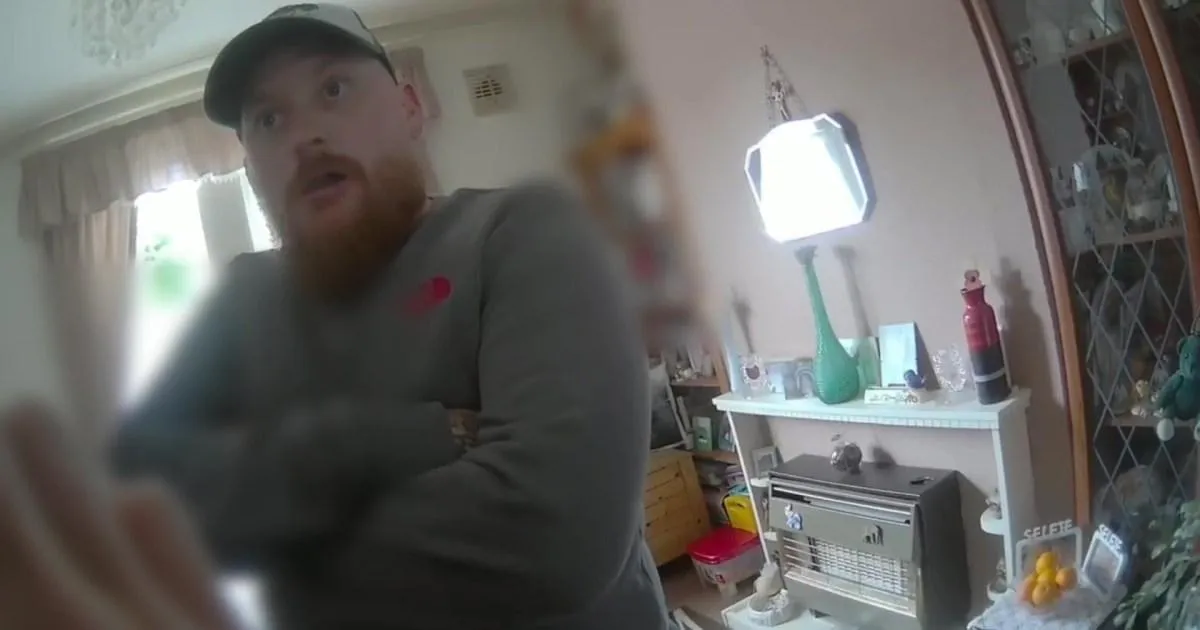
Yates was subsequently charged and stood trial. He was found guilty of coercive and controlling behavior. In April 2026, he was sentenced to three years in prison. Detective Constable Hannah Lane of Sussex Police commented on the case, highlighting how Yates “sought to control almost every aspect of this victim’s life, using violence and intimidation to try and subdue her.” She praised Daisy’s immense strength in supporting the investigation. “But he underestimated her strength. Thanks to her reporting his crimes to the police, he is now safely behind bars while she can look to rebuild her life,” the detective said. Daisy’s terrifying account is now part of the This Is Not Right campaign, a movement launched by Metro on November 25, 2024, in partnership with Women’s Aid. The campaign aims to spotlight the widespread epidemic of violence against women and encourage survivors to come forward.
Daisy’s story is one of profound suffering, but it is also a story of immense resilience, courage, and survival. By sharing her ordeal, she hopes to help other women recognize the signs of abuse and understand that they are not alone. She continues to deal with triggers from the trauma, but she refuses to be defined by it. “I will never be the same again, but I am not letting him win. There is life after trauma. I will never let a man treat me like that again,” she affirms. Her message to other victims is clear: there is a way out. Organizations like Refuge provide vital support, and in an emergency, calling 999 and using the ‘Silent Solution’—by coughing or tapping the phone—can alert police without an abuser knowing. For anyone experiencing domestic abuse, help is available, and escape is possible. If you are affected by issues in this story, you can contact the National Domestic Abuse Helpline on 0808 2000 247, which is run by Refuge and open 24 hours a day.