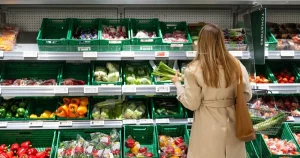


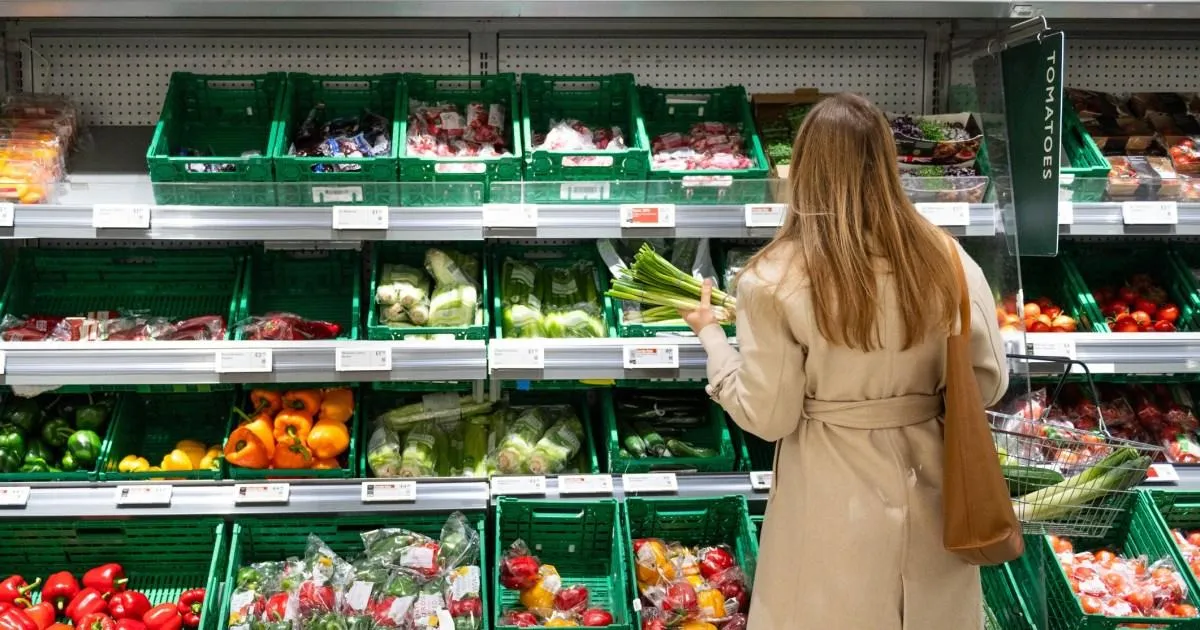
Have you found yourself doing a double-take in the produce aisle recently? Maybe you picked up a potato and thought it looked a little too lumpy, a little too proud of its lumps. Or you reached for a cucumber and realised it had a curve that could almost be called artistic. Perhaps the carrots are thinner than usual, the lettuce seems a bit sadder, and the broccoli looks like it’s had a long, dry week. If any of this sounds familiar, take a deep breath: you’re not imagining things, and you’re not going crazy. The supermarket hasn’t quietly started selling rejected produce to unsuspecting shoppers. What you’re seeing is the real, visible result of the weather we’ve been having. Across England, Wales and much of continental Europe, drought has taken hold, and heatwave after heatwave has turned green fields into cracked, thirsty ground. Plants need water to grow properly. When they don’t get it, they don’t simply stop growing; they produce fruit and vegetables that look different from the glossy, uniform images we’ve come to expect. Instead of plump, perfectly shaped specimens, we’re seeing smaller, rougher, more irregular versions of our old favourites. For years, supermarkets have operated with strict cosmetic standards. Knobbly potatoes, bendy cucumbers, twisted carrots and odd-sized onions would often be rejected before they ever made it to a shelf. But now, as the drought continues to disrupt supply, retailers are having to let go of those tight aesthetic rules. They’re asking shoppers to look past the surface and remember that what matters most is what’s inside the skin, not how smooth or symmetrical that skin happens to be. It’s a big shift in food culture, and it’s happening right now, in the middle of a season that is testing everyone involved, from farmers to logistics teams to the person just trying to make dinner.
It might be tempting to laugh at a potato that looks like it’s been through a rough night, or to judge a carrot for taking an unexpected turn halfway down its length. But the truth is, these vegetables are doing their best under incredibly tough circumstances. And they’re not alone. Even the people who grow them are struggling. One of the first major supermarkets to address the situation publicly was Waitrose, which told customers that heat stress and lack of rainfall might mean their vegetables are smaller than usual. In an effort to avoid waste and give growers a fair income, Waitrose has relaxed its size and shape guidelines for key vegetables. This doesn’t mean the quality has dropped; it just means the usual “perfect” look is harder to maintain when Mother Nature is in a difficult mood. Calum Kelly, Waitrose’s Produce Technical Manager, put it beautifully when he said that baking potatoes might be a little smaller than usual this harvest if the drought continues. He added that all these vegetables still taste great, but like many of us in a heatwave, they might just look a little less than perfect. That’s exactly the right way to think about it. When you’ve been through days of extreme heat with no rain in sight, you don’t look your best either. Your skin can look tired, your hair wilts, and your energy levels drop. Vegetables respond to the environment in a similar way. They may be smaller, slightly more wrinkled, a bit lumpier, or somehow less polished than they would be in a year with perfect rainfall. But under all of that, they are still real, honest food, packed with flavour and nutrition. Perhaps the only thing that has changed is our expectation of what food should look like, and that expectation has been built over decades of carefully curated supermarket displays that have little to do with the natural world.
Waitrose is far from alone in this approach. The British Retail Consortium, which represents a wide range of retailers, has made it clear that climate change is creating serious challenges for the entire food industry. Droughts, extreme heat and unpredictable weather can all affect crop yields, reduce the supply of fresh produce, and place upward pressure on prices. Retailers, for their part, have become experienced in managing supply disruptions. They can look for alternative suppliers, adjust their sourcing strategies, and even expand the range of odd-sized produce they stock. But there is no escaping the fact that when the weather refuses to cooperate, the supermarket shelves will eventually reflect that reality. Andrew Opie, the BRC’s Director of Food and Sustainability Policy, acknowledged that climate change continues to create challenges, and that extreme weather can affect crop yields and push prices up. He also promised that retailers would do everything they can to minimise the impact on customers. Still, we should be honest with ourselves: the age of flawlessly uniform produce, delivered every day of the year without any visible signs of struggle, is coming under serious threat. We’ve been trained to judge food by its appearance. We reach for the shiniest apple, the straightest cucumber, the most evenly shaped tomato without even thinking about it. But nature is messy. It doesn’t always produce perfect shapes, especially when it’s coping with drought, heat and the rising pressure of a changing climate. If we want to keep food waste down and support the farmers who are working so hard to feed us, we may need to accept a new standard, one that celebrates taste, nutrition and sustainability over superficial perfection. That might sound like a big philosophical shift, but it starts with something as simple as choosing a wonky carrot over a perfectly straight one.
The effects of the drought, however, are not limited to the way vegetables look. They may also end up affecting how much we pay for the food we buy. The Food and Drink Federation, which represents manufacturers throughout the UK, has warned that food is likely to become more expensive in the coming weeks and months unless the drought comes to a rapid end. Dr Liliana Danila, the FDF’s chief economist, explained that the impact on prices will be gradual, and the speed varies depending on how processed a product is. A cucumber that goes straight from the field to the supermarket will feel the impact of the drought much faster than a ready-made meal that has to pass through multiple stages of processing and manufacturing. That means fresh produce prices might rise sooner, while things like canned soups, frozen pizzas and other packaged foods could see delayed but still noticeable increases. The chain of supply is complex, but the result is relatively simple: the drought is adding another layer of pressure to the already steep cost of living. For people who are already worrying about their weekly budget, the thought of paying more for dinner is genuinely stressful. It’s not just about ugly vegetables anymore. It’s about whether you can afford to fill your shopping basket at all. And underneath all of that, there is a deeper worry that this might not just be a one-off season. If climate change continues to make extreme weather events more frequent, then these periods of drought-driven inflation could become a regular feature of modern life. The coming weeks will reveal just how much of that pressure reaches the checkout counter, but the early signs are not especially comforting. We are all in this together, though, and being aware of the situation is the first step toward handling it with a little more patience and understanding.
And the ripple effects don’t stop at fruit and vegetables. Later in the year, we may begin to feel the drought’s impact in the dairy and meat aisles as well. Farmers are being forced to make difficult choices because the dry fields no longer provide enough grass for grazing animals. To keep cattle and sheep fed, many farmers are using up the winter feed they would normally save for the colder months. Hay and silage are being consumed now, which means that before the actual winter arrives, those supplies will already be running low. Farmers will then have to buy expensive supplementary feed, and those extra costs will almost certainly be passed on to consumers through higher prices for milk, cheese, butter, yogurt and meat. This is not something that will happen overnight, but it’s expected to emerge gradually as the year goes on. It’s a long, tangled chain: dry soil leads to less grass, less grass leads to increased use of stored feed, increased use of stored feed leads to shortages, shortages lead to higher prices, and higher prices lead to more expensive shopping trips. For farmers, who are already facing enormous stress because of the weather, this is an incredibly difficult situation. They are not just trying to grow food; they are trying to keep their animals alive and their businesses running. They are watching the weather forecasts with hope, checking the soil with worry, and doing everything they can to stay afloat in conditions they did not create and cannot fully control. When we think about the food on our plates, we rarely think about all the anxiety that went into getting it there. But in times like these, it becomes much harder to ignore. The entire food system depends on natural rhythms that are being disrupted, and everyone from the smallest farm to the largest supermarket feels those disruptions in different ways.
So what should we do with all of this information? The first step is probably to show a little more kindness to the vegetables. If you see a potato that looks like it’s spent too much time in the sun, pick it up anyway. If a cucumber has a bend in it, remember that it’s still going to taste fresh and crunchy in your salad. We have a chance to be less superficial when it comes to food, and that might actually be a good thing. Food waste is already a massive problem around the world, and the more we embrace imperfect produce, the more we can reduce waste and support the farmers and growers who are working under such difficult conditions. The second step is to remember what these weird-looking vegetables represent. The drought, the shrinking crops, the rising prices, and the shifting supermarket shelves are all reminders that we are deeply connected to the natural world, and that nature is not always predictable. We like to think that supermarkets will always be full of abundant, flawless food, but that confidence is a relatively modern luxury. The environment has its own rhythms, its own limits and its own moods. When we see smaller, stranger vegetables or creeping price rises, we are witnessing the consequences of a changing planet. It can feel overwhelming to think about, but there is still something empowering about making small choices. Buying a misshapen carrot might not save the world, but it tells supermarkets, farmers and policymakers that we care about sustainability and that we are willing to accept imperfection in order to keep good food from going to waste. The next time you spot a wonky vegetable, give it a little smile. It has been through a rough season. It has survived drought and heat. And it is still doing its best to feed you. That deserves a little respect and appreciation.