

When the Sirens Went Silent: A Nation’s Shared Wake-Up Call in the Flames of a Record Heatwave
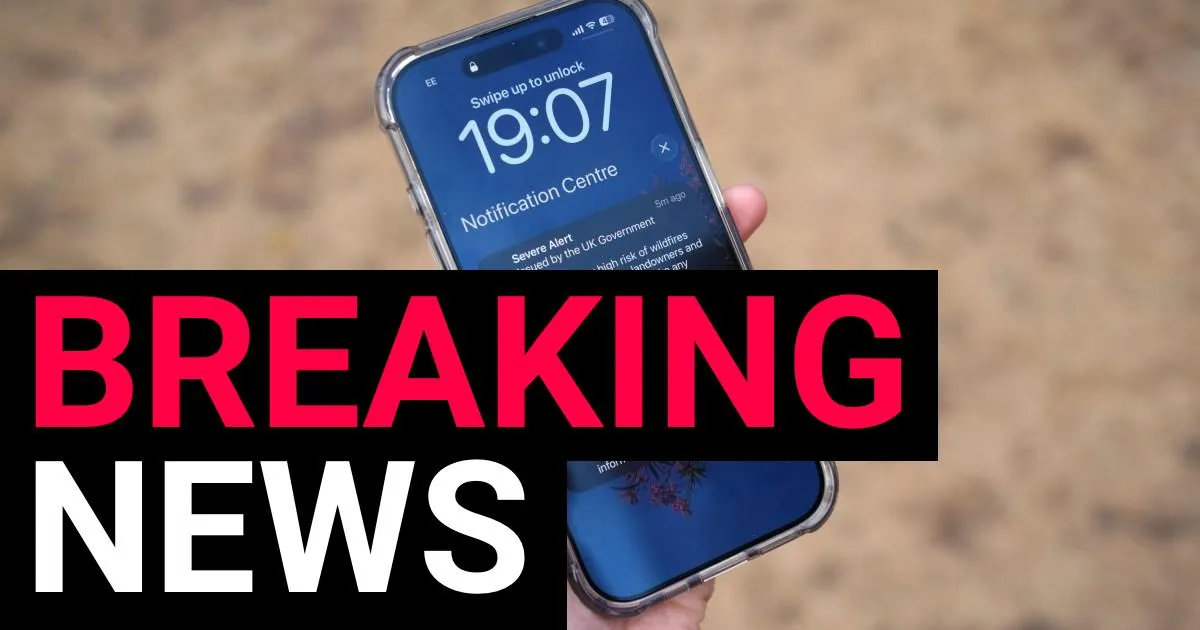
Imagine you are sitting in your living room on a sweltering Friday evening. The air is thick and heavy, a humid blanket that refuses to lift even as the sun begins its slow descent. You are scrolling through your phone, distracted by the mundane rhythm of a summer’s night. Then, without warning, your device erupts. A violent, unfamiliar siren shatters the quiet hum of the room. It is not a text message from a friend, nor a reminder about a meeting. It is a sound designed to bypass your brain’s usual filters and lodge itself directly into your gut—a sound of official, undeniable urgency. At around 7 PM, for millions of people across England and Wales, that sound meant one thing: the country was on fire, and the government was begging them not to light the match. This was not a test. This was the fifth heatwave of a summer that felt less like a season and more like a prophecy.
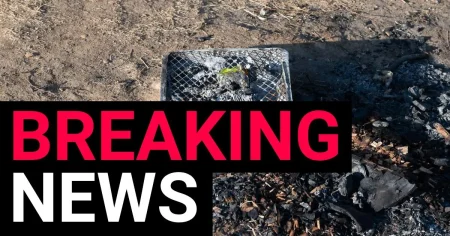
The message that appeared on screens was stark, clinical, and terrifying in its simplicity. It warned of a “very high risk of wildfires nationally.” It did not ask politely. It commanded. Residents, landowners, and visitors were told, in no uncertain terms, to refrain from any activity that could birth a flame. No disposable barbecues. No fire pits. No garden incinerators. No fireworks. The alert painted a grim picture of cause and effect, explaining that even the smallest, most innocent flicker—the forgotten ember from a cigarette, the stray spark from a garden tool—could rapidly evolve into a major wildfire. This wasn’t just a warning about property damage. It was a warning about lives. The message explicitly stated that these fires place “lives, homes, businesses and emergency responders at risk.” The human element was front and center, a digital plea for collective sanity. It was a moment of national unity born from a shared, silent panic, as strangers on trains and families in kitchens all looked down at their glowing phones and understood, for a moment, that they were all in the same dry, tinder-dry boat.
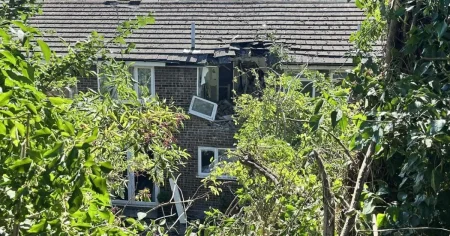
This wasn’t a remote crisis happening somewhere else; it was happening in the backyard, on the local moor, and in the parks where children played. The alert was the direct result of a landscape transformed into a potential inferno. The UK was officially deep in a drought, with over 70% of England and all of Wales suffering from a lack of water that had turned green fields into brittle, golden straw. The earth itself was ready to burn. The human cost of this reality was already visible. The alert referenced a recent wildfire in the West Midlands, in Stourbridge, where a blaze had torn through a residential area, destroying 19 homes. This was not a forest fire in a distant national park; it was a fire that had swallowed people’s sanctuaries, their photo albums, their children’s bedrooms. In Stoke-on-Trent, communities were described as “devastated” after fires gutted houses and forced terrified residents to flee, many of whom lost “everything.” These aren’t statistics. These are families standing on a curb, watching their life’s possessions turn to ash, their neighbor’s walls collapsing under the relentless advance of a heat that had finally found its fuel.
The government’s response was a blend of stern warning and heartfelt empathy. Prime Minister Andy Burnham, who had witnessed the devastation in Stourbridge, took to social media to ask the public to “take the emergency alert seriously.” He didn’t just deliver a dry political statement; he painted a picture of a frontline under siege. He spoke of firefighters and emergency responders working “around the clock in incredibly difficult conditions.” He asked the public to help these exhausted heroes by simply not starting fires. It was a deeply humanizing request—a call to be a good neighbor, to think of the tired crew member who has been fighting flames all day and deserves a break, not another 999 call. Louise Haigh, the First Secretary of State, confirmed that this was “the most extensive use of the UK’s emergency alert system in response to an active incident.” This wasn’t a drill or a test. The system, which had first been tested in April 2023 and used for storms, was now being deployed for a fire. The unique, siren-like sound was deliberately chosen to be jolting, a break from the digital noise, a collective auditory nudge that said, “This is real. Pay attention.”
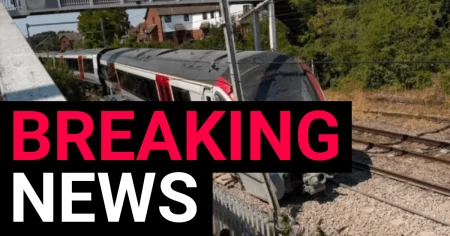
The extreme weather wasn’t just creating fire hazards; it was systematically breaking the infrastructure of daily life. The heat, which had provisionally reached 38.1°C at Kew Gardens, was buckling train tracks and causing chaos on public transport. Within 24 hours, two trains derailed, one in East Sussex and another in Essex. Network Rail executives admitted that the “unprecedented hot and dry weather” presented exceptional challenges, as steel tracks bent out of shape under the relentless sun. Hospitals were overwhelmed with demand, as the amber health alerts warned that vulnerable populations—the elderly, the very young, those with pre-existing conditions—were at significant risk. Angela Rayner, the Communities Secretary, promised a summit to bring together fire chiefs and unions to look at future responses, acknowledging the need for a systemic, long-term plan. But the immediate, raw reality was simple: people were losing their homes, their ability to travel, and their sense of security. The tinderbox metaphor was no longer a poetic device; it was a practical description of a nation holding its breath, hoping no one struck a match.
As the dust—or rather, the ash—settles on the emergency alert, a profound and unsettling question lingers. This was a warning, a digital shout in a crowded room. But what comes after the siren fades? Andy Burnham admitted that we must “face up” to the “changing climate.” The humanization of this crisis lies not just in the panic of the alert or the grief of those who lost homes, but in the slow, dawning realization that this might be the new normal. The summer of barbecues and carefree nights in the park now carries a new weight. The simple act of lighting a fire has become a potentially catastrophic act of negligence. The human story here is one of adaptation, of collective responsibility, and of deep empathy for the firefighters, paramedics, and neighbours who are on the front line. It’s a story about the family in Stourbridge who will never sleep soundly again, and about the millions of others who, for one night, put down their sparklers and their charcoal bags, looked at the blazing sun, and felt a flicker of respect for the raw, unforgiving power of the heat. The alert was a technological marvel, but its true power was in reminding us of a very old, very human truth: we are all connected, and in a tinderbox, one bad decision can consume us all.