


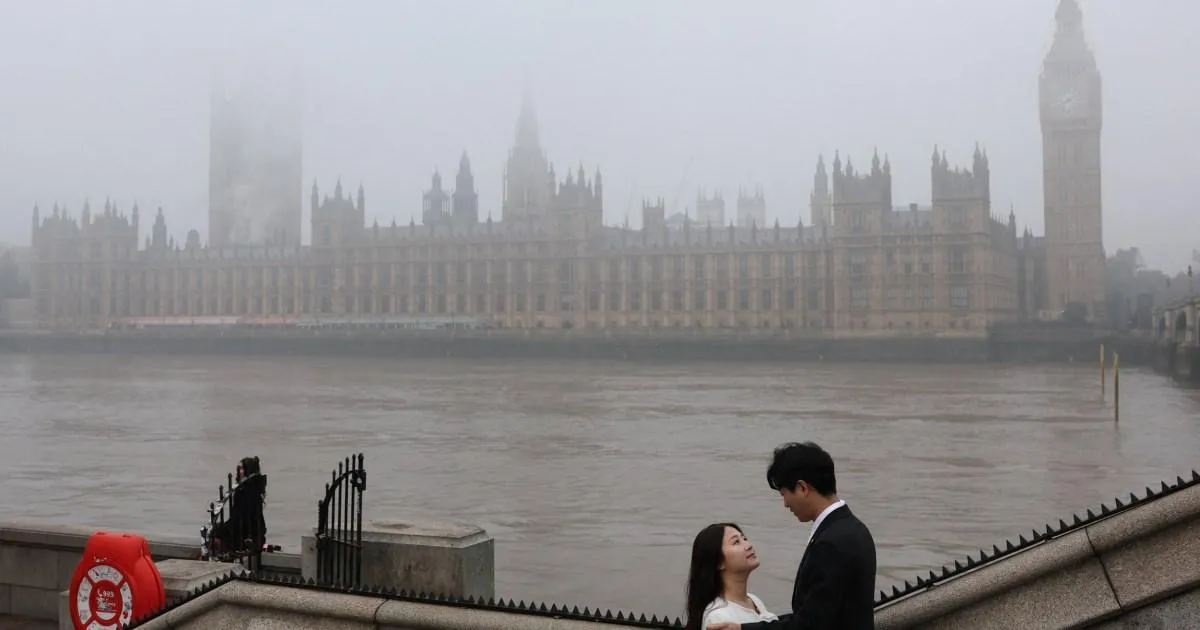
If you stepped outside in London this morning, you may have noticed something heavier in the air—a lingering haze, a faint smoky smell, a city that felt wrapped in a damp, grey blanket. That unsettling feeling was not just the usual autumn chill. It was the result of a serious air pollution episode, one that prompted Mayor Sadiq Khan to issue a high air pollution alert across the capital. The warning came after forecasters detected elevated levels of particle pollution, the kind of microscopic material that can slip deep into the lungs and cause real harm. With dense fog and very light winds over the weekend, the air simply stopped moving, allowing all the everyday emissions of a giant city to pile up and hang around into Monday morning. And it wasn’t just traffic and industrial fumes. The recent celebrations of Bonfire Night and Diwali had filled the skies with firework smoke, and the cosy seasonal habit of burning wood in fireplaces and stoves added another layer of pollution. The result was a “toxic” air alert, a term that sounds alarmist to some, but one that reflects a very real threat to public health, especially for the youngest, the oldest, and those already struggling to breathe.
This is not the first time London has faced such a warning this year—it is actually the fourth high air pollution alert in 2024, and each one serves as a stark reminder that clean air is not something we can take for granted. When the Mayor triggered this alert, it was not a bureaucratic formality. It was a signal for everyone to pay attention, to understand that the air outside was not just unpleasant but genuinely harmful. The Deputy Mayor for Environment and Energy, Mete Coban, put it plainly: toxic air is responsible for thousands of premature deaths in London every year, a sobering statistic that can feel abstract until you think about a grandmother with asthma, a child with a cough, or a neighbour who struggles with heart problems. This is why city leaders have been pushing so hard for changes, including the world’s largest clean air zone, designed to discourage the most polluting vehicles from entering the city. But on days like this, the limits of policy become obvious. Even the best long-term plans cannot instantly clear the sky when weather conditions trap pollution close to the ground, which is why the Mayor and his team have asked Londoners to do their part in the immediate moment, protecting the most vulnerable while continuing to work toward a greener, safer city for everyone.
So what exactly is in the air, and why does it matter? The main concern is fine particulate matter, often referred to as PM2.5, which refers to tiny particles smaller than 2.5 micrometres across. These particles can come from many sources—diesel engines, construction sites, industrial processes, and, of course, the smoke from fireworks and bonfires. Because they are so small, they bypass the natural defences of our noses and throats and travel deep into the lungs, where they can enter the bloodstream. For healthy adults, this might cause temporary irritation, a scratchy throat, or a tight chest. But for vulnerable people, including those with respiratory conditions like asthma or chronic obstructive pulmonary disease, older adults, pregnant women, and children, the effects can be much more serious. High pollution days are linked to increased hospital admissions, asthma attacks, and even heart problems. That is why, alongside the public alert, additional information has been sent directly to GPs and hospital emergency departments across London, giving healthcare professionals the tools to support patients who may arrive feeling breathless or unwell. It is a quiet but crucial step, a reminder that the impact of pollution is not just an environmental issue; it is a health emergency that plays out in waiting rooms and emergency wards.
In response to the alert, City Hall has issued a set of practical recommendations designed to reduce your exposure and your contribution to the problem. For ordinary Londoners going about their day, the advice is to think about travel choices. If you can, walk or cycle instead of driving, and use public transport whenever possible. If you are out and about, try to avoid busy roads, where pollution levels tend to be highest, and choose quieter side streets or parks for your route. For those who need to drive, consider sharing the journey with someone else so there are fewer cars on the road, switch off your engine when you are stationary instead of idling, and make sure your vehicle is well maintained so it burns fuel as cleanly as possible. The guidance also extends to what you do at home. Residents have been urged not to burn garden waste, and to avoid using wood burners and open fires unless absolutely necessary. On a freezing November evening, a glowing fire might feel like comfort, but on a high pollution day, it makes the air worse for everyone, including your own neighbours. These are not radical sacrifices. They are small, mindful actions that, multiplied across millions of people, can make a noticeable difference to the quality of the air we all share.
This alert also points to a larger truth about modern city life. The air we breathe is a shared resource, and pollution does not respect borough boundaries or income brackets. However, not everyone faces the same risk. Air pollution tends to hit harder in poorer parts of the city, where people are more likely to live near busy roads, work in jobs that require time outdoors, and have less access to healthcare. Children growing up in these areas may develop lung problems that stay with them for life, and older residents may see their conditions worsen with every bad air day. This is why the Mayor’s clean air zone is so important, despite the controversy it has stirred. It represents a serious attempt to address the root of the problem, rather than just treating the symptoms. But as the repeated alerts this year show, there is no single fix. Climate change is making weather patterns more unpredictable, and the same calm, foggy conditions that create picturesque mornings can become invisible traps for pollution. Even as London transitions toward electric vehicles, cleaner energy, and greener public spaces, there will still be days when nature and human activity combine to create a dangerous cocktail in the sky. On those days, the best response is not panic but solidarity: checking on neighbours, keeping children indoors, and making changes that protect the collective.
Ultimately, this moment should not be dismissed as just another weather warning. It is an invitation to remember how much our health depends on the world around us, and how much our actions affect the people next to us. The same fog that hides the skyline also hides a problem we cannot see, and that invisibility makes it easy to ignore. But the people of London are resilient, and they have shown time and again that they can come together when it matters. Whether it is a neighbour checking on an elderly resident, a family choosing to take the bus instead of the car, or a school deciding to move playtime indoors for the day, these choices matter. The current warning will eventually pass. The winds will pick up, the fog will lift, and the fireworks smoke will fade. But the underlying challenge of air pollution will remain, and so will the need for care and compassion. By listening to the advice, protecting the vulnerable, and pushing for cleaner air in the long term, London can move toward a future where high pollution alerts become rare, and where every breath is easier. Until then, take it a little slower, look out for one another, and know that the air you breathe is something you share with a whole city of striving, hoping, and loving people.