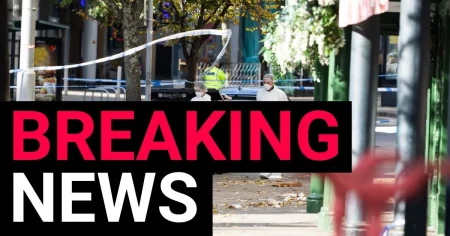

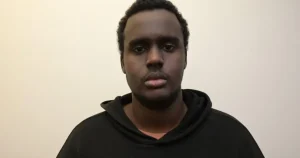

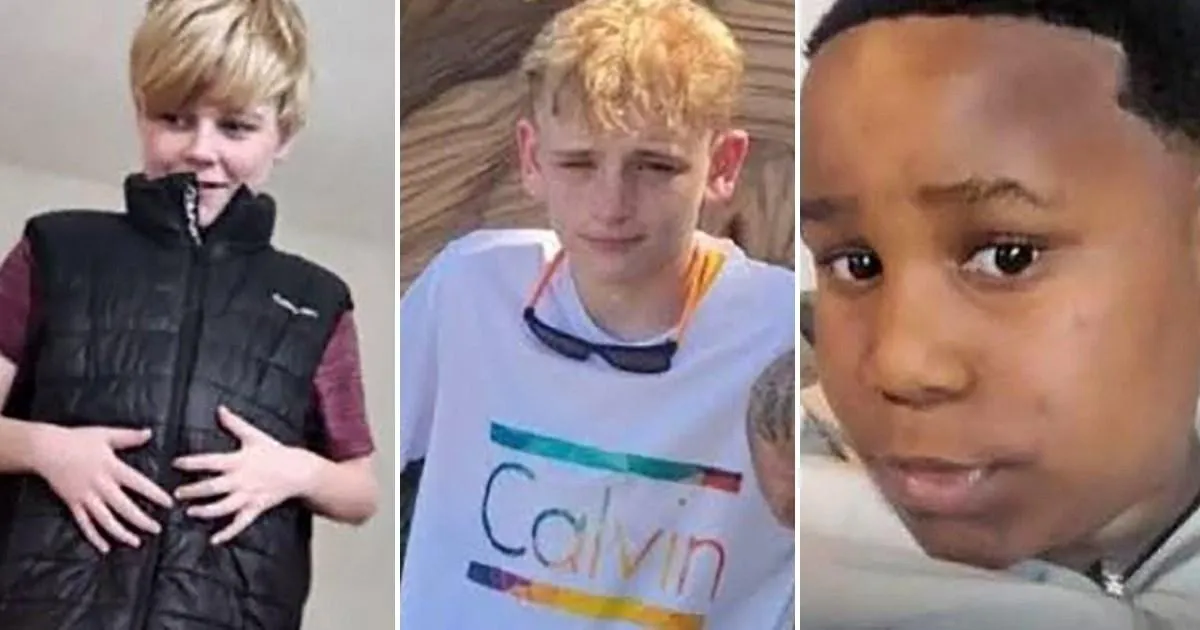
On an ordinary Saturday evening, when families across Manchester were settling down after the day’s activities and the Metrolink trams were carrying their usual mix of shoppers, commuters and teenagers heading home, the familiar rhythm of the city was quietly broken by a worrying development. Greater Manchester Police received a report that three young boys, all aged just 12 and 13, had disappeared from the Stretford Metrolink stop at around 6.50pm. The boys were named as Riley, Noah and Kian, and as the minutes turned into hours, the initial concern rapidly deepened into something more urgent. Police confirmed that a manhunt had been launched, and the public was being asked to keep their eyes open for the trio, who were last seen together at that tram stop but who could well have gone their separate ways since. The phrase that appeared in the official appeal was that officers were “becoming increasingly concerned” for the boys, a phrase that always sends a chill through any community because it is so carefully measured, and yet so full of dread. It is the kind of update that makes people stop scrolling and look a little more closely at the faces around them, because somewhere out there, three children are missing, and nobody has been able to account for them since that evening. The appeal was not yet a national emergency, but it had all the markings of one in the making, with adults across the region praying that the boys would simply wander home, with a shrugged explanation and an apology, and that the whole incident would fade into an anecdote. But until that happened, the search was real, urgent and emotional, and it was being driven by the fear that every minute away from home increases the risk for children so young. At that age, 12 and 13, they are old enough to be independent, but still very much children, vulnerable in ways they do not yet understand. They had been seen at a tram stop, a place that symbolises movement and choices, where a person can step onto a platform and suddenly be somewhere else, and that is exactly what made the disappearance so difficult to pin down. Were they together? Were they lost? Were they with someone they had met online? Did panic set in after a missed tram, or after a wrong decision? These are the questions that raced through the minds of anyone who read the appeal, and the police were clearly thinking along the same lines, because they did not rule anything out, but instead put out an urgent call for sightings, asking anyone who had been in the area around that time to think hard and get in touch.
The first thing that people often cling to in a missing child case is a concrete description, because it makes the search feel possible, and the police were quick to provide exactly that. Riley, the youngest of the group mentioned first, is 13 years old, with blonde curly hair and a height of around 4ft 9ins, which is small for a teenager and would make him stand out, but also makes him easier to overlook in a crowd because he might be assumed to be much younger. He was wearing a green North Face coat over what appears to have been a black Adidas tracksuit, both the top and bottom, which suggests he had not been planning for an all-night excursion, but had been wearing the kind of comfortable, casual clothing that any boy his age would wear when out in the city. Noah, who is 12, was described as having dark hair and was wearing a similar black tracksuit, along with a sweatshirt and a black jacket with the word Reebok written on the back. Again, the description is ordinary, almost to the point of being unhelpful, because black tracksuits and branded jackets are the uniform of a generation, and every parent reading the appeal probably owns a photo of their own child in something very similar. But the precision of the details mattered, because in a city the size of Manchester, the difference between a jacket with Reebok on the back and another brand on the front could be the detail that helps a witness put a name to a face. Noah’s appearance was described with enough clarity that a bus driver, a shop worker, or a passer-by could stop and think, yes, I saw that boy, and I remember because of the writing on his jacket. The police were not asking people to spot a suspicious character, but simply to recall ordinary moments, the kind of moments that we all experience and usually forget within seconds. A group of three boys at a tram stop, jostling, checking phones, deciding something, would have been easy to overlook, but now it was being held up as a crucial clue. The fact that two of the boys were described as wearing black tracksuits suggested they were perhaps friends who had dressed alike, or that they had been hanging out together as a group, and the similarity in their clothing made it more likely they had been seen as a unit, a small cluster of teenage energy at the edge of a platform.
Then there was Kian, also 12, described as blonde and around 5ft 5ins, noticeably taller than Riley despite being younger, and wearing a purple t-shirt underneath a black tracksuit and black trainers. That flash of purple is the kind of detail that could catch someone’s eye, a splash of colour in an otherwise dark outfit, perhaps the only thing that a witness might remember when they looked at a group of boys in black. Kian’s height makes him appear older than his age, which can be a double-edged sword in a missing person appeal, because he might not get the same instinctive sympathy as a smaller child, but also because he may be able to blend in with older teenagers, using that height to move through places where his age would otherwise make him stand out. The police did not say which of the boys was first noticed missing, or how they came to be at the Stretford stop, but the lack of information only added to the tension. The appeal included the crucial caveat that it was not known whether the three boys were still together or whether they had parted ways after the tram stop sighting, which opened up countless possibilities. Maybe one had missed a connection and walked off in one direction while the other two went in another, maybe they had argued and split up, or maybe they had all decided, together, to get off somewhere and then found themselves unable to get back. The uncertainty was the hardest part, because it meant that the search had to be broad, covering a wide radius, and that the public had to be asked to look for two separate sets of young people, or perhaps three individual boys, rather than a single identifiable group. In the hours after the appeal was issued, social media began to pick up the story, with residents around Stretford and Greater Manchester sharing the photos and descriptions, some of them tagging friends who lived in the area, others simply reposting in the hope that someone, somewhere, would see something useful. The online response was a mixture of genuine concern and the frantic energy that always accompanies a missing child, with people trying to do something, anything, to help, even if that something was just spreading the message further.
For the community, the disappearance of three boys from a tram stop was a reminder of how quickly a normal day can turn into a nightmare, and how every parent’s worst fear is never really about the odds, but about the uncertainty. Police officers on the ground were carrying out searches, checking nearby streets, parks, bus stations and other public places, while detectives were presumably reviewing CCTV footage from the tram stop and surrounding areas, trying to trace the boys’ movements from the moment they were last seen. The appeal to the public was made in the plainest terms possible, with officers insisting that they just wanted to make sure the boys were “safe and well”, a phrase that carries an implicit promise that no one will be in trouble, and that whatever had happened, the priority was to bring the boys home. That reassurance was clearly aimed at the boys themselves as much as at the public, because children who have run away or become lost are often afraid to turn themselves in, dreading the punishment they might face for causing so much worry. It was a compassionate approach, one that acknowledges the fragile psychology of young people, and it was accompanied by a direct request for anyone with information to call 101, the non-emergency police number that is familiar to anyone in the UK. But despite the formal structure of an appeal, the emotional weight behind it was impossible to ignore. The thought of three families sitting by the phone, waiting for news, their hearts jumping every time the doorbell rings, hit home for many people who had never met them. In a city like Manchester, which prides itself on being close-knit despite its size, the response was immediate and heartfelt, with offers of help, suggestions for where to search, and endless messages of hope from strangers who merely wanted to do their part.
The search operation itself was a quiet, methodical thing, not the sort of dramatic police pursuit shown on television, but a patient scouring of every place where a young person might hide, rest, or become trapped. At the same time, the media played a crucial role, with articles and broadcasts repeating the descriptions and urging anyone who had been at the Stretford tram stop on that Saturday evening to think back and ask themselves whether they had noticed three boys, perhaps laughing, perhaps arguing, perhaps strangely subdued. The possibility that the boys had separated meant that every report had to highlight each individual description, so that a sighting of a boy in a green North Face coat, or a boy in a Reebok jacket, or a boy with blonde hair and a purple t-shirt, would all be treated as potentially significant. The police were clearly leaving no stone unturned, but they were also realistic, which meant that the public had to be prepared for the emergency to last through the night and into the next day. As the hours stretched on, the window for a simple explanation narrowed, and the tone of the coverage shifted from immediate concern to something closer to an ongoing search. People were asked to check their gardens, their outbuildings, their dashcam footage, and their front door cameras, because in a missing child case, even the smallest piece of footage can make a difference. The appeal was also shared across social media platforms, with the police using the reach of the internet to ensure that the boys’ faces and names were seen by as many people as possible, in the hope that someone would recognise them from their own neighbourhood or remember seeing them at a local shop. It was a powerful example of how a community can mobilise, but it was also a sobering reminder that no amount of sharing can replace information from a person who has seen something and chooses to pick up the phone.
In the end, the single most important message was the simplest one: anyone with information should call 101, and should do so immediately. The police were not asking for speculation, not asking for people to confront anyone, not asking for vigilante effort, but simply asking for knowledge to be shared, because knowledge is what would bring the boys home. They also made a direct appeal to the boys themselves, saying that they were not in trouble, and that everyone just needed to know they were safe and well. That kind of direct appeal can be the one that works, because young people who are scared, lost, or confused often need to know that they can return without facing blame. As the story continued to develop, readers were encouraged to keep up to date with breaking news alerts, to sign up for newsletters, and to check back for further updates, so that the public could remain part of the effort to find the three boys. The original report had been a cry for help, amplified by the internet, and every retweet, every share, every forward of the article was another pair of eyes on the streets. At its heart, this was a story of ordinary children, wearing ordinary clothes, at an ordinary tram stop, who disappeared at a time when they should have been safe. It was also a story of a community refusing to accept that, and of officials working to turn concern into action. For everyone reading, the hope was that the next update would be the good one, the one that says the boys have been found, that they are safe, that the nightmare is over. And until that moment came, the only thing anyone could do was keep looking, keep sharing, and keep holding on to the belief that somewhere, somehow, Riley, Noah and Kian would be found and brought back to the people who loved them.