
In the quiet hours before dawn, when Nottingham’s streets are usually at their most peaceful, a sudden sharp noise shattered the stillness. It was not a car backfiring or a door slamming; it was the sound of a gun firing at close range on a city road. The target was a police officer, approached by two suspects at a bus stop on Angel Row at around 4.50am on Sunday. Within seconds, the officer was down, shot in the foot, bleeding and in pain. Bystanders, still lingering from the late-night weekend scene, fumbled for their phones. Some captured video, and soon the images were everywhere. The footage shows the officer lying on the pavement, being tended to by colleagues outside a Taco Bell fast food restaurant, the bright restaurant sign an incongruous backdrop to the grim reality of a police investigation. In the background, a witness can be heard saying, “Oh my days, they shot him, bro,” a raw, unedited cry of shock that came to define the public reaction. The officer was taken to hospital, where he remains in stable condition, according to Nottinghamshire Police. As the news spread, the city woke to something it had not prepared for: a shooting on its own streets, targeting one of the people entrusted with keeping the peace. Nottingham, a city with a proud history and a vibrant student life, suddenly felt smaller and more fragile. By Monday morning, four people, two men and two women, had been arrested in connection with the attack. But the process of understanding what happened, and why, has only just begun.
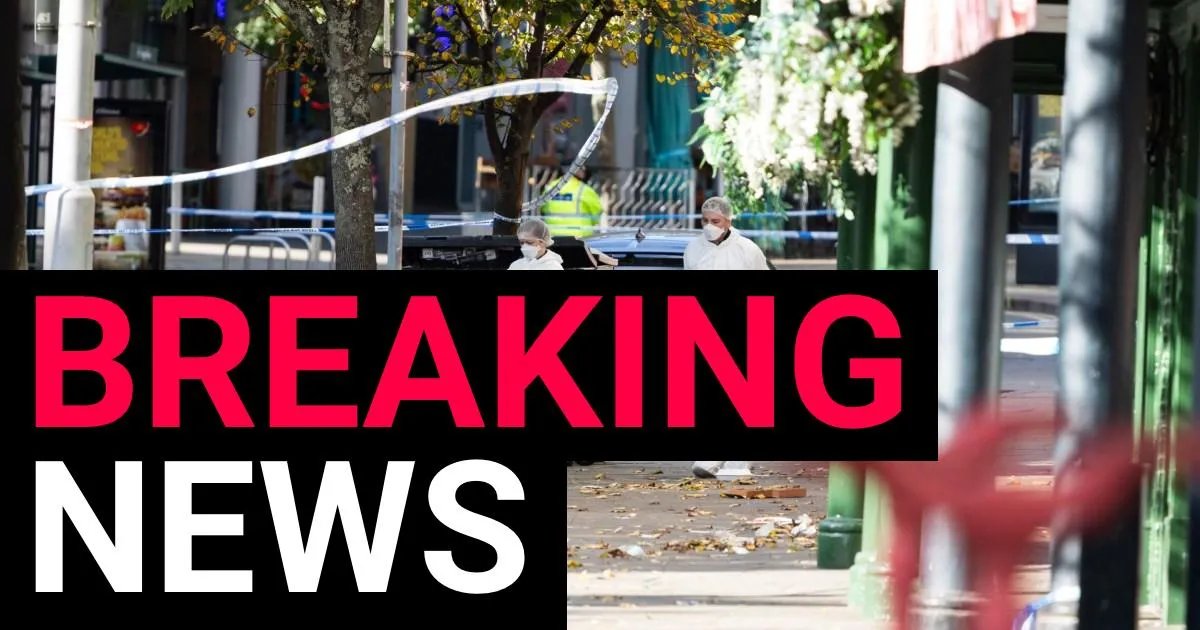
Angel Row is not unfamiliar territory for police. It sits in the heart of Nottingham, close to the bustling Old Market Square, lined with cafes, restaurants, and stops for trams and buses. On a typical Sunday, it would have been filling with people on their way to brunch or church. But at 4.50am, it was the tail end of the night, a time when the last of the club-goers are heading home and the city is catching its breath. The officer, whose name has not been released, spotted the two suspects waiting at an ordinary bus stop with a shelter and timetable. He made a decision that is part of an officer’s daily routine: approach and talk. There was no reason, perhaps, to believe this would end in violence. Yet within moments, a weapon was produced and fired. The bullet struck the officer in the foot, causing an injury that, while not life-threatening, was still traumatic and painful. The immediate aftermath was a flurry of activity. Fellow officers arrived almost instantly, their training taking over even as concern for their colleague surged. They applied first aid, secured the area, and tried to make sense of what had just happened. The video captured by witnesses shows the stark image of a uniformed officer on the ground, vulnerable in a way that the public rarely sees. The witness’s words were not dramatic for effect. They were the spontaneous expression of a person witnessing something they never imagined they would see. In the hours that followed, the police sealed off the area, forensic officers in white suits combed the pavement for evidence, and the Taco Bell branch became an unlikely landmark for a crime scene. The city’s usual Sunday rhythm was disrupted, replaced by a sense of unease that lingered long after the police tape was wrapped around the lampposts.
The police investigation moved with speed and precision. By Sunday evening, officers had stopped a car in the Radford area, a residential neighbourhood not far from the city centre. Inside were three people, and all three were arrested. A 27-year-old woman was held on suspicion of causing grievous bodily harm with intent and possession of a firearm with intent to endanger life. Those charges suggest that detectives believe she played a central role in the shooting, whether by pulling the trigger or by being directly involved in the use of the weapon. A 24-year-old man and a 25-year-old woman were arrested on suspicion of assisting an offender. Then, on Monday morning, a fourth person, a 30-year-old man, was arrested on the same suspicion. All four remain in police custody, and all four are being questioned by experienced detectives. The distinction between the charges matters. The charge of causing grievous bodily harm with intent is among the most serious offences in British law, carrying the possibility of life imprisonment. The firearm charge, which specifically references intent to endanger life, indicates that the weapon was not merely carried but used, or at least brandished, in a manner intended to cause fear or harm. The assisting offender charges, meanwhile, suggest that the other suspects may have helped the shooter avoid capture, disposed of evidence, or in some other way aided in the aftermath of the shooting. The arrests were a significant breakthrough, and Nottinghamshire Police were quick to highlight the hard work of their teams. But an arrest is not the same as a conviction. Over the coming days and weeks, the legal process will take its course, as bail decisions are made, charges are reviewed, and the evidence is tested. For the public, the news of the arrests brought a degree of reassurance, but it also raised questions: Who were these people? How did a gun end up on the streets? And what, if anything, could have been done to prevent the attack?
Assistant Chief Constable Claire Rukas, speaking on behalf of Nottinghamshire Police, delivered a statement that sought to balance firmness with compassion. “A team of experienced detectives continues to work tirelessly to establish exactly what happened before, during and after this appalling incident,” she said. “I am pleased that four arrests have now been made and hope this provides some reassurance to the public as those detained are questioned in connection with the discharge of the firearm.” Her words were carefully chosen, reflecting the gravity of the situation while also acknowledging the public’s need for order and meaning. She then turned her attention to the injured officer, offering a message that was strikingly personal. “The injured officer continues to recover in hospital and is receiving support from colleagues and loved ones. We ask that his privacy is respected at this time. Our thoughts remain with him, and with his family, friends and colleagues, who have all been affected by this deeply shocking incident.” The statement did more than provide an official update; it reminded everyone that the victim of this shooting is a person, not just a badge. Police officers are trained to deal with danger, but they are not immune to pain, fear, or trauma. A gunshot wound to the foot may not be as catastrophic as a wound to the chest, but it is still a devastating injury, requiring surgery, rehabilitation, and time away from work and family. The plea for privacy is also a plea for humanity. In an age when every detail of a tragedy is scrutinised, the officer deserves the space to heal without the pressure of public attention. The support of colleagues and loved ones, though invisible to the outside world, will be vital to his recovery. And the phrase “deeply shocking incident” captures not only the official view but the feelings of everyone who has followed the story.
This shooting has also reignited conversations about the dangers faced by police officers. The reality is that most police officers will go through their entire careers without ever firing their weapon, and incidents of firearms being used against them remain relatively rare. But when they do happen, they send a chill through the entire community. An officer was not shot during a dramatic siege or a high-speed chase; he was shot while approaching two suspects at a bus stop. The mundane setting makes it all the more disturbing. It suggests that violence can erupt anywhere, at any time, and that even a routine encounter can turn deadly in the blink of an eye. The footage of the officer on the ground, surrounded by colleagues, is a powerful reminder of the human cost of law enforcement. Police officers are often asked to bear the burden of society’s problems, to be the first line of defence against chaos, and to do so with professionalism and restraint. They are expected to be courageous, but they are still human. They have families who fear for them, friends who laugh with them, and lives beyond the uniform. In the wake of the shooting, messages of support have come from across Nottingham and beyond. The public, so often divided on issues of policing, has found common ground in concern for the officer and anger at those who would use a gun against someone trying to keep the peace. The investigation continues, with detectives piecing together the movements of the suspects, tracing the source of the weapon, and building a case that will stand up in court. Justice will not undo the damage, but it can provide a measure of closure and send a message that attacks on police officers will not be tolerated.
As the city moves into a new week, the immediate shock of the shooting is beginning to give way to a quieter sense of resolve. The four suspects remain in custody, and the detective work continues. Nottinghamshire Police have appealed for anyone with information, dashcam footage, or mobile phone recordings to come forward, knowing that even the smallest detail might prove crucial. The officer, meanwhile, remains in hospital, his condition stable but his recovery only beginning. He will need time to heal, both physically and emotionally. The witnesses who saw the shooting will also need time to process what they experienced. The woman who cried out in the video, the bystanders who filmed the scene, the colleagues who knelt beside their wounded friend, all of them have been touched by the violence that unfolded on Angel Row. For the city itself, the incident is a reminder that safety is not guaranteed, that the people who protect us are not invincible, and that the fight against gun crime is not over. It is also a reminder of the importance of community. In the face of horror, people came together, offering support, sharing information, and trusting the police to do their job. The arrests have provided a measure of reassurance, but the case is far from closed. The coming weeks will bring charges, court appearances, and ultimately a trial. The officer’s name may eventually be released, or it may not, but the public will remember the image of a wounded servant rendered suddenly human. In a world of constant news, this story might fade from the headlines, but for those who were there, and for the officer and his family, it will never fade. The hope is that he makes a full recovery, that justice is done, and that the sound of a gunshot on a quiet Sunday morning no longer echoes in Nottingham’s streets.