
Paragraph 1: A Storm That Turned a Family Walk Into Tragedy
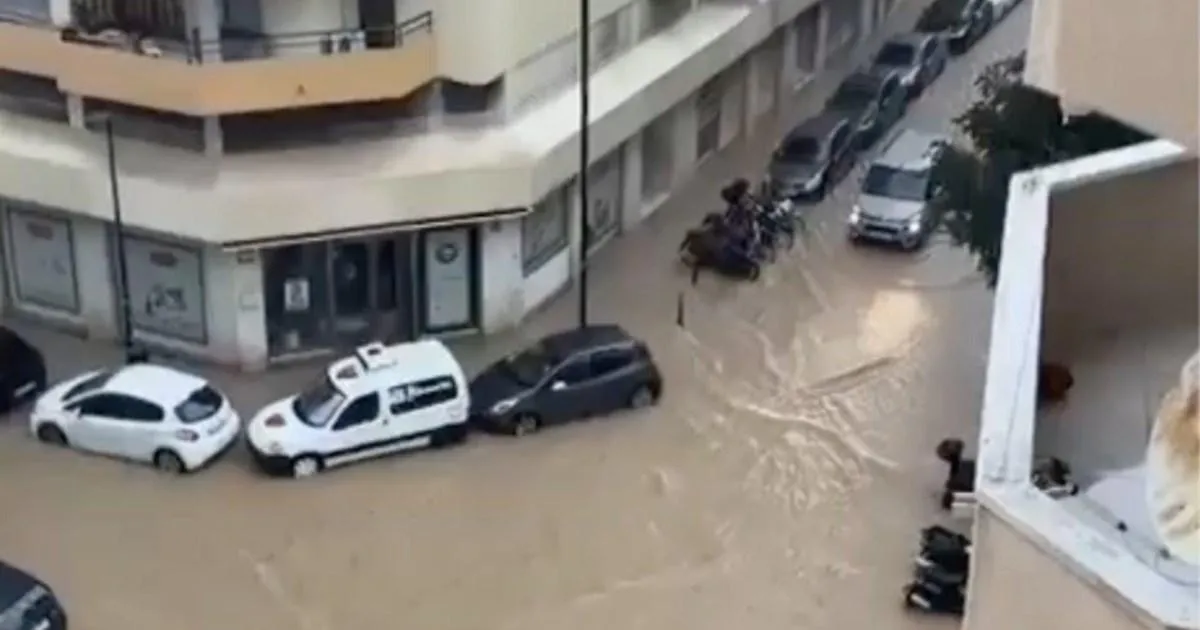
On a day when the sky turned against the land, a simple family walk along the Catalan coast became a scene of profound, heart-stopping loss. Spain and the Balearic Islands were being battered by a ferocious wave of storms, and in the small coastal town of Premià de Mar, north of Barcelona, a mother went out walking with her husband and two children near a canal. Authorities had warned everyone to stay indoors. The storm was not an ordinary rain shower; it was a violent, unforgiving assault of water, wind, and rising rivers. But perhaps the family believed they could make it back in time, or perhaps they underestimated how quickly a canal can turn from a placid trickle into a raging torrent. Within moments, the world around them changed. Water surged, streets became rivers, and the family was caught in the chaos. Emergency services were called, and then came the devastating discovery: the mother’s body was found floating in the water at the port in Premià de Mar. The image is almost too painful to process. A woman who had likely set out with her loved ones, perhaps to witness the dramatic weather, perhaps to check on something, never made it home. Her children will carry this day with them for the rest of their lives. What should have been a moment of shared adventure or a mundane errand became a lifelong scar. The sea, which had always been a source of beauty and livelihood for this Mediterranean community, suddenly became a place of mourning. The waves that had once carried boats and dreams now carried grief. There is no way to soften this tragedy. It is raw, sudden, and deeply unfair. And yet, in the midst of this sorrow, there is also a reminder of how fragile life is, how quickly weather can turn deadly, and how important it is to respect the warnings that authorities issue during extreme storms. The mother’s name has not been released, but her story has already become a symbol of the human cost of these relentless floods. In the days to come, the town will grieve, the family will try to piece itself back together, and the water will eventually recede, but the memory of that terrible day will remain forever.
Paragraph 2: The Impossible Force of Rain and the Growing Toll in Catalonia
The tragedy in Premià de Mar did not happen in isolation. It was part of a larger, terrifying pattern of extreme weather that has gripped the Iberian Peninsula for weeks. According to local authorities, a total of five people have now died in Catalonia as a result of these storms within just fifteen days. Each death represents a family shattered, a community left in disbelief, and a warning that nature is becoming more violent and less predictable. The mayor of nearby Cabrera de Mar, Oscar Fernandez, spoke about the moment when the storm reached its peak. He described how some people decided to cross the water just as sixty litres of rain fell within forty minutes. That number is almost impossible to grasp. Sixty litres per square metre in less than an hour is not rain; it is a waterfall from the sky. Streets that were dry at noon were under water by early afternoon. Cars were submerged, doors were blocked by mud, and people who thought they could outrun the weather found themselves trapped. The mayor’s words carry a tone of frustration and sorrow, because he knows that some of these deaths could have been avoided if people had listened to the warnings. But it is also hard to blame anyone entirely. We are not used to weather like this. We have been raised to believe that rain is something to complain about, not something to fear. We look at dark clouds and think, “I’ll be fine, it’s just water.” But this was not just water. This was a natural disaster moving at the speed of a freight train. In the aftermath, rescue workers searched through debris, families waited for news, and the region tried to understand what had hit them. The grief is not just for those who died, but for the way of life that is being shaken. People in Catalonia are used to storms, but not to this. The weather has become a threat, and every new warning from the meteorological agency now carries a weight of dread. As the rain continues to fall, the people of this region are learning a hard lesson: when the authorities say stay inside, they mean it. But even that knowledge does not make the losses any easier to bear.
Paragraph 3: Storm Adam Brings Chaos to Airports and Travelers Across Spain
While the streets of Catalonia were flooding, another kind of chaos was unfolding in the air. Storm Adam, as the system had been named, swept across the Balearic Islands and the southern mainland, bringing air travel to a near standstill. At Ibiza airport, operations were suspended completely. Water seeped into the terminal building, flooding waiting areas and check-in zones. Passengers who had arrived for their flights found themselves wading through water inside the airport, their holiday dreams replaced by a soggy, stressful scramble for information. The airport, which usually buzzes with the excited energy of tourists heading to the Mediterranean’s most famous party island, looked more like a disaster zone. Delays were also reported in Alicante and Málaga, as air traffic controllers struggled to keep planes safe in the stormy skies. In a statement posted on X, the air traffic controllers described the conditions as “very challenging” and warned that Sunday would be just as complicated. They explained that storm cores were forecast for the southern and eastern mainland areas and the Balearic Islands, and that safety regulations had been coordinated through Eurocontrol for the entire morning. What that meant in practice was simple: most routes passing through those sectors of airspace would face ground delays, and Eurocontrol’s algorithm would assign takeoff slots. For passengers, this translated into hours of waiting, missed connections, and the kind of frustration that makes travel feel like a battle. But behind the inconvenience was a real danger. Airplanes are not built to fly through severe thunderstorms. Lightning, hail, and violent winds can be deadly. The decision to ground flights was not about inconvenience; it was about protecting lives. The red weather alert issued by Spain’s meteorological agency Aemet for Ibiza was a clear signal that this was no ordinary storm. Yet, for many tourists, the disruption was the beginning of a nightmare. Families were separated, luggage was lost, and hotel rooms were booked and then cancelled. The Balearic Islands, which depend so heavily on tourism, were suddenly a place where visitors could not leave and could not enjoy themselves. The storm did not care about holiday schedules. It did not care about flight connections or the money spent on sun-drenched vacations. It simply arrived, and everything stopped.
Paragraph 4: Formentera’s Churches and Care Homes Under Water, and a Region on Its Knees
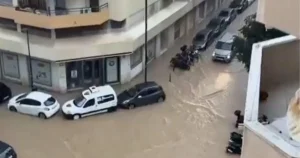
The storm’s reach extended far beyond the airports. On Formentera, the smallest of the Balearic Islands, the rainfall was staggering. A total of 183 millimetres of rain battered the area, and the island, usually known for its quiet beaches and crystal-clear waters, was overwhelmed. Footage from the island showed a church nave flooded, water rising around pews and altars, turning a place of worship into a shallow lake. In a care home, water inundated the floors, forcing staff to move elderly residents to higher ground. Imagine the fear in that building: elderly people, many with limited mobility, being rushed through hallways as water seeped under doors. The caregivers, already stretched thin, had to become heroes in a matter of minutes. There is something especially painful about seeing a church flooded. It is not just a building; it is a place where people have gathered to celebrate, mourn, and find hope. Watching water swallow it feels like losing a piece of the community’s soul. In Algeciras, in the southern region of Andalucía, pictures showed a person wading through a flooded street, their legs disappearing into murky brown water. The scene was repeated across the country: people standing on balconies watching their streets become rivers, shop owners trying to save their goods, and drivers abandoning their cars as water rose around them. The storm was not discriminating. It hit coastal towns, inland villages, islands, and mainland cities. It flooded homes, businesses, and infrastructure. It forced people to make impossible choices. And it reminded everyone that nature, when unleashed, does not care about human plans. For those living through it, the sound of rain no longer brought comfort. It brought anxiety. Every drop felt like a threat. The weather forecast became a source of dread, and the phrase “new storm” was enough to send shivers through communities already exhausted by weeks of turmoil. The clean-up will take months. The financial cost will be enormous. But the emotional cost, the fear, the sleepless nights, the memories of watching water rise, will linger much longer.
Paragraph 5: A Longer Season of Extreme Weather and the Weight of a Changing Climate
This latest wave of storms is not an isolated event. It is the continuation of a brutal season of extreme weather across the Iberian Peninsula. Over the past several weeks, Spain has experienced torrential rain, flooded buses, cars floating in waterlogged tunnels, and water pouring into metro stations. The images have been relentless: commuters standing on seats as water fills the cabin, firefighters pulling people from vehicles, families being evacuated from their homes with nothing but the clothes on their backs. Each storm seems to bring a new record, a new level of intensity, a new sense that the old rules no longer apply. Scientists have long warned that a warming atmosphere holds more moisture, which means storms become more intense and rainfall more extreme. The evidence is playing out in real time on the streets of Spain. For the people who have lived through these weeks, the experience is deeply unsettling. There is a feeling that the ground beneath their feet, quite literally, is no longer solid. The weather, once a topic of small talk, has become a matter of life and death. People are now checking radar apps before leaving the house. They are paying attention to warnings that they might once have ignored. But no amount of preparation can fully protect against the scale of what is happening. When sixty litres of rain fall in forty minutes, the infrastructure simply cannot cope. Drains overflow, rivers burst their banks, and the water finds its way into every low-lying space. The human toll is the hardest to accept. Every death is a story cut short, a family left in pieces. And the worry is that this is not the end. The season is not over. More storms are forecast. The people of Spain are bracing themselves for what comes next, even as they try to recover from what has already happened. There is a deep sense of exhaustion, both physical and emotional. The resilience of these communities is remarkable, but resilience has its limits. They need help, they need time, and they need the world to understand that this is not just a bad weather story. It is a glimpse into a future that is becoming more dangerous, more unpredictable, and more costly with every passing year.
Paragraph 6: Grief, Solidarity, and the Hard Lessons of Living with Water
In the end, this story is about a mother who went for a walk and never came back. It is about a husband who lost his partner, children who lost their mother, and a community that lost a neighbour. It is about a region that has been battered by rain, wind, and water, and a nation that is trying to find its footing in the midst of a climate crisis that is no longer a distant threat but a daily reality. The warnings were given. The red alerts were issued. And still, the water won. But in the aftermath of this tragedy, there is also a powerful reminder of human connection. Neighbours helped neighbours. Rescue workers risked their own lives to save strangers. Air traffic controllers worked around the clock to keep planes safe. Volunteers filled sandbags, opened their homes to the displaced, and comforted the grieving. In the flooded church in Formentera, people will eventually return to clean the mud and restore the pews. In the care home, the residents will be brought back, their routines re-established. In Premià de Mar, the port will reopen, boats will sail again, and the water will become a source of beauty once more. But the memory of the mother will remain. Her death is a warning and a tragedy. It is a reminder that nature is not something to be conquered or ignored. It is something to be respected, especially when it speaks with the voice of thunder and the force of flood. As Spain moves forward, the hope is that these storms will bring not just destruction, but also change. Change in how we prepare, how we build, how we warn, and how we listen. Change in the way we treat the planet that is growing warmer and more volatile. And change in the way we value every ordinary moment, every simple walk, every day that we are fortunate enough to be safe and dry and together. The mother who died in Premià de Mar cannot be brought back. But her story, carried in the hearts of those who loved her, can inspire a deeper respect for the power of water and a greater commitment to protecting the people we love. In the face of such loss, that may be the only thing we can do. But it is not nothing. It is everything.