

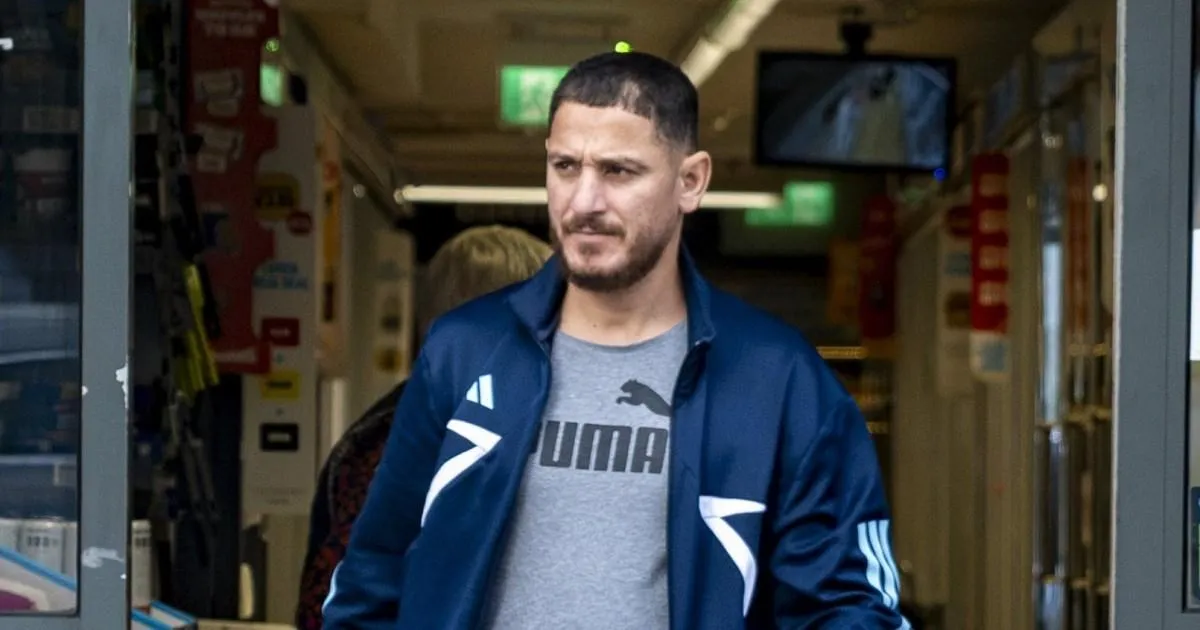
On the surface, it looked like an utterly unremarkable scene: a man slipping into a local Co-op, perhaps reaching for bread, milk, or a newspaper before carrying on with his day. But the shopper was not an ordinary resident, and the setting was not an ordinary town. The convenience store sits in the shadow of Windsor Castle, the royal residence where the King spends much of his time, and the man walking through the aisles was Mohammed Yaseen, a convicted terrorist with a long and brutal history inside Al-Qaeda and Islamic State. His presence in such a peaceful, tourist-filled corner of England, just days after being released from prison, has provoked shock, anger and deep unease. Yaseen is not a low-level sympathizer or a man caught up in the chaos of war; courts have described him as a committed and dangerous extremist. As a teenager he belonged to the Al-Qaeda franchise in Iraq, and he later joined an ISIS unit that carried out stonings, beheadings and mass executions. Yet despite all of this, he was allowed to remain in Britain because of a legal system that places human rights at the centre of deportation decisions. The image of Yaseen doing something as mundane as shopping at a Co-op near the royal palace jars painfully with the reality of what he has been part of. It raises uncomfortable questions about how a society balances compassion with protection, and what it truly means to keep people safe from those who once gloried in violence. For the families of victims like Ken Bigley, a 62-year-old Liverpool engineer beheaded in Iraq in 2004, the sight of this man browsing groceries so close to the monarchy’s most iconic residence must feel like a cruel insult. This is the strange, unsettling paradox at the heart of the case: a man who was part of groups responsible for murder, torture and terror is now walking free in one of Britain’s most beautiful towns, with taxpayers contributing to his upkeep. How this came to pass is a story of international terrorism, failed deportation, legal entanglement and a profound clash between security and human rights.
Yaseen’s background is deeply disturbing, and understanding it makes his presence in Windsor all the more alarming. He grew up in western Iraq, in the town of Al-Rutbah, and joined the Islamic State of Iraq, an Al-Qaeda franchise, at the age of just sixteen. That group was led by Abu Musab Al-Zarqawi, a notorious figure who personally oversaw the beheadings of Western hostages on video, including Ken Bigley, who was executed in front of cameras in 2004. Bigley was a civilian engineer, a family man who had gone to Iraq to work, and his brutal murder shocked the world. Yaseen was part of that world, and his involvement went far beyond mere membership. A German court later heard that, as a teenager, he planted at least thirteen bombs on roads around Al-Rutbah, weapons designed to kill and maim, including American troops operating in the region. Those bombs were not abstract symbols; they were real, deadly devices that killed US soldiers and shattered countless families. After the rise of the group that would become ISIS, Yaseen moved into a unit that performed some of the most horrific acts imaginable: stonings, beheadings and mass executions. He served as a security guard for ISIS, including during at least two mass executions in which the victims included children. The testimony and evidence presented in court painted a picture of a man deeply embedded in terrorist activity for years, not someone who merely drifted into extremism or expressed sympathy from afar. This was active, hands-on involvement in some of the worst crimes of the modern era. When UK prosecutors described Yaseen as having a deep and lengthy involvement in terrorism and Islamic extremist ideology, they were not exaggerating. His is not a case of mistaken identity or youthful indiscretion; it is a documented history of violence, cruelty and ideological commitment to terrorist organisations that have caused immense suffering across Iraq, Syria and beyond.
How did such a man end up standing in a Co-op in Windsor? The path that led him there is a complex and frustrating legal saga. Yaseen had served a lengthy prison sentence in Germany for his membership in ISIS, a term of nearly five years that ended last year. German authorities, understandably, tried to deport him back to Iraq after his sentence was complete. But a German judge ruled that there was a real risk he could be mistreated or even executed if returned to Iraq, because of his terrorist past. That decision, based on human rights protections, effectively blocked his removal. Then, in December of last year, Yaseen was intercepted by British Border Force after crossing the English Channel on a small boat, one of the thousands of migrants making the dangerous journey. At first, he gave a false name, but routine biometric checks revealed his true identity. He was charged with illegally entering the country, a relatively minor offence compared to the horrors in his past, and appeared at Winchester Crown Court. He was sentenced to two years in prison but, because of time served and early release rules, he served just six months before being freed. To make matters worse, the British courts have acknowledged that Yaseen poses a genuine threat, with one court hearing explicitly stating that he posed a danger to the whole of the UK. Yet he cannot be deported. The Foreign Office has raised concerns that he could face mistreatment if returned to Iraq, and those same human rights arguments that protected him in Germany now protect him in Britain. And so, instead of being removed from the country, he was placed in a bail hostel in Windsor, allowed to walk the streets of the royal town while wearing an ankle tag and observing a strict curfew. The legal logic may be defensible in the abstract, but to many people, it feels like madness. A man who once stood guard during mass executions is now living in a bail hostel near one of the most famous landmarks in the world, at taxpayer expense.
The practical details of his current existence make the situation even more difficult to swallow. Yaseen was cleared to walk around town between the hours of 6am and 6pm, as long as he obeyed his curfew and stayed within the bounds of his bail conditions. He was seen shopping at the Co-op, and he was also able to visit Windsor Great Park and the castle itself, according to reports. That means he was free to move through the same streets, parks and shops frequented by the King, by tourists, by local families and by schoolchildren. His accommodation and food allowance are being paid for by the Home Office, meaning the British taxpayer is effectively covering the costs of housing and feeding a man that the courts have described as a danger to the entire nation. Experts have estimated that Yaseen could cost the taxpayer as much as £85,000, a figure that understandably enrages many people. Chris Philp, the Shadow Home Secretary, did not mince words when he reacted to the news. He said: “We are paying through the nose to feed, clothe and house individuals who pose a clear threat. If Andy Burnham took this seriously, he would deport this man at once.” The political anger is not hard to understand. People look at the situation and wonder why the government cannot simply put a dangerous terrorist on a plane and send him back to his country of origin. They wonder why the rights of a man who has shown so little regard for the rights of others are being protected while the safety of the public is put at risk. The fact that Yaseen was able to wander so close to Windsor Castle, of all places, has made the issue even more symbolic. It feels like a failure of common sense, a moment where bureaucratic legalism has triumphed over plain human judgement.
The deeper issue, though, is that this is not a simple case of politicians refusing to act. It is a moral and legal dilemma that strikes at the very foundations of the concept of human rights. Yaseen has done terrible things, and there is no doubt that he is a dangerous man. But Britain, like Germany, is bound by laws that say no one should be deported to a country where they face a real risk of torture, inhumane treatment or execution. Those laws exist for good reason, often to protect innocent people fleeing persecution. They are not designed to protect terrorists, but they cannot easily be applied selectively. If the government sends Yaseen back to Iraq, it may be sending him to his death, and that would violate the very principles that Britain claims to stand for. At the same time, keeping him in the country means imposing enormous burdens on security services, paying for his accommodation, monitoring his movements and hoping that his ankle tag and curfew are enough to prevent him from causing harm. That is a heavy price to pay, and it creates a situation where the public feels unsafe while a hardened terrorist enjoys a level of comfort that many law-abiding citizens cannot afford. There are no easy answers. The law tries to balance the preservation of life against the protection of society, and in Yaseen’s case, the scales have tipped decisively toward preserving his life. That decision, however legal it may be, has profound consequences. It means that the victims of terrorism, and their families, have to watch as someone connected to such horrors walks free in a peaceful English town. It means that the memory of Ken Bigley, and countless others, is overshadowed by the sight of a terrorist shopping for groceries. And it means that the very concept of human rights becomes tainted in the public mind, seen as something that protects the guilty rather than the innocent.
In the end, Yaseen’s freedom was short-lived. The Mail on Sunday reported on his presence in Windsor, and hours after the Home Office was contacted by the newspaper about the case, he was recalled to prison. A source at the Ministry of Justice said that he had apparently breached the “good behaviour” requirement at his bail hostel, a vague but significant condition. “He is no longer in Windsor,” the source said, offering a small measure of relief to those who had been angered by his presence. But the underlying problem remains unresolved. Yaseen is still in Britain, still cannot be deported to Iraq, and will presumably be dealt with through the courts once again. His brief appearance in a local Co-op was a stark reminder of the difficult decisions that governments face when trying to deal with terrorists who have been convicted and served their sentences. It also served as a reminder that the victims of terrorism are not statistics; they are real people with families, names and stories. Ken Bigley was a beloved husband, father and brother, an engineer whose life was cut short in the most brutal way imaginable. His death, and the deaths of so many others, ought to matter. The sight of Yaseen wandering near the castle was, for many, a sign that the system has lost its way. But the solution is not to abandon human rights or to rush into dangerous deportations. Instead, it is to figure out how to defend civilized values against those who despise them, without becoming like them. Yaseen may be back behind bars for now, but the question of what to do with him, and others like him, will not disappear. It will continue to haunt the political system, the legal system and the public conscience until a better answer is found. Until then, the image of a terrorist in a Windsor Co-op will linger as a troubling symbol of a world where justice and mercy are never easy to reconcile.