

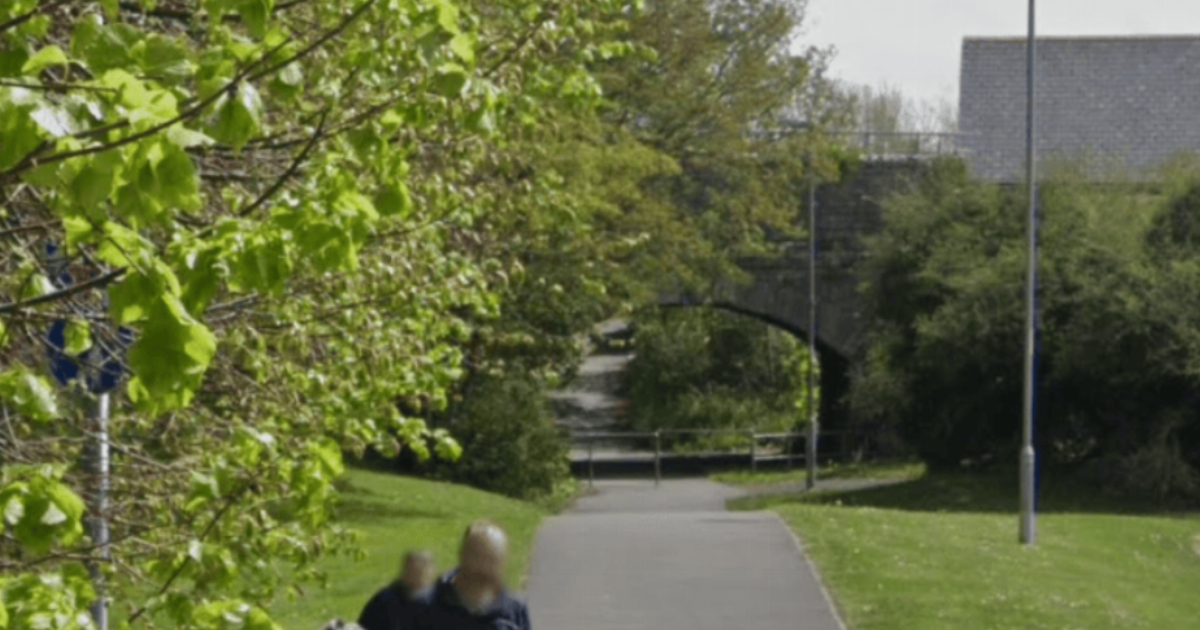
The morning of Thursday 29 October 2026 began like many others in Dorchester. The streets were waking slowly, the cricket green was quiet under a pale autumn sky, and the alleyway running between Sawmills Lane and Herringston Road was, for most people, just another unremarkable shortcut tucked beneath a railway bridge. Then, at around 10am, that ordinary routine was shattered. Emergency services were called to the alley after a woman was found seriously injured beneath the bridge. She was in her sixties, badly hurt, and she was wearing a white bucket hat, a dark-coloured coat, dark-coloured trousers and white shoes. The description was precise, but it only deepened the sense of tragedy. These were the clothes of someone who had been going about an everyday life, someone who had no reason to expect that a single morning would change everything. She was rushed to hospital, where her injuries were described as potentially life-changing. Police arrived soon after and began piecing together what had happened, and what had once been a hidden, forgotten corner of the town became the centre of a serious and sensitive investigation. The alley was cordoned off, officers stood in quiet conversation, and the ordinary rhythm of the area was replaced by something heavier. For the people who live and work nearby, the news was a shock, the kind that makes a community pause and look at familiar places with new eyes. A place they had walked past a hundred times, without thinking, had suddenly become the backdrop for a human tragedy. The exact sequence of events that led the woman to that bridge remains unknown, but the impact of her discovery is already being felt far beyond the police tape.
The alleyway itself is the kind of place that many people would struggle to name, even if they had used it dozens of times. It runs under a railway line, close to sports pitches and a YMCA hostel, a landscape of brick, grass and iron that sits somewhere between the residential streets and the open green spaces of Dorchester. The cricket green nearby speaks of summer afternoons, of community matches and children running across the outfield, while the railway bridge speaks of everyday movement, of people passing through on their way to somewhere else. In daylight, it is not the kind of place that would normally make anyone feel uneasy. But on Thursday morning, that changed. The presence of police officers, the fluttering of incident tape, the quiet, serious faces of investigators all transformed the scene into something else entirely. For those who use the alley regularly—dog walkers, commuters, residents cutting through to reach Sawmills Lane or Herringston Road—the discovery was deeply unsettling. It was a reminder that nowhere is completely immune to sudden misfortune, and that the places we take for granted can, in an instant, become the setting for something terrible. The proximity of the YMCA hostel adds another layer of concern, because it means the area is home to a diverse group of people, including some who may be vulnerable or living with complex circumstances. Whatever the truth of what happened, the community around Sawmills Lane and Herringston Road is now a community on edge, waiting for answers and struggling to make sense of how a woman in her sixties could be found so badly injured in such a public, yet hidden, spot. There is something particularly unsettling about a bridge in an alleyway: it is a place of passage, not of pause, a place where people pass through quickly and rarely stop to look around. That a woman’s life could be so profoundly altered in such a transient space is a thought that lingers long after the initial shock wears off.
At this stage, the woman’s identity has not been released, and the full nature of her injuries has not been made public. What police have confirmed is that they are potentially life-changing. That phrase is heavy with meaning. It suggests not just pain and recovery, but a life that may never be the same. It suggests hospital rooms, operations, rehabilitation, and a future filled with uncertainty. It suggests that even if she survives, even if she stabilises, the woman who emerged from this incident may not be the same woman who walked through Dorchester that morning. The clothing she was wearing—a white bucket hat, dark coat, dark trousers and white shoes—has been described in detail, and those details matter. They are the kind of details that might help someone recognise her, or help a witness remember seeing her earlier that morning. But they are also heartbreaking in their ordinariness. A white bucket hat is not the kind of thing you wear to attract attention. It is the kind of thing you wear to keep the sun off your face or the rain out of your eyes. It is the kind of thing that suggests a person with routines, with places to go, with a life that existed long before this moment. She is someone’s mother, someone’s sister, someone’s friend. She may have left home that morning with a list of small tasks in her head—a few groceries, a walk, a chat with a neighbour. Instead, she is lying in a hospital bed, her life interrupted, her family and friends waiting for news. The police have not said whether they believe anyone else was involved, and the investigation is ongoing. But for now, the focus is on her, on her recovery, and on the small pieces of information that might explain how she ended up beneath that bridge. The coming days will be difficult for everyone connected to her, and the uncertainty is perhaps the hardest part of all.
PC Jacob Chutter, of Dorset County CID, is leading the appeal for information. In a statement, he said: “We are carrying out enquiries into the circumstances of how this woman came to sustain her injuries and these remain ongoing. I would urge any witnesses or anyone with information that might assist our enquiries to please make contact with us. I would also urge anyone with home CCTV or doorbell cameras in the area of Sawmills Lane and Herringston Road to please review any footage from the morning of Thursday 29 October 2026 to see if they have captured anything of relevance. I would also make the same request of any motorists with dashcam who were driving in the vicinity, including in the Manor Road area.” His words are careful, measured, and deliberately broad. They reflect the reality of such investigations: the truth is often hidden in fragments, in a glimpse through a window, in a few seconds of dashcam footage, in a neighbour’s half-remembered sighting. The appeal is not just to those who think they saw something dramatic. It is to everyone who was in the area that morning, no matter how insignificant their own experience may have seemed. A car parked in an unusual place, a person walking quickly, a voice raised in a quiet street—any of these could be the detail that changes everything. Dorset Police have asked anyone with information to contact them online or by calling 101. They have also made it clear that the investigation is at a stage where every piece of evidence is valuable, and that no call should be considered too small or too trivial. In cases like this, the public can become the eyes and ears of the investigation, and the smallest memory can become the key to unlocking the truth. The police are not simply going through the motions; they are actively seeking out the people who might hold the answers, and they are relying on the community to help them.
News of the discovery spread quickly through Dorchester, as news like this always does. In a town with a strong sense of community, the idea of a woman in her sixties being found seriously injured under a bridge is the kind of thing that people talk about in hushed tones, in shops and at school gates and in workplaces. There is shock, but there is also a deep sense of concern. People are asking each other: do you know who she is? Were you near the cricket green yesterday? Did you see anything? The YMCA hostel, the sports pitches, the residential streets around Sawmills Lane and Herringston Road—all of these are places that are usually associated with normal life, not with tragedy. The police presence has been visible, and that too sends a message. It tells residents that this is being taken seriously, that the authorities are doing everything they can. But it also reminds them that the safety they usually feel is not something to be taken for granted. For the woman herself, and for those who love her, the coming days and weeks will be difficult. The uncertainty is perhaps the hardest part. Not knowing exactly what happened, not knowing whether she will recover, not knowing whether someone is responsible—all of this hangs in the air like a question that no one yet knows how to answer. The community can offer little more than hope and vigilance, but that is not nothing. People are looking out for one another, checking their own CCTV footage, thinking back over their own movements that morning. Some are walking their usual routes with a new sense of awareness, noticing the shadows and the blind spots they had never thought about before. It is a small, human response to a situation that feels overwhelming, but it is also a way of taking back a sense of control in the face of something frightening and unexplained.
Ultimately, this is a story about a human being, not just a police case. It is about a woman whose day took a turn no one could have predicted, and whose life may have been changed forever in a narrow alleyway beneath a railway bridge. The image of her white bucket hat and white shoes stays with you, because it is so specific, so personal. It is a reminder that behind every report of an incident there is a real person, with a real history, with people who care about her. And it is a reminder that the world is full of unseen vulnerabilities, of moments when ordinary people find themselves in extraordinary and terrifying situations. The investigation will continue, and the police will piece together the evidence. But they cannot do it alone. Someone in Dorchester knows something. Someone saw something. Someone’s doorbell camera or car dashboard recorded a fragment of that morning that could make all the difference. The appeal is simple: if you were in the area of Sawmills Lane, Herringston Road, or Manor Road on the morning of Thursday 29 October 2026, think back. Check your footage. Ask yourself if you noticed anything unusual. It may feel small, but it could be significant. The woman in the white bucket hat deserves answers. Her family deserves answers. And the community, shaken and unsettled, deserves the chance to heal. That healing can only begin when the truth is known. Dorset Police can be contacted online or by calling 101, and every piece of information will be treated with care. In the meantime, all anyone can do is hope—hope that the woman recovers, hope that the circumstances are understood, and hope that out of this dark and troubling event, some measure of justice and peace can be found. Dorchester is a town that looks after its own, and now is the time for that quiet, steady care to make itself known.