

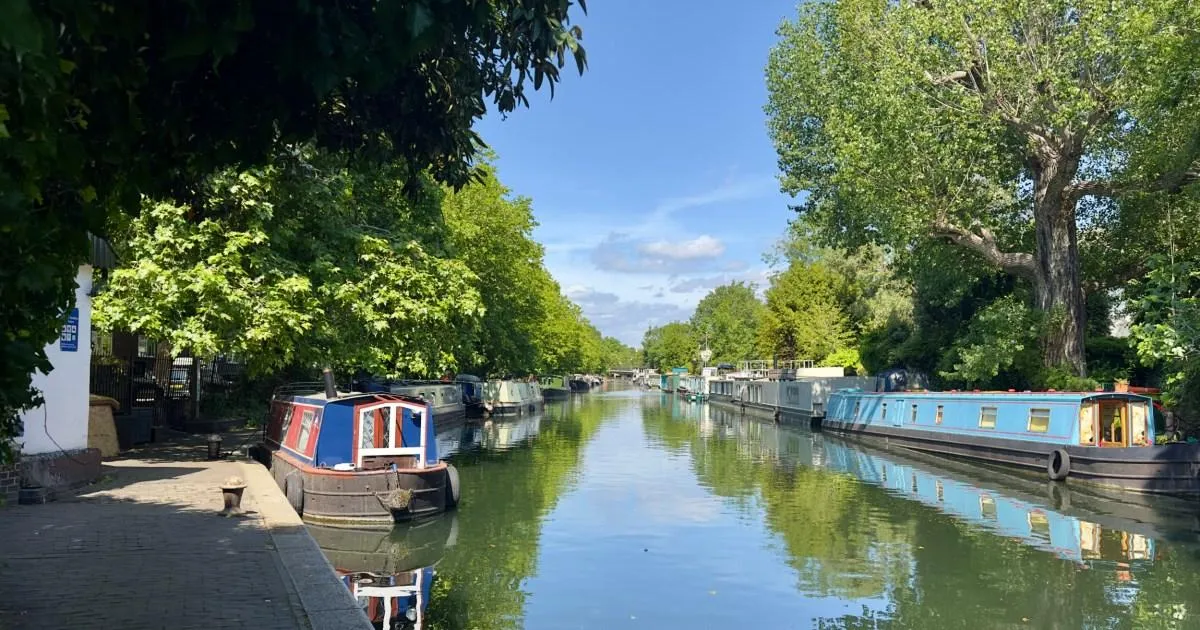
On the night of August 4th, a quiet stretch of the Grand Union Canal in Brentford, west London, became the setting for a scene of harrowing violence. Around 10:20 p.m., the tranquil waters near Clitheroe’s Lock—a spot typically associated with evening strolls and the gentle hum of canal life—were shattered by a brutal assault. Local residents reported hearing sudden, chilling sounds of screaming and shouting echoing through the dark, signaling that something went terribly wrong near Lock 99, situated between Transport Avenue and Boston Manor Park.
When emergency services arrived at Transport Avenue, they were met with a grim sight: a man in his 40s suffering from severe wounds inflicted by an axe. Paramedics worked urgently to stabilize the victim at the scene before rushing him to the hospital, where he remains under medical care. Authorities have since confirmed that his injuries are life-changing, though the full extent of his trauma and the long-term road to recovery he faces remain uncertain. The sheer brutality of the weapon used has sent a shockwave through the local community, turning a familiar neighborhood path into a restricted crime scene.
In the aftermath of the attack, the Metropolitan Police officially launched an attempted murder investigation, treating the incident with the gravity it demands. The canal and the surrounding towpath, usually open to boaters and pedestrians, have been cordoned off as forensics teams meticulously comb the area for evidence. For now, the rhythmic passage of canal boats has been halted, and the usual peace of the waterfront is replaced by the presence of investigators searching for clues that might reveal who committed such a senseless act of violence.
Despite the intensity of the police presence and the clear evidence of a struggle, the investigation remains in its early stages. As of now, no arrests have been made, leaving the perpetrator of this horrific assault still at large. This reality has left the Brentford community feeling vulnerable and uneasy, as the mystery behind the motive and the identity of the attacker continues to loom over the neighborhood. The local authorities are now working to piece together the events of that night, acknowledging that the speed of their progress depends heavily on the cooperation of those who might have seen or heard something that evening.
The Metropolitan Police are now making an urgent appeal to the public, asking anyone who was in the vicinity of the Grand Union Canal or the towpath on the night of August 4th to come forward. Even the smallest detail—a fleeting glance, a strange noise, or a suspicious figure—could be the missing piece of the puzzle that leads investigators to the truth. For those who may have information, the police have established a clear path for communication: callers can reach out at 101, referencing 8737/04AUG, or they can choose to remain completely anonymous by contacting Crimestoppers at 0800 555 111.
Crimes of this nature serve as a jarring reminder of how quickly the fabric of daily life can be torn by unpredictable violence. As the victim fights for his future and the community waits for answers, the priority remains justice and public safety. This investigation is more than just a procedural task for the authorities; it is a desperate attempt to ensure that someone who could inflict such harm on another is held accountable. As the forensics team continues its work along the canal banks, the hope remains that the testimony of a witness or a surge in community vigilance will soon bring a conclusion to this dark chapter for west London.