



There is something almost unbearably painful about the conclusion reached by Lady Justice Thirlwall in her long-awaited inquiry into the crimes of Lucy Letby: some of the babies who were murdered might have survived if the adults responsible for their safety had acted sooner. The neonatal unit at the Countess of Chester Hospital was supposed to be a place of hope, a place where the most fragile lives were cradled and protected. Instead, between 2015 and 2016, it became a place of inexplicable death and harm. Seven babies were murdered by a nurse entrusted with their care, and seven more were subjected to violent attacks. For years, the hospital’s own consultants raised alarms. They noticed patterns no one wanted to acknowledge. They begged for intervention. But senior management, according to the inquiry, failed to respond with the urgency that the situation demanded. There was, in the judge’s words, a “complete failure to protect babies” on the unit. That failure was not merely bureaucratic or administrative. It was a failure of human responsibility, of moral courage, of basic safeguarding, and it allowed a killer to remain in a position of trust long after warning signs had become impossible to ignore.
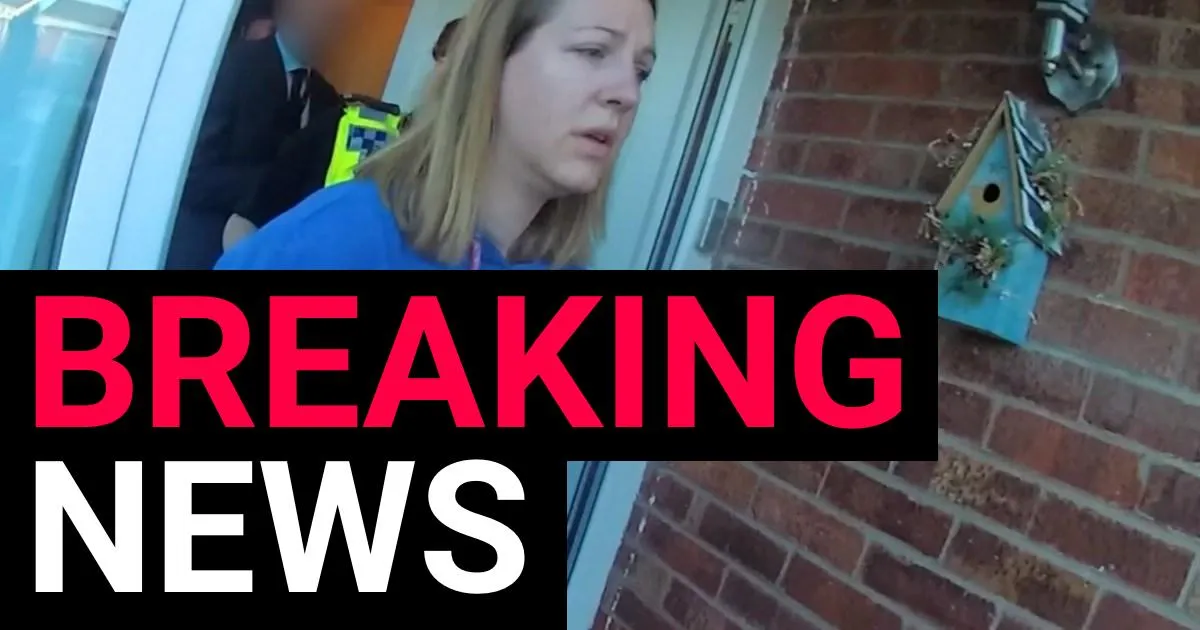
The timeline of what happened is now painfully clear, and it paints a damning picture of institutional paralysis. Lucy Letby began working as a nurse on the neonatal unit in 2012. She was young, apparently dedicated, and trusted by many of her colleagues. But by 2015, doctors on the unit began to notice an alarming rise in the number of babies collapsing and dying under mysterious circumstances. These were not babies expected to die. Their conditions were not consistent with natural causes. Consultants grew increasingly anxious, and in 2016 they took their concerns directly to the hospital’s executive team. They believed, with growing certainty, that something was very wrong. Letby was eventually moved to administrative duties in July of that year, but she was not removed from the hospital, and the police were not called. Instead, hospital leaders commissioned a series of internal and external reviews. Those reviews, as the inquiry found, never properly confronted the possibility that a member of staff was deliberately harming babies. Senior nurses dismissed the consultants’ concerns, refusing to accept that they were, or even might be, justified. There was a prolonged delay in involving law enforcement. Cheshire Constabulary was not contacted until May 2017, and even then Letby remained on site until her arrest in July 2018. For two full years after doctors first raised the alarm, she continued to walk the same corridors, surrounded by the same vulnerable infants. The inquiry concluded that those delays were not innocent mistakes but part of a pattern of defensiveness, denial, and misplaced institutional loyalty.
Perhaps the most heartbreaking dimension of the entire tragedy is what the families of the babies endured. While hospital leaders worried about reputations, while managers commissioned reports and shuffled paperwork, while senior nurses closed ranks, parents were kept in the dark. They were not told that concerns had been raised. They were not warned that their babies might be in danger. They were not informed that doctors on the unit were fighting for a response from management. Instead, they sat beside incubators, held tiny hands, and believed they were in a place of safety. They only learned the truth in July 2018, when Letby was arrested and police contacted them. Imagine the shock, the horror, the incomprehension. One mother, whose baby was among the victims, told the inquiry that the hospital was “concentrating on saving their own skins and jobs and reputations.” She said, with devastating simplicity, “Babies died because someone in an office being paid hundreds of thousands of pounds didn’t want the hospital to look bad if they shut.” Lady Justice Thirlwall responded directly to that testimony: “No one could disagree with any of these observations.” In her report, she described the lack of consideration shown to parents at the time as “reprehensible.” That word, chosen by one of the country’s most senior judges, carries enormous weight. It acknowledges that the harm done to these families did not end with the attacks themselves. It continued through years of silence, evasion, and institutional self-protection.
The inquiry’s findings go beyond the conduct of one individual and expose a deeply dysfunctional system. Lady Justice Thirlwall described a “dysfunctional management and governance” structure, a “gulf between hospital leadership and clinicians,” and a fundamental failure to understand the basics of safeguarding. What does that mean in human terms? It means that the people who should have been protecting children were instead protecting themselves. It means that when doctors raised concerns, they were met not with action but with resistance. It means that a culture of deference and denial prevented anyone in authority from asking the most obvious and urgent question: could one of our own be harming these babies? The judge explained that safeguarding action is required whenever a member of staff is suspected of causing deliberate harm, and that such action does not require colleagues to be sure of guilt. That principle is foundational to child protection. It exists because abusers and killers often operate in plain sight, shielded by trust and institutional reluctance to believe the worst. At the Countess of Chester, that reluctance proved catastrophic. The inquiry did not set out to examine Letby’s motives or to revisit her convictions; its purpose was to understand how she was able to carry out her crimes and why she was not stopped sooner. The answer, now laid out in meticulous detail, is that the system around her failed at almost every level.
There is a tendency in cases like this to focus on the monstrous individual, to treat the entire tragedy as the work of a single evil person. But the Thirlwall Inquiry forces a broader and more uncomfortable reckoning. Lucy Letby was responsible for the attacks themselves, but she was able to continue because the institutions around her failed to do their jobs. The consultants who raised concerns were not the problem; they were the exception, the people who tried to sound the alarm. The problem was the leadership that ignored them, the colleagues who dismissed them, and the culture that valued reputation over safety. The inquiry also raises painful questions about accountability. Who should have acted sooner? Who should have called the police? Who should have told the parents? Who should have shut down the unit or removed Letby from the premises entirely? These are not abstract questions. They are questions about individual decisions made by real people in positions of authority, people who were paid to protect vulnerable children and who failed to do so. The judge noted that we will never know for sure how many lives could have been saved if the hospital had acted differently. But she added, with stark clarity, that some babies would certainly have been saved and some attacks would have been prevented. That is a devastating conclusion. It means that the final death toll is not solely the responsibility of one killer. It is also the responsibility of those who had the power to intervene and chose not to.
As the report lands in the public consciousness, its purpose must be more than to document horror. It must be to ensure that no other hospital, no other neonatal unit, no other family ever has to endure this kind of tragedy. The lessons of the Thirlwall Inquiry are not complicated. They are about listening to clinicians when they raise concerns, no matter how difficult those concerns may be. They are about treating safeguarding as an absolute priority, not an inconvenience. They are about remembering that hospitals exist for patients and families, not for the comfort of executives or the protection of institutional reputations. The babies who died at the Countess of Chester Hospital were not statistics. They were sons and daughters, grandchildren, little lives filled with potential. Their families will carry this grief for the rest of their lives. The least that society can do is honor them by learning the truth, by acknowledging the failures, and by demanding change. Lady Justice Thirlwall’s words should echo through every hospital boardroom in the country: safeguarding action does not require certainty of guilt. It requires only the suspicion that a child might be in danger. If that principle had been followed in 2015 and 2016, some of those babies might still be alive today. That thought is almost too painful to bear. But it is exactly why this inquiry mattered, and why its findings must never be forgotten. The memory of those seven murdered babies and seven harmed babies demands nothing less than a system that protects the vulnerable, believes the concerned, and refuses to look away.