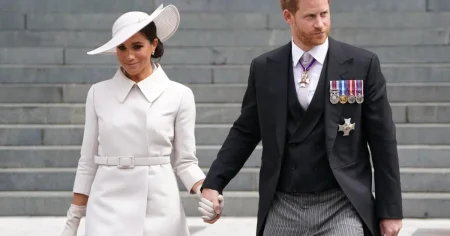



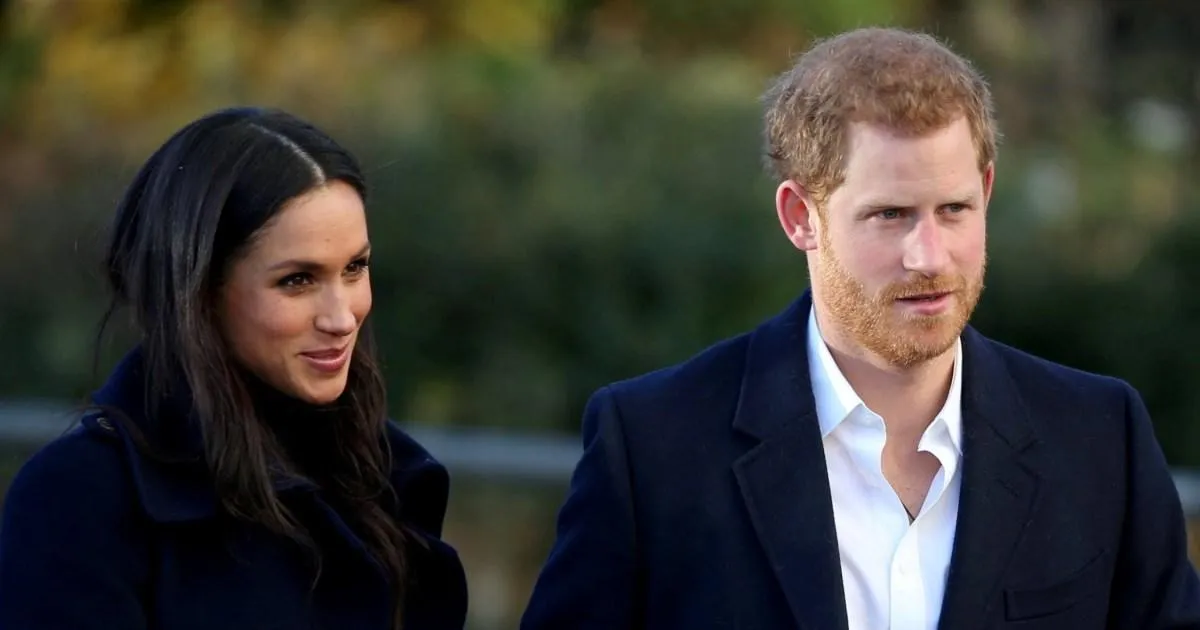
For Prince Harry and Meghan Markle, the dream of a gentle return to British life has hit an unexpected and deeply human obstacle. The couple, who moved back to the United Kingdom with their two young children at the end of the summer, have reportedly made the difficult decision to pull Archie, seven, and Lilibet, five, out of their new school barely a week into the term. It is a story that sounds more like the quiet dilemma of any worried parent than the dramatic royal headline it has become. Sources have described the first school as something close to perfect for the family—a place where the children were happy, where the parents felt welcomed, and where the rhythm of ordinary mornings seemed possible. “It’s a real shame, because they absolutely adored the school, the kids and their parents,” one insider told HELLO! Magazine. “It was perfect for them in every way and the children really enjoyed their time there.” The words carry a genuine weight of loss. This was not a decision born of dissatisfaction or a change of heart about education; it was a choice forced upon them by the unique and often cruel realities of their lives. Harry and Meghan had hoped to give Archie and Lilibet a taste of a childhood they could never fully have themselves—school runs, classroom doors, the chatter of other parents, the simple joy of belonging somewhere. Instead, they found themselves standing at the school gates, not as ordinary parents, but as figures whose every move is watched, weighed, and sometimes threatened. The heartbreak is not just about a school; it is about the constant collision between their desire for normalcy and the walls that their public status builds around them.
The practical reason for the sudden change is both mundane and revealing: the school run itself could not be made secure. For most families, driving children to school is a rushed, chaotic, often irritating part of the day. For Harry and Meghan, it became a security crisis. According to reports, their protection team had carefully assessed the school building during the summer months, when the streets were quiet and the traffic was light. What they had not fully accounted for was the reality of term time, when the roads around the school became congested with other parents, school buses, and local residents going about their day. The convoy that would have to accompany Archie and Lilibet—and the security detail required to keep them safe—simply could not navigate that environment reliably. The traffic made it difficult for the family to get to and from school in the tightly controlled, operational manner that modern royal security demands. Imagine the scene: a blacked-out vehicle trying to inch through a narrow street lined with parked cars, children crossing, parents chatting, and all the while security officers calculating every risk. It is an impossible tension. The very things that make a wonderful school—a close-knit community, a residential setting, a lively atmosphere—are the same things that make it vulnerable. The couple, according to sources, “really wanted to make it work,” but they had to accept that their team could not guarantee the children’s safety on that particular route. It was a heartbreaking collision between the life they long for and the life they have to live. The decision was not made lightly, and the disappointment in the source’s voice is unmistakable. This was a family willing to try, a family that wanted to trust the world around them, and a family ultimately reminded that trust is a luxury they cannot always afford.
In the wake of the reports, a spokesperson for the Duke and Duchess of Sussex issued a statement that sought to frame the decision with grace and gratitude. “The decision for the children to move school was taken following a discussion with the family’s security team about the practicalities of their current arrangements,” the statement read. “The parents remain extremely grateful to all the teachers and staff for the love, care and effort they have shown their family. This decision should in no way be interpreted as a reflection on the school or the exceptional care the children have received there.” Those are the polished words of a carefully managed public message, but beneath them lies a quieter and more vulnerable truth. Harry and Meghan are parents first. They are not trying to offend, critique, or make a statement. They are trying to keep their children safe while also allowing them to be children. There is a strange sadness in having to apologize for making a protective choice, but that is exactly what their lives demand. The couple’s thankfulness feels genuine, and one can almost imagine the conversations that took place behind closed doors: the phone calls to headteachers, the awkward explanations, the quiet tears of disappointment. The children, meanwhile, will now join another school in the area for their second week—another new face, another new classroom, another fresh start. It is a lot for a seven-year-old and a five-year-old to carry. And yet, children are often more adaptable than adults give them credit for. They may not fully understand the reasons for the move, but they will feel the emotional weight in the air. The hope, of course, is that the new school will be just as loving, and that the security detail can find a way to make the routine work. But the episode is a reminder that for this family, there is no such thing as an easy morning.
The decision to move schools is part of a much larger story—a story that began in earnest six years ago, when Harry and Meghan made the dramatic choice to step away from the working monarchy. They left behind royal duties, formal titles, and the rigid expectations of institutional life, hoping to build something different for themselves and their children. Since then, they have constructed a life centered on family, charitable work, and a series of commercial ventures, all while living primarily in the United States. But the pull of Britain has never fully left them. Their return to the UK at the end of this summer was described by those close to them as a genuine homecoming, a chance to reconnect with a place that still holds deep meaning, particularly for Harry, whose childhood memories are bound up in the landscapes of England. Meghan, too, seems to have embraced the idea of giving her children a connection to their father’s roots—a sense of heritage, of history, of the particular smell of an English autumn. The move was never going to be simple. The couple are not ordinary ex-pats returning to their homeland; they are walking contradictions, simultaneously famous and private, privileged and vulnerable. They have built a brand around authenticity and personal freedom, yet they remain subject to the very structures they tried to leave behind. Security, after all, does not care about personal reinvention. It does not recognize the desire to blend in. It only sees risk. And so, in this strange chapter of their lives, even the classroom door becomes a threshold between the ordinary world they crave and the fortified reality they cannot escape. Their return was never just a physical move; it was an emotional, symbolic gesture. And the school-run setback is a stark reminder that reinvention has limits.
There is something almost painfully relatable about this story, even as it unfolds in the rarefied world of royalty. Every parent knows the anxiety of sending a child to a new school, the hope that they will find friends, and the quiet fear that something will go wrong. But for Harry and Meghan, those universal feelings are magnified by forces few of us can truly comprehend. The recent public mocking of the couple on SNL’s UK edition is just one example of how relentlessly the public eye tracks them. Every choice they make—where they live, how they raise their children, why they switch schools—becomes a topic of debate, memes, and commentary. And beneath that scrutiny is a more serious undercurrent: the genuine security threat that follows them every day. It is easy to roll one’s eyes at a complaint about school-run traffic when so many parents manage the same trip on two wheels or on foot. But the traffic is not the problem; it is the exposure. A family that requires a convoy, security personnel, and a detailed threat assessment cannot simply join the queue of SUVs outside the gates. For them, every minute spent in slow-moving traffic is a minute of vulnerability. This is not about avoiding inconvenience; it is about protecting the lives of two small children. And yet, because Harry and Meghan are also public figures who have traded on their celebrity, they are often met with cynicism rather than sympathy. The couple cannot win. If they remain in the US, they are accused of abandoning their duties. If they return to the UK, they are criticized for disrupting their children. If they move their children over a security concern, they are seen as difficult. The human reality—a mother and father trying to make the safest choice for their kids—is buried beneath the tabloid noise.
Perhaps the most important thing to remember is that Archie and Lilibet are not just names in a headline; they are real children, still very young, still learning who they are. They have been moved from one country to another, from one school to another, from one set of routines to another. Through all of it, their parents are trying to give them something that may ultimately be impossible: a childhood that is both rich in opportunity and protected from harm. The decision to change schools will no doubt be followed by more adjustments, more security assessments, and more difficult conversations. But there is also hope in the story. The couple are not giving up on the UK; they are simply adapting, as parents everywhere do when reality does not match the dream. They are choosing a different school in the same area, determined to make this chapter work. The children, with the resilience that children so often possess, will get used to their new surroundings. They will make new friends, learn new names, and create new memories. And their parents, despite the frustration and sadness, will carry on, holding tightly to the belief that this sacrifice is worth it. In the end, this is not a story about royal entitlement or irrational demands. It is a story about a family discovering that even the most ordinary acts—taking your child to school—can become extraordinary when you live in the light of public life. Harry and Meghan may have expected a smooth return to Britain, but instead they have been met with another lesson in the complex arithmetic of love, safety, and belonging. Their greatest challenge remains the one they cannot outrun: how to be both remarkable and ordinary, how to protect while also letting go, how to raise children who are strong enough to face the world and safe enough to dream.