
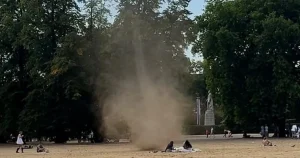

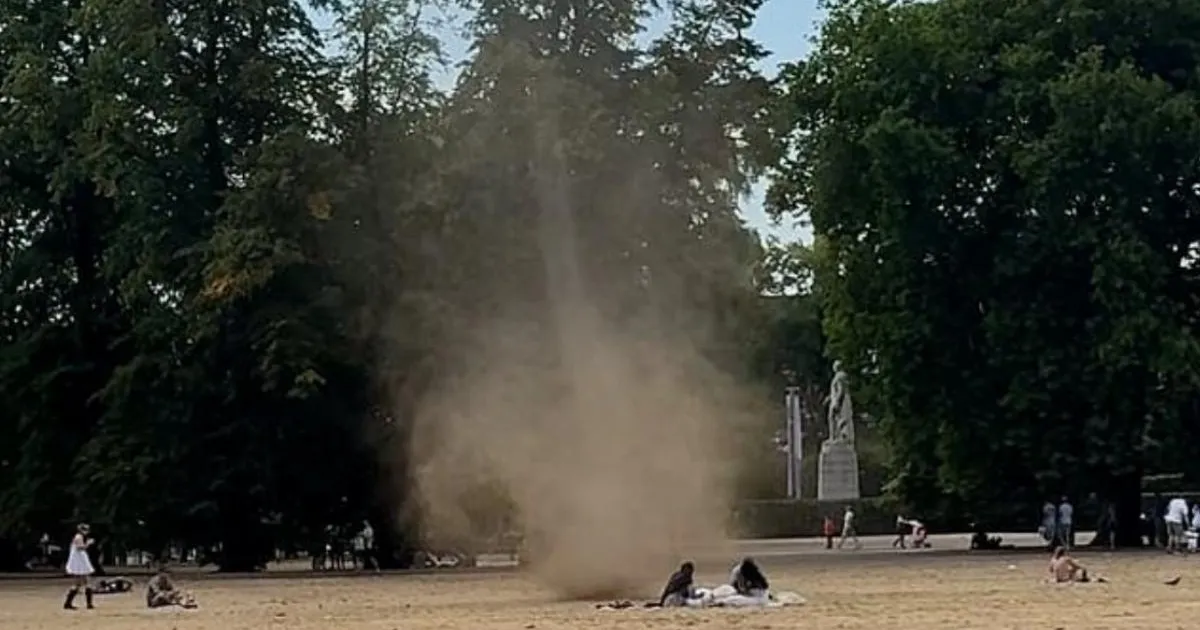
The sudden appearance of “dust devils” across London has brought a surreal, cinematic flair to an otherwise grueling heatwave. While these swirling vortexes of sand and debris are usually reserved for the high-noon drama of classic Western films—evoking dusty deserts and impending showdowns—they have recently become an unexpected feature of the English landscape. From the manicured lawns of Greenwich Park to the bone-dry fields near Leeds Castle in Kent, these miniature tornadoes have been catching sunbathers and passersby off guard, turning tranquil afternoons into moments of genuine, wide-eyed amazement as blankets are lofted into the air and leaves are swept into chaotic, spinning dances.
These occurrences are far from random; they are a direct, physical manifestation of the extreme environmental conditions the UK has been suffering through lately. According to the Met Office, these vortices require a very specific set of atmospheric ingredients: parched, moisture-deprived ground combined with intense surface heating. As the earth bakes under the unrelenting sun, it creates powerful, localized updrafts. Usually, these vertical columns of air remain invisible to the naked eye, but as they grow in intensity, they begin to act like vacuums, picking up dust, dried grass, and debris from the thirsty soil. It is only when they become “loaded” with this detritus that we can actually see the swirling, ghostly shapes that have been startling Londoners this past week.
The prevalence of these dust devils highlights just how severe the current drought has become. The Met Office recently confirmed that the previous month was provisionally the driest July for England and Wales since records began 190 years ago. In many areas of London, not a single drop of rain fell for the entire duration of the month, turning lush public parks into scorched, yellowed plains. Scenes of horses kicking up clouds of dust in Hyde Park have replaced the typical greenery, serving as a stark reminder of how rapidly the landscape has changed. When a place known for its temperate, rainy climate begins to produce desert-like phenomena, it forces us to confront the reality of a changing, more volatile weather pattern.
Despite the spectacle, there is an underlying tension beneath the wonder. For the locals caught in the path of these vortexes, it is a quirky, slightly alarming reminder of the intensity of the heat. One social media user captured the mood perfectly with a reference to The Wizard of Oz, jokingly noting, “Toto, we’re not in Greenwich anymore.” However, behind the humor lies the discomfort of a heatwave that shows little sign of relenting. With temperatures projected to climb toward 36°C in southern and central regions, the atmosphere is being pushed to its limits. The ground remains so dry that any brief reprieve from the sun is quickly swallowed up, leaving the ecosystem desperate for a sustained soaking that has yet to arrive.
Meteorologists suggest that we might eventually see a shift, noting that the high-pressure system dominating our skies is expected to show signs of weakening. The prospect of showers and potentially longer spells of rain in the coming week offers a glimmer of hope for the landscape and the people struggling to cope with the relentless, oppressive heat. Until that change arrives, however, the country remains in a state of high alert. The Met Office is already considering rare extreme heat warnings, underscoring the danger that this level of temperature poses to public health and infrastructure, far beyond the whimsical sight of a spinning dust cloud in a city park.
Ultimately, these dust devils serve as a potent symbol of our times—a blending of the strange and the concerning. While it is easy to be captivated by the sheer spectacle of a swirling column of dust on a Sunday afternoon, it is impossible to ignore the context of a record-breaking drought and an overheating planet. As Londoners navigate this period of “roasting weather,” these miniature weather events act as a daily reminder of the planet’s fragility. We are reminded that nature is not merely a backdrop for our weekends; it is a dynamic, reactive force. We wait for the rain, hoping for a return to the normalcy of a temperate summer, watching the skies and the scorched grass for the next unexpected twist in the weather.