

In today’s climate, the rising cost of living is not just a headline; it is a pervasive reality that dictates the rhythm of daily life for millions. From the eye-watering price of concert tickets to the modest tally at the local grocery till, financial strain is everywhere. For Jo McLoughlin, a London-based creative who turned her necessity into a mission, this pressure led to a clever, pragmatic solution. Living on a strict £40 weekly food budget, Jo discovered that the key to maintaining her health without breaking the bank was the supermarket’s “yellow sticker” section—the area where items nearing their end-of-life dates are drastically reduced. What began as a personal strategy to survive high city prices evolved into the moniker “Yellow Sticker Girl,” a testament to her commitment to resourceful, healthy eating in an increasingly expensive world.
Jo’s approach to shopping is methodical and disciplined. She treats her food budget as a guarded pot, keeping her personal finances separate and ensuring every penny is accounted for. Rather than sticking to a static list, she embraces the fluidity of the clearance section, allowing the day’s bargains to dictate her menu. If she finds high-quality protein like chicken on sale, she buys in bulk, portions it out, and clears freezer space accordingly. By rotating between daily shop-and-cook cycles and strategic bulk-buying, she ensures that she never misses out on fresh produce. Even items like soft berries, which are usually considered a luxury, become accessible through these late-day markdowns, proving that healthy eating doesn’t have to be a privilege reserved for the wealthy.
Beyond the brick-and-mortar aisles, Jo has expanded her savvy into the digital realm, utilizing food-rescue apps like Too Good to Go. In one instance, a delivery costing just £6.66 yielded groceries that would have cost nearly £30 at full price. This experience reinforced the double benefit of her lifestyle: she isn’t just saving money; she is actively preventing perfectly edible, nutritious food from ending up in a landfill. This sense of purpose is a cornerstone of her philosophy. By transforming what others might ignore into healthy juices or batch-cooked meals, Jo finds a sense of satisfaction that transcends simple budgeting. It is a way of reclaiming agency in a system that often makes healthy choices feel impossible for the average person.
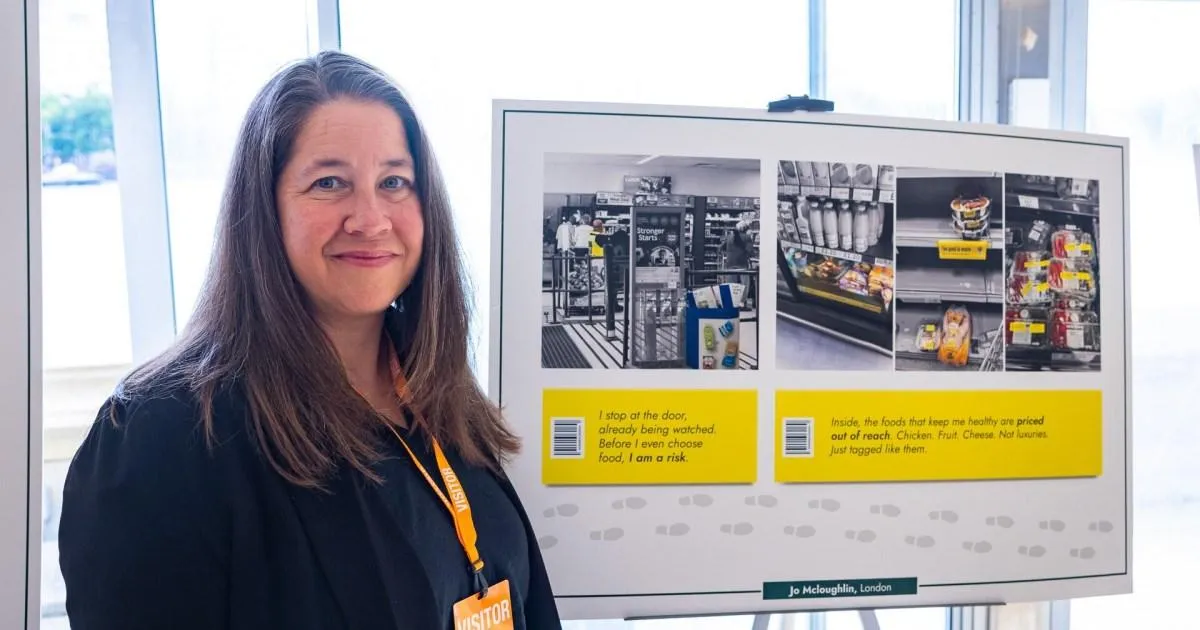
Her commitment to this cause led her to join The Food Foundation’s Ambassador Programme in early 2025, where she has been a vocal advocate for food equality. Jo’s advocacy reached the halls of Parliament recently, where she presented a unique “visual poem”—a project featuring photography that highlights the stark divide between empty, expensive aisles and the vibrant, hopeful clusters of yellow-stickered goods. For Jo, these stickers are not just discounts; they are a visual shorthand for a broken system. She uses her platform to challenge the narrative that people on low incomes are choosing poorly; instead, she points to the uncomfortable reality that nutritious food is rapidly becoming an unaffordable luxury.
The data supports Jo’s lived experience. According to the latest Broken Plate Report from The Food Foundation, the lowest-earning fifth of the population must now spend 85% of their disposable income just to afford a healthy diet, up significantly from 70% only a year prior. It is a damning statistic that highlights the disparity between the cost of junk food and fresh produce. Jo is quick to dismantle the stigma often attached to those on lower incomes, noting that because sugary, high-salt, and high-fat foods remain the only consistently cheap option, many families are left with no choice but to rely on them. To Jo, the fact that healthy produce must be marked down just to be bought is a systemic failure, not a victory or a personal failure of the consumer.
Ultimately, Jo hopes for a future where her “Yellow Sticker” expertise is no longer required—a world where the price of health is built into the system rather than scavenged for at closing time. Until that change occurs, she continues to encourage others to embrace the hunt. By planning ahead, keeping an eye on store-specific discount rotations, and utilizing the freezer as a tool for sustainability, she believes everyone can stretch their budget to accommodate better nutrition. Her journey is a reminder that while the cost of living can be crushing, there remains power in community awareness, waste reduction, and the refusal to let a tight budget dictate the quality of one’s health.