



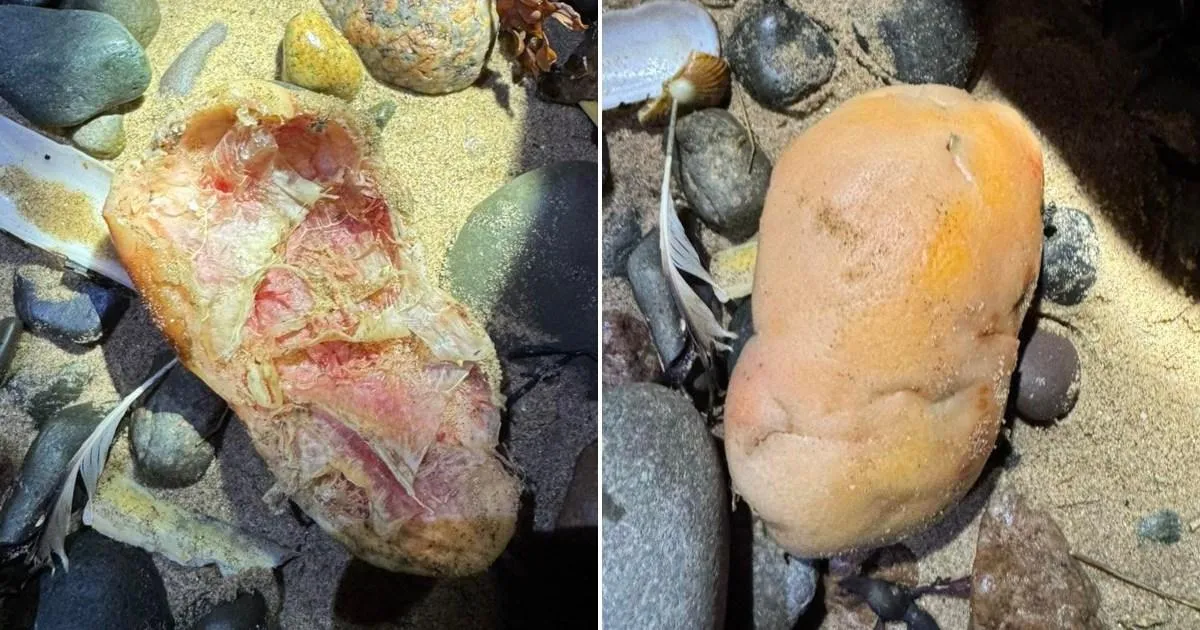
On a quiet Sunday evening, after the day-trippers had packed up their windbreaks and the last ice-cream van had rumbled off along the coast road, the tranquillity of Earnse Bay in Barrow-in-Furness was broken by a phone call that made everyone sit up a little straighter. Furness Coastguard received a report of a potential human body part washed up on the beach — specifically, what looked like a kneecap. It was the kind of call that never really gets routine, even for volunteers who have seen their fair share of strange and unsettling things along the shoreline. The caller, to their credit, had acted with admirable good sense. Rather than simply pointing vaguely towards the water, they had managed to find a washed-up traffic cone and placed it beside the mysterious object. This small, slightly bizarre act of practical thinking meant that when the coastguard team arrived, alongside Cumbria Police, they would not have to conduct a frantic, fingertip search in the fading light. Instead, they had a bright orange marker bobbing slightly in the shadows, a beacon leading them towards what everyone assumed would be the beginning of a grim and distressing discovery. As they made their way across the pebbles, with the evening turning from grey to deep blue, the volunteers probably braced themselves for something out of a crime drama. But the coastline, as it so often does, had other plans.
The object in question was sitting quietly in a pile of rocks, and from a distance it looked every bit as concerning as the initial report had suggested. It was a beige, rounded, unpleasantly organic-looking lump — too pale to be a stone, too smooth to be a piece of driftwood, and with a shape that seemed to echo something uncomfortably anatomical. When one of the coastguard volunteers carefully flipped it over, the sight that greeted them did not immediately put their minds at ease. The underside had a pinkish, flesh-like texture, the sort of colour and softness that could easily convince an anxious observer that they were staring at human tissue. It was a perfect storm of misleading appearances. Yet after a few moments of closer inspection, the collective tension began to dissolve. The team realised that the supposed kneecap was, in fact, a creature of the sea — a form of sea urchin known colloquially as a Sea Pork or a Sea Potato. To the untrained eye, the name sounds almost like a joke, but these strange marine animals are very real. They are soft, often odd-shaped, and when they wash up after being tumbled by the waves, they can look remarkably like something far more sinister. The pink lining that so closely resembled flesh is part of their internal structure, a detail that nature has arranged with an unfortunate sense of humour. Needless to say, the coastguard and police quickly agreed that no crime had been committed, no tragedy had unfolded, and no kneecap had mysteriously detached itself from its owner and travelled to Cumbria all alone.
The official response from Furness Coastguard was a masterclass in handling a false alarm with grace, humour, and a gentle nod to public vigilance. A spokesperson explained that the team had been called out to “an initial report of a potential body part washed up on the beach at Earnse Bay,” with Cumbria Police also in attendance. They described how the search was made far easier by the informant’s thoughtful decision to place a washed-up traffic cone next to the item. “We located the item, which appeared to be either Sea Pork or a Sea Potato. Both are a form of sea urchin,” the spokesperson said. “The team agreed that the item was not a knee cap as originally reported, and the Police agreed. We would like to thank the informant for raising their concerns and placing a marker next to the item.” It is worth pausing to appreciate what that message really means. A team of volunteer coastguard members had left their homes on a Sunday night, possibly interrupting dinner or time with their families, and driven to a beach on the strength of one anxious phone call. They could easily have been frustrated or dismissive. Instead, they took the report seriously, carried out the search, and then used the incident as an opportunity to thank the public for being cautious. In a world where people are often afraid to bother the authorities, this was a quiet reminder that better safe than sorry is not just a cliché. The coastguard would rather be called out to a hundred sea urchins than miss one real emergency, and their response to this peculiar mix-up reflected exactly that attitude.
As word spread, the strange tale of the Earnse Bay kneecap quickly made its way online, and the internet, predictably, had a field day. The photograph of the beige lump, nestled in its bed of rocks, sparked a cascade of increasingly creative and increasingly amused theories. One commenter thought it looked like a “bacon bap,” while another detected the visual signature of a “ham sandwich.” Someone else, staring at the image with genuine bewilderment, asked: “Can someone please explain what body part this looks like im so confused.” A third, clearly enjoying the absurdity of the whole situation, wrote: “Bloody hell, what had they been smoking?” It was one of those rare stories that unites people in harmless bewilderment, because almost everyone can relate to that moment of seeing something odd on a walk and feeling a flicker of uncertainty — is that a piece of rubbish, a lost shoe, or something far more sinister? The fact that the object turned out to be a sea creature made the story all the better. It was not a tragedy. It was not a hoax. It was simply a case of nature playing a practical joke on the human imagination. There was also something quietly endearing about the fact that, in the middle of an ordinarily busy news cycle, thousands of people had paused to debate the identity of a rubbery marine animal that looked vaguely like lunch. It was a gentle, silly, human moment in a world that can often feel overwhelming.
Beneath the humour, however, there were some genuinely useful lessons buried in the report from Furness Coastguard. The spokesperson took the opportunity to offer practical advice to anyone who might one day find themselves in a similar situation. “If a traffic cone is not available,” they said, “please download the What3Words app and this will give you a location accurate to a meter square. If in danger on the coast or one of the four navigable lakes, Windermere, Coniston, Ullswater or Derwent Water, then dial 999 and ask for the Coastguard.” This advice is more valuable than it might first appear. When someone spots something worrying on a beach, their first instinct is often to wave their arms and try to describe their location using landmarks, which can be surprisingly difficult in practice. A particular stretch of pebbles can look identical to another, and by the time emergency services arrive, the light may have changed, the tide may have come in, and the object in question may have disappeared. Marking the spot with a traffic cone — even a washed-up traffic cone — was a stroke of genius, because it transformed a vague description into a clearly identifiable target. The What3Words app offers an even more precise alternative, dividing the world into three-metre squares and giving each one a unique combination of three words. It is quick, free, and potentially life-saving, especially along a dramatic and changeable coastline. The coastguard’s willingness to share these practical tips during what could have been an embarrassing false alarm showed a real commitment to public education. They turned a moment of comedy into a teaching opportunity without ever losing their sense of warmth.
In the end, the story of the Earnse Bay kneecap is a lovely reminder that the natural world has a strange and wonderful talent for surprising us. Sea potatoes and sea pork, whatever the precise biology of the creature involved, belong to a category of beach finds that sit somewhere between fossil, driftwood, and science experiment. They are not dangerous. They are not mysterious in any foreboding sense. They are simply odd, and their oddness invites our imaginations to run wild. The same object that caused a moment of alarm on a Cumbrian beach might, on another day, have been dismissed with a shrug and a laugh. But on that particular Sunday night, under a darkening sky, with the tide muttering among the stones, it looked exactly like the kind of thing that belongs in the hands of a forensic investigator. It is easy to laugh at the person who saw a kneecap and thought of cones, but honestly, would any of us have done better? Most of us would have squinted at it, felt uneasy, and walked on, leaving the mystery unsolved and perhaps still wondering. The anonymous informant did the right thing, and the coastguard did the right thing, and the internet did what the internet always does — it found the humour, shared it, and moved on. So next time you are walking along a beach and spot a beige lump that looks a little too fleshy, do not panic. Take a moment. Maybe take a photo. Mark the spot if you can, call the relevant authorities if you feel it is necessary, and remember the wisdom of the Furness Coastguard. Sometimes the human remains are actually a sea potato. Sometimes the ham sandwich is just a ham sandwich. And sometimes, the most ordinary-looking thing in the world is simply a little gift from the ocean, designed to remind us that even when we think we have seen everything, there is always room for one more absurd, ridiculous, and strangely heartwarming surprise.