

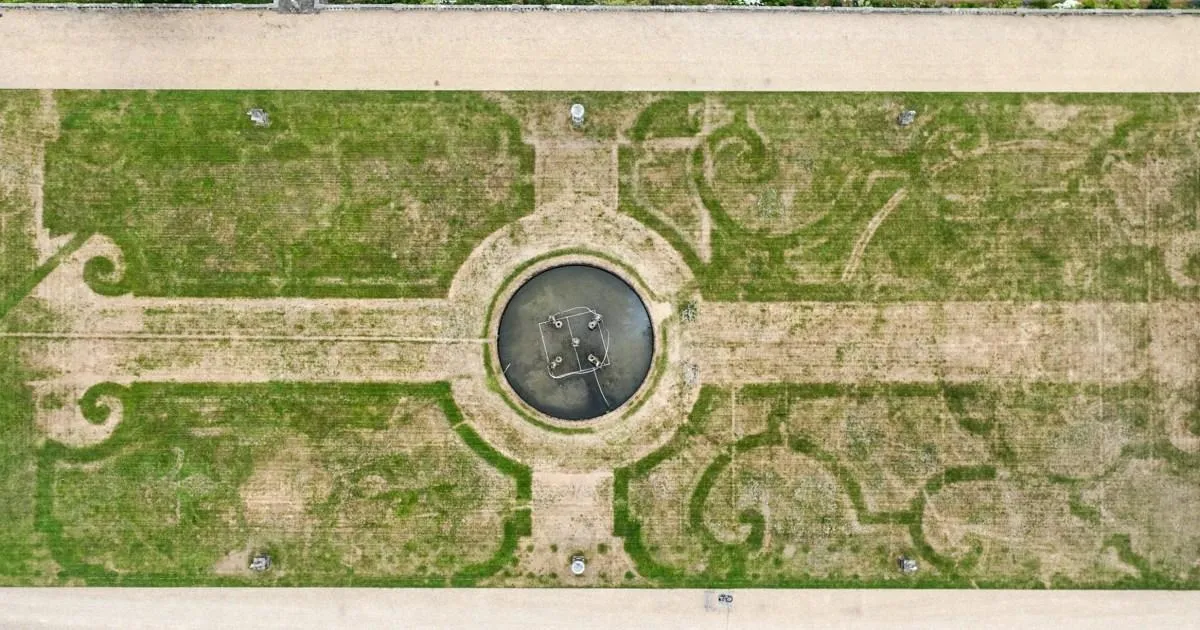
The story of Chatsworth House is one defined by the intersection of high-society history and the stark, unfolding reality of our changing climate. Nestled within the picturesque, rolling hills of the Derbyshire Dales, this stately home—a crown jewel of English heritage—has stood as a family residence since 1549. Yet, in recent years, the grounds of this historic estate have become a canvas for a phantom from the past. As extreme heatwaves have baked the United Kingdom, they have paradoxically acted as an archaeological lens, stripping away the manicured lawns of the modern era to reveal the ghost of a 17th-century masterpiece hiding just beneath the surface.
The “Great Parterre,” an intricate, swirling design of paths and flowerbeds, was originally commissioned by the first Duke of Devonshire around 1699. For decades, this ornamental garden was the pride of the estate, a testament to the landscape fashions of the time. However, history is rarely static; by 1730, the third Duke, William Cavendish, opted for a dramatic redesign, flattening the elaborate layout and covering it with a fresh lawn. For nearly three centuries, the original geometry rested in silence, preserved like a secret in the soil. It was only when the UK began experiencing unprecedented spikes in temperature—most notably in 2018 and again during the record-shattering heat of 2022—that the “ghost” garden began to reappear.
The reappearance happens because of the way grass roots interact with the layers of history beneath them. Because the grass covering the original parterre is planted over the old, compacted stone paths and formal arrangements, its root system is shallower than in the surrounding, deeper soil. When the sun bears down, the lawn above the old paths parches and browns much faster than the rest of the field, effectively tracing the “bones” of the 17th-century garden. It is a haunting, visible struggle between two dukes’ visions, playing out in real-time as the grass withers to reveal the long-forgotten work of a previous century.
This visual phenomenon is, however, a canary in the coal mine for the British climate. Chatsworth’s records show a clear shift toward a pattern of exceptionally sunny springs, prolonged droughts, and occasionally violent, heavy rainfall. The data from recent years paints a concerning picture: sunshine hours have surged well above average while rainfall has plummeted. In 2022, as the estate witnessed temperatures climbing to an historic 38.1°C, it became clear that the climate isn’t just shifting—it is stressing the very fabric of our landscape. What makes for a fascinating archaeological reveal is, in reality, a warning of a destabilized ecosystem.
The consequences of this “new normal” extend far beyond the beauty of a garden. As the UK faces water shortages, reservoir levels have dipped significantly, leading to widespread hosepipe bans across dozens of regions. From London to Norfolk, homeowners and estate managers alike are being forced to adapt. At Chatsworth, the gardening team is now tasked with increasing the organic matter in the soil to improve moisture retention, a desperate but necessary effort to keep the land hydrated. This struggle reflects a broader trend across England, where the luxury of a perpetually green lawn is colliding with the reality of an environment that can no longer sustain it.
Ultimately, the ghost of the Great Parterre serves as a poignant reminder that history is never truly finished; it is merely waiting for the right conditions to show itself. As we move further into an era of climatic volatility, we find ourselves as custodians of these historic spaces, tasked with protecting their legacy while grappling with a future that looks very different from the past. Whether it is through smarter water usage or an acceptance of the brown, dormant grasses of late summer, the lessons of Chatsworth suggest that we must learn to be better observers of the land, respecting both its ancient memories and its fragile, modern requirements.