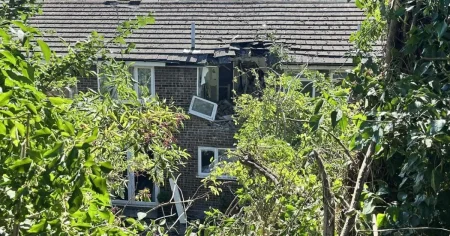


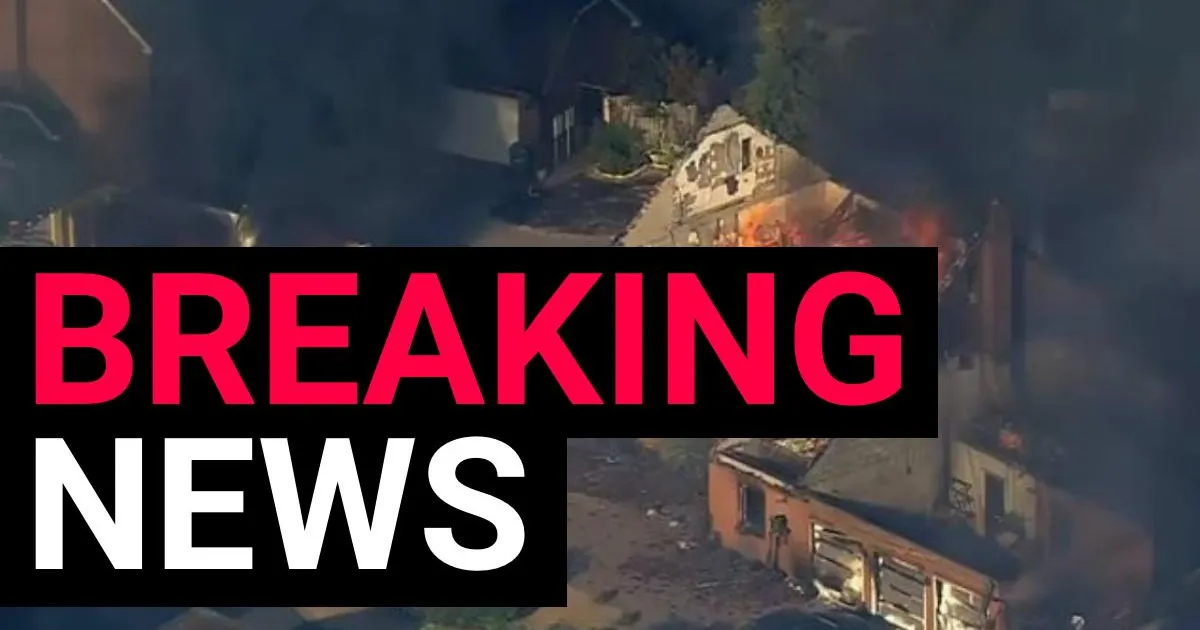
The tranquility of an ordinary day was violently shattered in the West Midlands when a fast-moving grass fire erupted, transforming a residential neighbourhood into a scene of chaos and terror. What began as a blaze in dry vegetation quickly escalated, leaping from the land to the very structures where families lived, forcing residents to flee their homes in a desperate bid for safety. The air, once filled with the mundane sounds of daily life, was replaced by the crackling of flames, the frantic wail of sirens, and the acrid smell of smoke. For those caught in the path of the fire, the primary instinct was pure survival, as they watched, helpless, from a distance while their properties, filled with memories and belongings, were consumed by the relentless inferno. The event serves as a stark and terrifying reminder of how swiftly nature’s fury can turn a familiar suburban landscape into a danger zone, leaving a trail of destruction and displacing countless individuals in a matter of moments.
As the scale of the emergency became horrifyingly clear, West Midlands Fire Service declared it was facing “extreme levels of demand,” with crews battling a large and complex fire in the Stourbridge area. The sheer magnitude of the incident stretched their resources to the breaking point, prompting them to release dramatic drone footage that showcased the sheer scale of the inferno, revealing two major fires raging simultaneously in the region. The footage painted a sobering picture of the immense challenge facing firefighters, who were scrambling tirelessly to contain the flames and prevent further devastation. With homes under direct threat, the immediate priority was the safety of the public. The community rallied in response, with Stourbridge Town Hall being hastily opened as an emergency rescue centre, providing shelter and refuge for those who had been forcibly evacuated from their homes, offering a small semblance of safety amidst the overwhelming chaos.
The urgency of the situation was underscored by an impassioned warning issued by West Midlands Fire Service on social media. With resources stretched to their absolute limit, they made a heartfelt plea to the public, urging people to take extra care and avoid any activities that could inadvertently start further fires. “We are currently facing extreme levels of demand as a service, and need your immediate help,” the message read, a statement that laid bare the immense pressure the emergency crews were under. The service issued clear and direct instructions to residents directly affected by the ongoing fire: they were told not to attempt to tackle the formidable flames themselves. The advice was simple and unequivocal: “Get to a safe place and call 999.” Furthermore, they appealed to the public’s common sense, urging people to avoid driving through areas shrouded in dense, potentially toxic smoke and to refrain from travelling to the fire scenes out of morbid curiosity, as such actions would only hamper the rescue and firefighting efforts.
The peril was not confined to a single location, as the crisis extended its grip across the region. In a parallel incident, Warwickshire Fire and Rescue Service was grappling with another ‘large fire’ in Salford Priors, near Stratford-upon-Avon. This second major blaze prompted a multi-agency response, with police, firefighters, and ambulance crews all converging on the scene, culminating in the declaration of a formal major incident. The fact that multiple regions were simultaneously battling large-scale fires, while dealing with an overwhelming number of calls, painted a worrying picture of a region besieged by fire-related emergencies. Residents in this area were told to take immediate protective action by closing all doors and windows as crews fought to bring the blaze under control, while authorities worked to assess the full extent of the damage and ensure the safety of everyone in the vicinity.
The twin emergencies unfolded against a backdrop of significant and sustained pressure on fire services across the entire region. The high demand was a clear indicator of dangerously dry and windy conditions, which served as a tinderbox for any stray spark or careless action. Each new blaze not only threatened homes and lives but also further strained the resources needed to fight them, creating a dangerous feedback loop. As firefighters continued to battle on multiple fronts, the message from authorities was consistent and desperate: residents had to take precautions. The plea was not just for the safety of individuals but for the collective wellbeing of the community, to avoid putting further, unnecessary pressure on emergency crews who were working relentlessly to protect everyone. The focus shifted to vigilance and proactive prevention, as the public was urged to be mindful of their actions and to report any signs of smoke or fire without delay.
In the immediate aftermath, the true emotional cost of the disaster began to surface. The residents of Stourbridge, forced to watch their cherished homes and possessions go up in flames, were left in a state of shock and despair, grappling with the devastating loss. The local town hall, a symbol of municipal life, became a haven for the displaced, a place of immediate comfort but also a stark reminder of the tragedy that had befallen them. With the cause of the fires still under investigation, the focus shifted from emergency response to recovery and resilience. The community, bound together by the shared trauma, began the long and arduous process of rebuilding their lives. The damage is severe, and the memories of that terrifying day will linger for years. However, the coordinated response from emergency services, the immediate opening of rescue centres, and the resilience of the community themselves offered a glimmer of hope. As the smoke cleared, the residents were left to sift through the ashes of their homes and begin the painful journey of putting their lives back together, a testament to the human spirit’s ability to endure even the most devastating of setbacks. For them, and for the entire region, the events of this day will forever be a stark reminder of the immense power of nature and the ever-present need for vigilance.