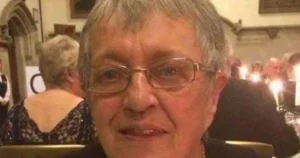


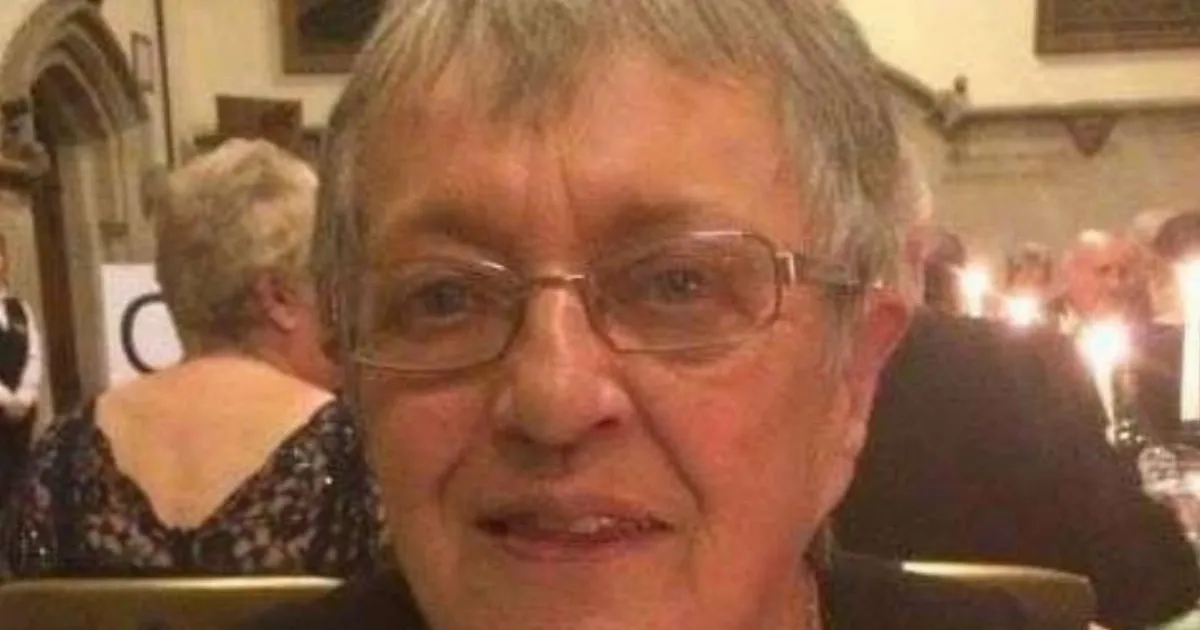
The passing of 75-year-old Christine Faunch has left a void that her family struggles to put into words. To those who knew her, Christine was more than just a grandmother; she was the vibrant, beating heart of her family. Despite navigating the complexities of aging and various medical conditions, she remained an independent and spirited woman, recently returning from a cruise and maintaining a life full of movement and joy. Her sudden decline in August 2025, which began as a simple stomach bug, transformed into a harrowing ordeal that would end in tragedy at the William Harvey Hospital in Ashford, forever altering the lives of those who loved her.
The events leading up to her death were marked by a frantic, high-pressure situation that culminated in a devastating accident. When Christine fell unconscious in her home, her daughter called for an ambulance, hoping for relief and stability. However, the scene turned chaotic when the responding paramedics from the South East Coast Ambulance Service (SECAmb) struggled to move her. In a rushed effort to transport her safely, the crew failed to fully secure her to the stretcher. As they maneuvered her outside, the equipment malfunctioned and the stretcher wheels locked, causing Christine to fall and strike her head against the concrete and the ambulance door. This fall, which left her with painful lacerations, became a point of deep trauma for her family, who witnessed the struggle firsthand.
The subsequent inquest at Oakwood House in Maidstone sought to disentangle the events of that day, specifically focusing on whether the fall was the primary cause of Christine’s death. Medical experts, including haematology consultant Dr. Allameddine Allameddine, provided a complex assessment. Because Christine was on blood-thinning medication and suffered from calcified arteries, she was exceptionally vulnerable. The autopsy revealed a ruptured spleen and massive internal bleeding. While the family questioned the narrative—noting that Christine had shown no signs of injury prior to the ambulance’s arrival—the experts concluded that the catastrophic haemorrhage had likely been a progressive event that may have been triggered by something as minor as a cough or a shift in position long before the stretcher accident occurred.
The Coroner ultimately recorded a verdict of accidental death, acknowledging that while the fall was undeniably distressing, it may not have been the sole catalyst for the rupture. For the family, the verdict offers a final, albeit heavy, chapter in a year of immeasurable grief. They have chosen to focus not on the clinical details of the tragedy, but on the legacy of the woman they lost. In a poignant statement, they honored Christine as a devoted, kind, and caring soul whose absence is felt every single day. They expressed deep gratitude to the friends, neighbors, and community members who stood by them during this agonizing period, offering a measure of comfort that helped them weather the storm.
In response to the incident, the ambulance service has been forced to confront uncomfortable realities regarding their protocols. During the inquest, SECAmb officials expressed profound regret, admitting that their patient transfer procedures were not followed correctly during the chaos of the emergency. Chief Nursing Officer Joanne Turner spoke candidly about the human element of the tragedy, stating that the system must be redesigned to account for the fact that people make mistakes under pressure. The trust has since implemented significant safety overhauls, including a new color-coded strap system and mandatory pre-clipping procedures for stretchers, designed to remove the margin for human error and ensure that no other family has to witness such a preventable lapse in safety.
As the legal proceedings conclude, the Faunch family is attempting to look toward the future, holding onto the memories of a life well-lived. They have found a way to bridge the gap between their pain and their need for closure, choosing to celebrate the kindness and compassion that Christine embodied throughout her seventy-five years. While the ambulance service’s apologies and policy changes represent a formal acknowledgement of the failure that occurred, they cannot replace the woman who held the family together. For Christine’s loved ones, the focus remains on keeping her memory alive, ensuring that she is remembered not for the way she died, but for the profound, lasting love she shared with everyone around her.