
Paragraph 1
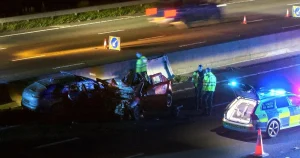
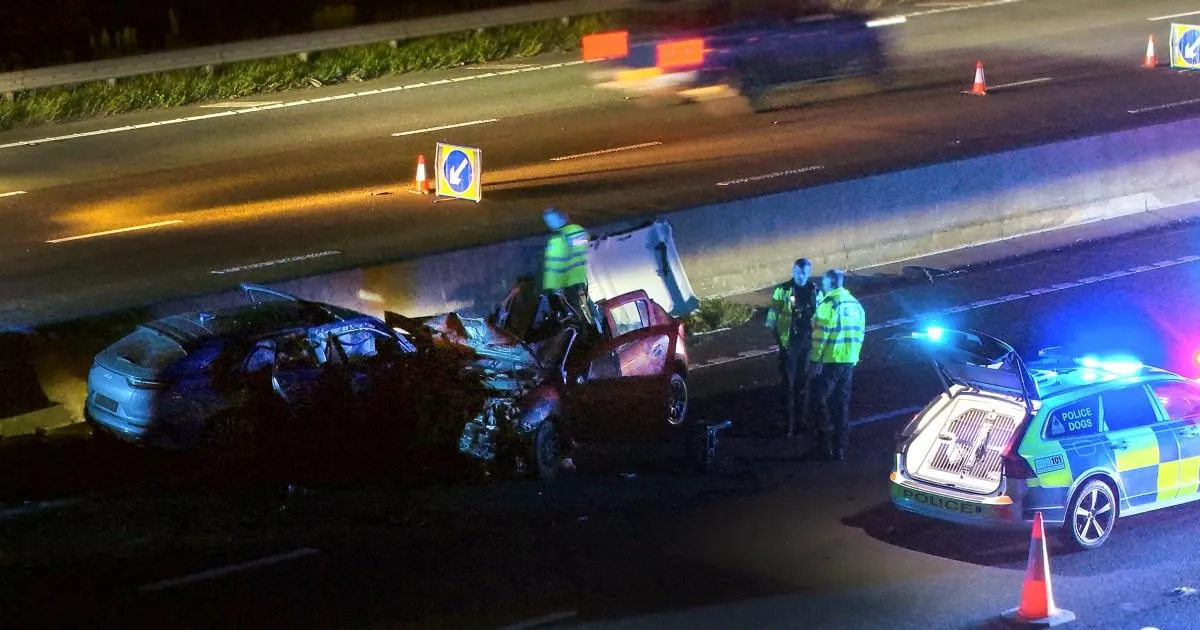
Late on an otherwise unremarkable evening, the familiar hum of traffic along the M1 near Wakefield was shattered by a scene of chaos and terror. What should have been a straightforward journey for dozens of motorists became a nightmare when a blue Kia Proceed, allegedly refusing to stop for police, began travelling the wrong way down the carriageway. The decision, whether born of panic, impairment, or reckless disregard, set off a chain of events that would leave a young man fighting for his future and three people under arrest. Emergency services flooded the motorway just before midnight, their blue lights cutting through the dark as they worked to reach those involved. Among them was an air ambulance, dispatched in the hope of saving a life or at least preventing the worst. For the driver of a red Dacia Sandero, a man still in his twenties, that night will forever mark a shocking divide between before and after. He was struck head-on, or at least horrifically, by the wrong-way vehicle, and the injuries he sustained were not minor. West Yorkshire Police later described them as potentially life-changing, a phrase that carries a weight few can fully grasp unless they have sat beside a hospital bed and heard those words. The road itself became a temporary crime scene, cordoned off and littered with emergency vehicles, as officers began the painstaking task of piecing together exactly how this nightmare unfolded. Behind the flashing lights were real people: frightened passengers, shaken witnesses, paramedics making split-second decisions, and a young man whose future was hanging in the balance. This was not just a traffic incident; it was a human catastrophe playing out on tarmac and hard shoulder, with the cold metal of crumpled cars serving as the backdrop to a story that will echo in many lives for years to come.
Paragraph 2
The facts, as they emerged from the fog of that chaotic night, are stark. A blue Kia Proceed failed to stop for officers and continued driving the wrong way against the flow of traffic along the M1 near Wakefield. That decision, deliberate or impaired, led to a collision with a red Dacia Sandero, driven by a man in his twenties. The victim’s injuries were serious enough to require immediate, intensive response, including the arrival of an air ambulance at the scene. He was rushed to hospital, where the true extent of his physical trauma began to unfold. Doctors, nurses, and surgeons would now face the long and uncertain work of trying to repair what a violent impact had broken, torn, or crushed. Meanwhile, police moved quickly to detain those they believed were responsible. A woman, aged 30, and a girl, aged 15, were arrested in connection with the incident. An 18-year-old male was also taken into custody, specifically on suspicion of causing injury by reckless driving. The woman faced an additional allegation: driving over the prescribed limit. This detail, if proven, adds an even deeper layer of sorrow and anger to an already tragic situation. It suggests that the choices leading to this moment were not merely a momentary lapse of judgment, but possibly the result of an altered state that should have prevented driving altogether. Three passengers from the Kia were reported to have sustained minor injuriesags. They were treated, assessed, and remained in custody alongside the others. And yet, even as arrests were made, there was a disturbing wrinkle: reports indicated that another person had fled the scene. That person, still unidentified, now faces the weight of a decision to run, leaving behind the wreckage and the wounded. The investigation, already complex, now includes the search for that individual, a reminder that the aftermath of tragedy often branches into multiple threads of accountability and unanswered questions.
Paragraph 3
Behind the clinical language of police reports — “serious injuries,” “potentially life-changing,” “detained” — lies a profoundly human story. Consider the young man in the Dacia Sandero. He was likely heading home, perhaps thinking about work the next morning, about a conversation with a friend, about dinner waiting for him, or about nothing at all beyond the next song on the radio. In an instant, all of those ordinary thoughts were erased by the screech of tires and the sickening sound of metal twisting into metal. His body, so easily taken for granted, was suddenly a battlefield. The phrase “potentially life-changing” does not mean merely a broken bone or a nasty cut; it signals a future rewritten, perhaps involving long rehabilitation, permanent disability, chronic pain, or profound psychological scars. For his family, the news must have arrived like a thunderbolt in the middle of the night, a call that no one ever wants to receive, sending them rushing to a hospital to wait for updates that would come too slowly and feel too cruel. The air ambulance that landed near the motorway was not just a machine; it was a vessel of hope, carrying medical expertise and urgency to a scene where every second mattered. The paramedics and trauma teams who worked on him did so with the grim focus that defines emergency medicine, knowing that their hands and decisions could mean the difference between a recovery and a tragedy. Meanwhile, the driver of the Kia and her passengers were themselves only relatively lightly injured, a strange twist of fate that often accompanies severe crashes. The randomness of such outcomes — who walks away, who is carried away, whose life is permanently altered — is perhaps the hardest thing for the human mind to accept. In this case, the contrast is stark: the person whose reckless actions may have caused the crash ended up with minor injuries, while an innocent stranger now faces an uncertain path through hospitals, therapies, and the slow, painful process of reclaiming a life he had not planned to lose.
Paragraph 4
The arrests themselves raise more questions than they answer. How does a 15-year-old girl come to be in a car with a 30-year-old woman heading the wrong way down a motorway? What circumstances led an 18-year-old male to be involved in a pursuit that ended in catastrophe? Are they family members, friends, or acquaintances drawn together by some chain of events that spiraled out of control? The authorities have not yet revealed the relationships among the occupants of the Kia, leaving the public to wonder about the social dynamics that placed a teenager in such a dangerous situation. The woman’s additional arrest for being over the prescribed limit adds a grim layer of familiarity; drink-driving remains one of the most avoidable causes of road death and injury, and to see it alleged in connection with a wrong-way collision only reinforces the sense of preventable tragedy. Perhaps the worst detail is the report that another person fled the scene. To walk away from a wreck, leaving behind injured people, police, and confusion, is a choice that suggests self-preservation over responsibilityaine. That person may have panicked, may have feared the consequences, or may have been swept up in a swirl of adrenaline and fear. Whatever the reason, they have now placed themselves on the wrong side of the law in a different way. Police will almost certainly find them; the net around such incidents always tightens, with witness statements, CCTV, dashcam footage, and phone data providing an almost inescapable trail. For the three people in custody, the coming days will be a blur of police interviews, legal procedures, and the slow realization that a single night’s choices have collided with the lives of strangers in the most violent way. The justice system, often slow and cumbersome, will now grind into motion, weighing evidence, intent, impairment, and culpability. But no verdict or sentence can undo the physical and emotional damage already done. The young driver’s future is now bound to the legal process as much as to his medical treatment, creating an agonizing double burden for everyone who loves him.
Paragraph 5
The wider impact of the crash rippled out far beyond the immediate victims. The M1, a vital artery of British infrastructure, was closed northbound between junctions 39 and 41 near Wakefield, and the southbound carriageway was also stopped between junctions 41 and 40. For hours, traffic came to a standstill as emergency services worked in the glare of their vehicles’ lights, and for the thousands of drivers caught in the resulting congestion, the night became a long, frustrating ordeal. Some sat for twenty minutes or more, unaware of the severity of the incident ahead; others would have glimpsed the flashing lights and the twisted vehicles as they inched past, catching a fleeting, unsettling view of a scene they would struggle to forget. Images from the scene showed police cars and ambulances scattered across the cordoned-off road, their emergency lights reflected on the wet or dark tarmac, while the queue of headlights stretched into the distance like a river of trapped travelers. National Highways eventually confirmed that the M1 was reopened in both directions by morning, but the residual effects — the recovery operations, the debris removal, the accident investigation, and the emotional aftermath — would linger far longer. For the emergency crews who attended, this was another shift in a long career of impossible scenes; but even the most hardened responders carry some memories with them, especially when the victim is young and the cause seems so senseless. For the witnesses who saw a car travelling the wrong way, the image of headlights bearing down on them through the night will likely replay in their minds for years. The closure also highlighted how fragile our essential infrastructure is, how one reckless decision could suddenly freeze a motorway that millions depend on, delaying ambulances, freight deliveries, and the simple journeys of ordinary people just trying to get home. The disruption was temporary; the desperation of that young man in the Dacia, and the grief of his loved ones, was not.
Paragraph 6
Now, as the sun rises and the M1 returns to its usual flow, a more somber process begins. West Yorkshire Police have appealed for anyone who witnessed the collision, or anyone with dashcam or other video footage of the incident, to come forward. They have asked witnesses to contact the Roads Policing Unit by calling 101 or reporting online, quoting reference 13260519370. Independent charity Crimestoppers is also available for those who prefer to remain anonymous. These appeals are more than formalities; they are crucial threads in the fabric of justice. A witness who saw the Kia’s movements in the minutes before the crash, or a dashcam that captured the wrong-way driving from a different angle, could help establish exactly what happened and who is responsible. The evidence may also reveal more about the person who fled, providing clues that could lead to their identity. Beyond the immediate investigation, this incident serves as a grim reminder of the dangers that all road users face, often at the hands of others. Wrong-way driving is rare but catastrophic, frequently linked to impairment, confusion, or reckless evasion of police. It is a nightmare scenario precisely because it violates the fundamental expectation that every vehicle on a divided motorway is travelling in the same direction. When that trust is broken, the consequences are often brutal. As the young man in the red Dacia begins his long road to recovery — or perhaps a new, harder existence — his story joins the countless other tragedies that unfold on our roads each year. Police will continue their work, the courts will eventually rule, and the public will shake their heads and wonder how such a thing could happen. But behind the headlines and the statistics lie the real costs: a body that may never fully heal, a family emotionally shattered, a community left to process an event that makes no sense. The arrests are only the first step in a long journey toward accountability, closure, and perhaps some measure of justice. In the meantime, the M1 flows on, drivers pass the spot without knowing the stories embedded in the asphalt, and somewhere in a hospital, a man in his twenties fights for a future that was stolen from him before he had the chance to live it.