

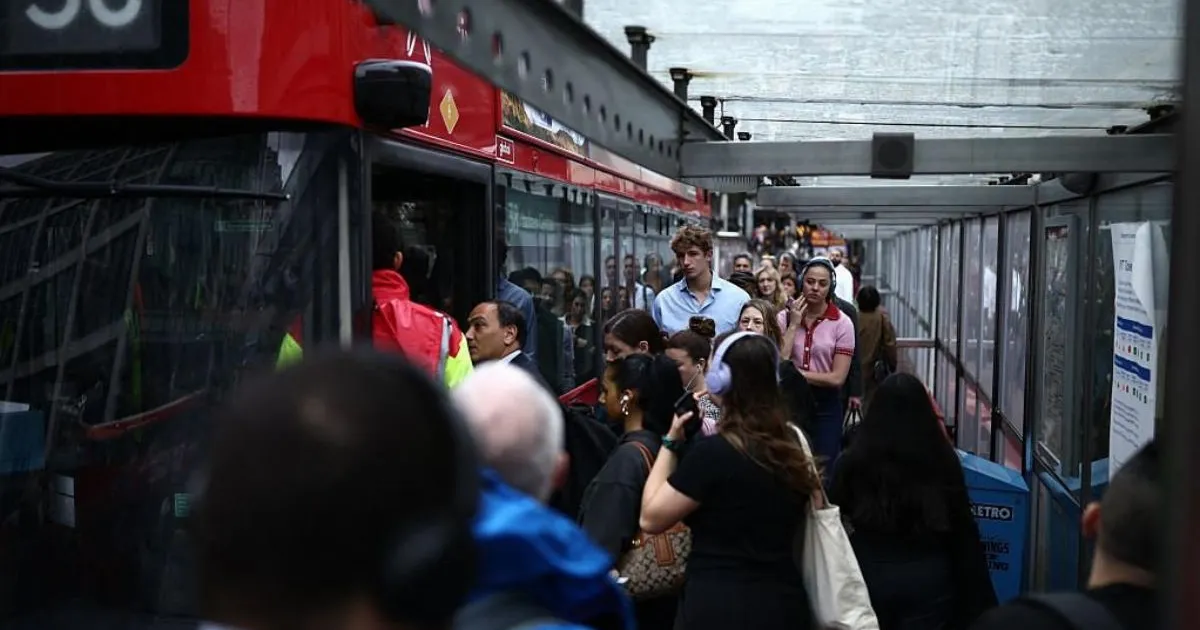
There is a particular kind of exhaustion that settles over a city when summer refuses to loosen its grip, and nowhere has that exhaustion been more visible in London this month than on its buses. Commuters who thought they had already seen the worst of the disruption have been told to brace themselves for more, as bus drivers employed by Arriva North London, one of Transport for London’s largest contractors, return to the picket lines. The company had offered a deal to Unite the Union after earlier strike action in August, but when drivers voted on it, they rejected it, arguing that the offer did not go far enough to tackle the dangerously hot conditions they have endured all summer. The result is a fresh wave of walkouts, beginning at 4am on Wednesday and lasting until 4.30am on Friday, followed by the threat of further strikes stretching well into October. For thousands of passengers across north London and Essex, that means another week of waking up to uncertain journeys, of standing at bus stops in the heat with no idea whether the next vehicle will come, and of trips that suddenly require a backup plan. More than 1,500 drivers have walked out over conditions that Unite says have left people suffering from heat exhaustion, heat stroke and dehydration, all while trying to keep London moving. The buses caught up in the dispute are not anonymous numbers on a map. They are the arteries of working-class and commuter neighbourhoods, connecting places like Wood Green, Edmonton, Enfield, Tottenham, Walthamstow and Romford to central London and to one another. When those routes stop running, the whole rhythm of daily life is disturbed. Parents worry about school runs, nurses worry about getting to hospital shifts, and older people who rely on a familiar bus to reach the shops or a GP appointment suddenly find themselves stranded. This is not just an industrial dispute. It is a story about how a city treats the people who keep it moving, and about what happens when a heatwave meets a workforce that feels ignored. The hottest day of the year may have passed, but the anger has not cooled.
At the heart of the dispute is a simple but urgent question: how hot is too hot to work? The summer’s heatwaves saw temperatures hover close to 40C, and according to Unite, the inside of a bus cab can be even hotter. Drivers have described feeling dizzy, sick and afraid while navigating London’s congested streets in cabins that turn into greenhouses during the afternoon sun. The cooling systems fitted to most London buses are not the same as air conditioning; they are air cooling systems that, in Unite’s words, only reduce the temperature by a couple of degrees. During the latest hot spells, cab temperatures reached 40 degrees, leaving drivers trapped behind the wheel in conditions that would be considered unacceptable in almost any other profession. Fatigue from heat is not a small thing. A tired driver is a distracted driver, and a distracted driver is a danger not only to themselves but to every passenger on board, every pedestrian at a crossing and every cyclist sharing the road. The union has accused Arriva North London of ignoring repeated complaints about these conditions, saying that a profitable company should be investing in proper protections instead of prioritising profit. Arriva insists that the welfare of its drivers is taken seriously, pointing to short-term measures introduced during the hot spells and longer-term investments in cab air conditioning upgrades and new fleet. But for the drivers who voted against the deal, those promises are not enough. They know that heatwaves are becoming more frequent and more intense, and that the buses they are asked to drive were simply not designed to keep them safe in temperatures that used to be exceptional and now feel routine. It is easy to think of a bus strike as a political problem or a logistical headache, but standing in a hot, stationary bus in the middle of a London traffic jam, with no air moving and no relief in sight, is a visceral experience. The drivers are not asking for luxury. They are asking for the basic right to do their jobs without collapsing.
The scale of the disruption is hard to ignore. This week’s strikes affect 42 routes, including two Superloop services and four night buses, with walkouts involving garages in Barking, Edmonton, Enfield, Grays, Palmers Green, Stamford Hill, Tottenham and Wood Green. The list of affected routes reads like a map of everyday life across north-east London: the 19 from Finsbury Park to Battersea Bridge, the 29 from Wood Green to Trafalgar Square, the 34 from Walthamstow to Barnet, the 41 from Tottenham Hale to Archway, the 66 from Leytonstone to Romford, the 67 from Wood Green to Dalston, the 76 from Tottenham Hale to Waterloo, the 102 from Edmonton Green to Brent Cross, the 141 from Palmers Green to London Bridge, the 149 from Edmonton Green to London Bridge, and the 243 from Wood Green to Waterloo. There are also routes that connect hospitals, schools and shopping centres, like the 307 from Barnet Hospital to Brimsdown, the 313 from Potters Bar to Chingford, and the 341 from Meridian Water to Waterloo. The Superloop routes SL1 and SL2, designed to offer express connections across outer London, are also being hit, as are night services such as the N19, N29, N41 and N279, which are lifelines for people who work late shifts, finish work after midnight, or simply need a safe way home in the early hours. Transport for London has warned passengers to expect little or no service on all of these routes on strike days, and has said that alternative buses, Tube lines and rail services are likely to be much busier than usual. For anyone used to hopping on a bus without thinking twice, that warning is a jolt. A journey that usually takes half an hour could take twice as long, if a replacement route even exists. The people most affected are often those with the least flexibility: gig economy workers, hospital cleaners, supermarket staff, students and carers who cannot work from home and cannot afford to miss a shift. The bus strike is a reminder that public transport is not just about convenience. It is about access to opportunity, and when 42 routes are taken away, something more than a timetable breaks down.
The pain is not going to end when the week does. Arriva has confirmed additional strike dates for the next two months, with walkouts scheduled for September 4-5, September 7-8, September 18-19, September 21-22, October 2-3, October 5-6, October 16-17 and October 19-20. What makes those dates even more frustrating for passengers is that some of them clash with planned closures on the Piccadilly line, which is being upgraded for new trains. The Tube line will shut this week between August 25 and 27, and again between September 18 and 20 and between October 16 and 18, which means that some parts of London will lose both bus and Tube services at the same time. It is hard to imagine a worse combination for commuters who depend on public transport to cross the capital. The overlaps feel like a perfect storm, with engineering works and industrial action arriving together to close off the usual escape routes. Passengers who might normally switch from a striking bus service to the Piccadilly line will find the station locked, and those who choose to take a different bus could be standing on packed pavements waiting for spaces that do not exist. Transport for London has tried to reassure travellers by saying that the majority of the capital’s bus network will still operate on strike days, and some routes will be busier than usual, but reassurance is thin comfort for someone who has been waiting forty minutes in the heat with a small child or an elderly relative who cannot stand for long. The long arc of strike dates through September and October also signals that neither side is blinking. The dispute has hardened into something more than a negotiation; it has become a test of endurance, and the people caught in the middle are the everyday Londoners who just need to get where they are going. Each new strike date is not just a line on a calendar. It is another morning of cancelled plans, another evening of missed connections, another reminder that the systems people build their lives around can be unexpectedly fragile.
The political and institutional response to the strikes has been a mixture of solidarity, frustration and careful diplomacy. Sadiq Khan, the Mayor of London, has made his position clear, telling LBC in June that if a driver’s cabin is too hot, he has given Transport for London permission and instructed bus operators that the bus must not be driven. That statement was a powerful signal of support for the drivers, but it has not resolved the underlying dispute. Unite’s general secretary, Sharon Graham, has been more blunt, accusing Arriva of sitting on its hands while drivers complained about working in dangerous conditions. “A profitable company such as Arriva could easily invest in improving conditions for its drivers and protecting the general public but is instead prioritising greed,” she said, adding that Unite would back its members all the way. Arriva’s response has been measured but firm. The company’s London managing director, Wasim Mohammed, told Metro that the welfare of drivers is taken seriously, that short-term measures have been introduced to protect staff during the hot spells, and that longer-term fixes, including cab air conditioning upgrades and ongoing investment in new fleet, are already in motion. He also said the company remains ready to sit down with Unite at any time to find a resolution that avoids strike action and disruption to customers. Transport for London, caught in the middle as the body that contracts Arriva and the public body responsible for keeping the city moving, has urged both parties to find a solution while apologising for the disruption to people’s journeys. There is something wearying about the familiar rhythm of these statements: the union accusing, the company defending, the transport authority apologising, and the passengers left to absorb the consequences. But there is also something important about the fact that this dispute is taking place at all. In a city where public transport workers are often invisible, expected to smile through heat, traffic and long shifts, the strike forces a conversation about dignity, safety and the difference between surviving a shift and thriving in a job. It also raises questions about who should carry the cost of climate change, and whether the people who keep essential services running should have to bear the physical burden of a warming world without proper protection.
Looked at from a distance, this is a story about air conditioning and bus routes, but up close it is a story about what happens when the world gets hotter and the systems people rely on are not ready. London’s buses, like many things built in a cooler age, were not designed for the kind of heat that has become a regular feature of British summers. The drivers who are striking are not asking for luxury. They are asking not to be endangered while doing a job that the city depends on. Their dispute is part of a broader pattern across the world, in which workers are drawing a line and saying that unsafe environments cannot simply be accepted; they must be made safe. For passengers, the advice from Transport for London is to plan ahead, allow extra time, expect crowded alternative routes and keep an eye on announcements. But for many, the deeper takeaway is a sense of shared vulnerability. The bus driver and the passenger are both at the mercy of the same heat, but the driver is the one who has to sit in it all day, every day, while managing the safety of everyone on board. When the strikes end, whenever that may be, the underlying question will still be there: what does it mean to work in a city that is heating up, and how should the people who do that work be protected? Until Arriva and Unite can agree on the answer, Londoners will keep checking their phones, waiting at bus stops and hoping for a resolution. The buses will probably be back eventually, but the trust in the system has been shaken, and that may be the hardest thing to repair. In the meantime, the city moves on, a little slower, a little hotter, and a little more aware of the people behind the wheel, the ones who keep London breathing even when the air around them is almost too much to bear.