
London Bus Drivers Strike: The Heatwave Dispute Bringing the Capital to a Standstill
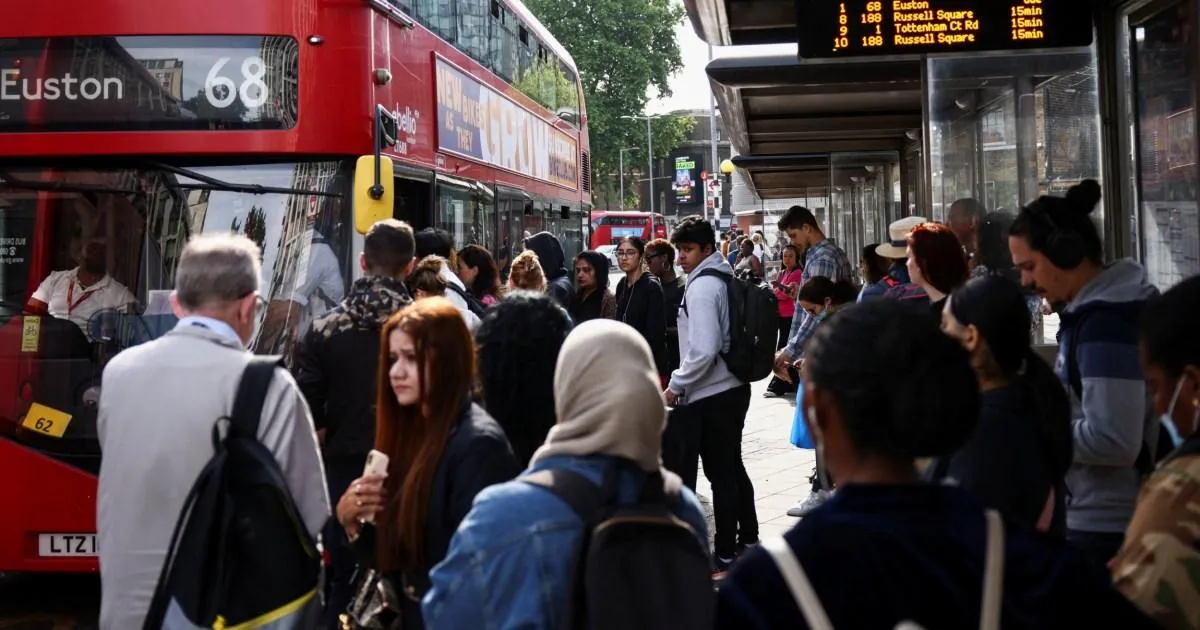
Londoners are facing significant travel chaos today and tomorrow as hundreds of bus drivers walk off the job in a bitter dispute over sweltering working conditions. The strike, organized by Unite the Union, has brought disruption to dozens of routes across north London and Essex, leaving passengers scrambling for alternative ways to get around the capital. With temperatures having hovered near 40 degrees Celsius throughout the summer, drivers say they can no longer tolerate the unbearable heat inside their cabs, which they describe as a serious health hazard. The industrial action began at 4am this morning and will continue until 4:30am tomorrow, affecting not just regular daytime services but also night buses and the popular Superloop express routes that many commuters have come to rely upon.
The scale of this disruption is considerable, with a staggering 42 separate bus routes affected by the walkout. These services span a wide geographic area, from the bustling streets of central London to the quieter suburban roads of Essex and Enfield. The affected garages include Barking, Edmonton, Enfield, Grays, Palmers Green, Stamford Hill, Tottenham, and Wood Green, meaning that communities across a broad swath of north and east London will feel the impact. Transport for London has issued a stark warning that passengers should expect little or no service on these routes, and that alternative local buses, Tube lines, and rail services are likely to be significantly busier than usual. For many residents in these areas, the strike represents more than just an inconvenience; it threatens their ability to get to work, attend medical appointments, or carry out essential daily tasks.
The routes affected read like a comprehensive list of the capital’s vital transport arteries. The number 29, which connects Wood Green to Trafalgar Square, and the 149, running between Edmonton Green and London Bridge, are among the most heavily used services that will be impacted. The 76 route, taking passengers from Tottenham Hale to Waterloo, and the 243, which connects Wood Green to the same major transport hub, will also be disrupted. Commuters who depend on the 41 between Tottenham Hale and Archway, the 19 from Finsbury Park to Battersea Bridge, and the 34 from Walthamstow to Barnet will need to find alternative arrangements. The Superloop services SL1 and SL2, which provide faster express connections across the capital, will also be affected, as will night services N19, N29, N41, and N279 that run into the early hours of Saturday morning.
At the heart of this dispute lies a fundamental question about worker safety and corporate responsibility. The union argues that Arriva North London, which operates these routes under contract to Transport for London, has consistently failed to address complaints about extreme temperatures inside bus cabs. During the recent heatwaves that have gripped the capital, some drivers have suffered from heat exhaustion, heat stroke, and severe dehydration while trying to carry out their duties. The situation has become so serious that Unite’s general secretary, Sharon Graham, has accused the company of prioritizing greed over the wellbeing of its workforce. She emphasized that drivers have complained repeatedly about the dangerous conditions, yet the company has failed to take meaningful action, which she called completely unacceptable for a profitable organization that could easily invest in better working environments.
The conditions inside these buses have been described as nothing short of dangerous. While many London buses are fitted with air cooling systems, these are far less effective than proper air conditioning, and drivers report that they only reduce the temperature by a couple of degrees. During the latest hot spells, cab temperatures have reached a staggering 40 degrees Celsius, creating an environment that is not only uncomfortable but genuinely hazardous to health. The physical demands of driving a bus through congested London streets, combined with such extreme heat, can lead to increased fatigue, impaired concentration, and a higher risk of accidents. This is not just a matter of comfort; it is a serious safety concern for both drivers and the passengers they carry, as well as other road users who share the streets with these large vehicles.
The industrial action is not a one-off event but rather the beginning of an extended campaign of strikes that will continue through the autumn. Arriva has announced additional walkout dates spanning August 18 to 21, August 25 to 28, September 4 to 5, September 7 to 8, September 18 to 19, September 21 to 22, October 2 to 3, October 5 to 6, October 16 to 17, and October 19 to 20. Of particular concern is that some of these strikes will coincide with planned closures on the Piccadilly line, which is being upgraded for new trains. This means that passengers who might normally switch to the Tube as an alternative will find themselves facing a perfect storm of transport disruption, with both bus and underground services unavailable on the same days. The Piccadilly line will be closed between August 18 and 20, August 25 and 27, September 18 and 20, and October 16 and 18, all of which are periods when bus strikes are also scheduled to take place.
Unite’s leadership has been unequivocal in its support for the striking workers, with Sharon Graham vowing to back members all the way in this dispute. The union’s position is that Arriva, as a profitable company, has both the resources and the obligation to improve conditions for its drivers and protect the traveling public. Beyond the immediate issue of heat, drivers have also raised broader concerns about shift patterns and workplace pressure, describing a “dangerous” epidemic of fatigue behind the wheel. These workers argue that the cumulative effect of long hours, demanding schedules, and uncomfortable working environments is creating conditions that are unsustainable and unsafe. The union’s stance reflects a growing militancy among transport workers across the country, who are increasingly willing to take industrial action to secure better working conditions.
London’s mayor, Sadiq Khan, has waded into the dispute with a clear message of support for the drivers. He has stated emphatically that drivers should not be working in conditions that are too hot or unsafe, and revealed that he has given Transport for London permission to tell bus operators that drivers must not operate vehicles when their cabins reach dangerous temperatures. This intervention from City Hall signals that the political establishment is taking the drivers’ concerns seriously, even as the practical challenges of resolving the dispute remain. Speaking to LBC earlier in the summer, Khan delivered a direct message to bus drivers across the capital, reassuring them that they have his backing if they refuse to drive in unsafe conditions and emphasizing that their health and safety must take precedence over operational considerations.
Arriva, for its part, has sought to present a more conciliatory face to the public while defending its record. Wasim Mohammed, the company’s London managing director, acknowledged that the extreme weather has had an impact on drivers and insisted that the company takes their welfare seriously. He pointed to short-term measures that have been introduced to protect drivers during the hot spells, as well as longer-term investments in cab air conditioning upgrades and new fleet vehicles. Mohammed expressed willingness to sit down with Unite at any time to discuss the issues and find a resolution that would avoid both strike action and the disruption it causes to customers. However, the company’s assurances have done little to placate the union, which remains skeptical about the pace and sincerity of these promised improvements.
Transport for London has found itself in an awkward position, caught between its contractor and the unions representing workers who are essential to keeping the capital moving. While acknowledging that the strike action will hit services in north and central London, TfL officials have been keen to emphasize that the majority of the capital’s bus network will continue to operate as planned on the strike days. They have advised passengers to plan ahead, allow extra time for their journeys, and consider alternative modes of transport where possible. The organization has also expressed encouragement for both parties to find a solution to the dispute, while apologizing for any disruption to people’s journeys. This neutral stance reflects the difficult balancing act that TfL must perform as an employer, a contractor, and a public service provider all at once.
The human cost of this dispute extends far beyond the inconvenience of delayed journeys and missed connections. For the drivers themselves, the strike represents a stand against conditions they believe are genuinely dangerous to their health and the safety of the traveling public. The physical toll of working in 40-degree heat, day after day, cannot be overstated, particularly for those who may have underlying health conditions or who are older. The mental strain is equally significant, as drivers must maintain constant concentration while navigating busy streets, dealing with passengers, and monitoring traffic conditions. The decision to strike is never taken lightly, and for many of these workers, it represents a last resort after months of complaints and appeals to management that went unheeded.
For passengers, the strikes highlight the fragility of London’s transport network and the dependence of millions of people on services that can be disrupted at a moment’s notice. Those who rely on buses because they cannot afford Tube fares, or because they have mobility issues that make other forms of transport difficult, will be particularly hard hit. Parents taking children to school, elderly residents attending hospital appointments, and low-wage workers who cannot work from home will all face difficult decisions about how to get where they need to go. The broader implications for the capital’s economy are also significant, as businesses struggle to maintain productivity when employees cannot reliably get to work.
As the dispute drags on with more strikes planned for the coming months, there are no easy answers in sight. The fundamental issues at stake – worker safety, corporate responsibility, and the quality of public services – are complex and deeply rooted. What is clear is that the status quo is unsustainable, and that both sides will need to make meaningful concessions if a lasting resolution is to be found. For now, Londoners are left to navigate the disruption as best they can, hoping that cooler heads will prevail and that the buses will soon be running again. The situation serves as a reminder that the people who operate our essential services deserve to work in conditions that are safe and dignified, and that the true cost of cutting corners on worker welfare is ultimately borne by us all.