


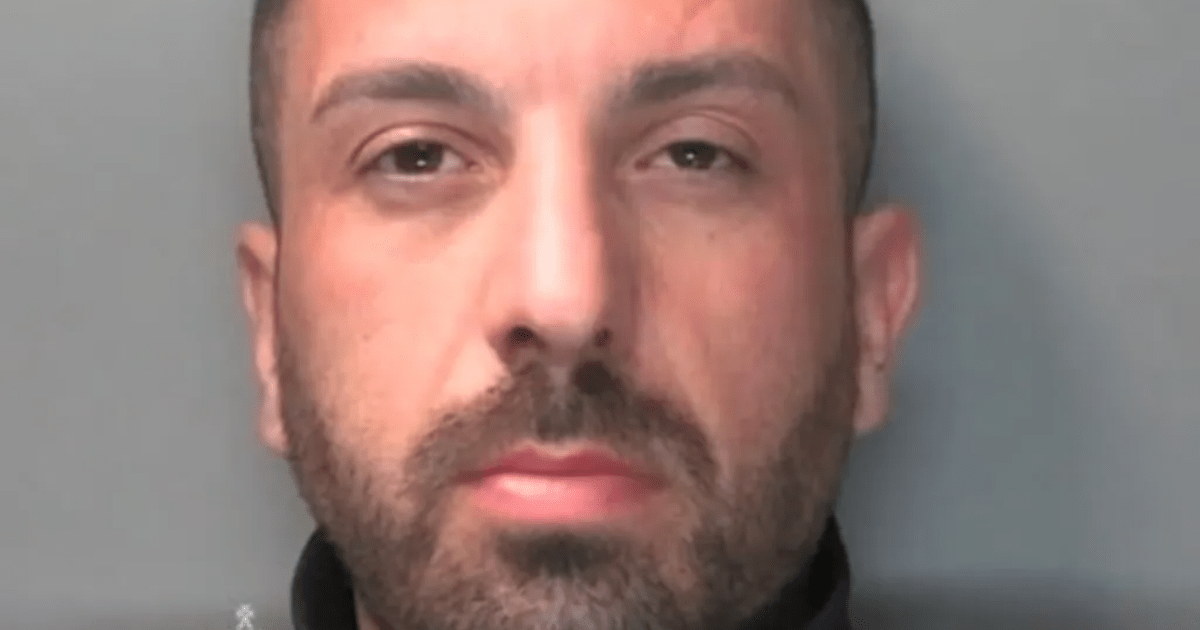
Some betrayals cut so deeply that they don’t just empty a bank account; they empty the soul of a family. The story of Terry O’Connor is one of those rare, chilling cases where the line between love and theft becomes horrifyingly blurred. At 33 years old, O’Connor appeared to be an ordinary man from Swansea, someone with elderly grandparents, hardworking parents, and siblings who trusted him. But behind that ordinary mask lay a five-year campaign of quiet, systematic theft from the very people who had raised him and stood beside him. He secretly set up phone and online banking for his parents, his brother, his sister, and his grandfather, then used that access to siphon money out of their lives and into his own pocket. Over the course of half a decade, he stole around £200,000 in total—a sum large enough to buy a home, to start a future, or to offer security to the elderly and the vulnerable. Instead, it funded his own hidden existence. What makes this case so devastating is not just the scale of the fraud, but the identity of the victims: these were not faceless corporations or distant strangers. They were the people who had changed his nappies, worried over his school reports, and probably celebrated his birthdays. They were his own blood.
The fraud only came to light because O’Connor’s grandfather, an elderly man who had worked hard all his life, went to withdraw some cash and saw that his life savings—roughly £80,000—had almost vanished. Imagine the moment: an elderly man, perhaps already feeling the fragility of age, standing at a counter and being told that the money he had carefully accumulated over decades was mostly gone. For him, it must have felt like the ground had opened up beneath his feet. Bank statements revealed that the money had been moved into accounts belonging to O’Connor’s parents before being transferred out again, a crude but effective money trail that confused the initial picture. A police investigation then uncovered the full, sickening truth: O’Connor had impersonated his relatives, using their personal details to gain access to their banking, and had even routed stolen funds through his parents’ accounts in order to hide the source. The court later heard the precise breakdown of his cruelty. From his grandfather, he stole £79,659. From his parents, he stole £84,094. From his brother, he took £29,353. And from his sister, he took £8,241. The grandfather’s bank, thankfully, repaid the total amount stolen from him, and the brother’s bank reimbursed half of his losses. But the other family members were left with nothing. Their savings, their safety nets, their futures were stripped away. Worse still, O’Connor’s grandfather has since passed away, never fully able to recover from the shock and grief of discovering that his own grandson had robbed him during his final years.
The family’s pain was laid bare in a statement read at Swansea Crown Court. O’Connor’s father described the situation as “very painful and very embarrassing for the family,” and said he did not want to spend any more time thinking about what his son had done. But he could not remain silent. “For what he did to my father and the rest of us, I can never forgive him,” he said. “We are an honest, hardworking family – he seems happy to take what he can from others around him. What he has done to our family is unforgivable.” Those words are not just the anger of a betrayed parent; they are the grief of a man who has had to watch his own child become a stranger. The father also revealed that O’Connor had posted derogatory comments about the family on social media, adding insult to injury. While in prison, O’Connor wrote to his mother to apologise. But his father saw through the apology: “I do believe he was sorry – but not for us. He is sorry he is in prison. He wasn’t sorry when he was stealing from us every day for five years.” That observation is piercingly clear. An apology born from the discomfort of a jail cell is not the same as remorse born from empathy. It is hard to imagine the dinners, the holidays, the family gatherings that must now be marked by silence and suspicion. The trust that should exist between parent and child, grandparent and grandchild, was not simply damaged; it was pulverised.
What did O’Connor do with all that stolen freedom? He did not seem to use it to build anything meaningful. Instead, he ran away from the consequences of his actions. After the fraud was uncovered, he took a ferry from Dover to France and travelled onward to Turkey, where he lived for almost a year. It is a grim detail: while his grandfather was discovering the ruin of his savings, while his parents were trying to understand how their son could betray them, O’Connor was enjoying what must have felt like an endless holiday abroad. He returned in April and was arrested at Gatwick Airport. The police investigation had been thorough, and the case eventually came before Swansea Crown Court. O’Connor pleaded guilty to fraud by false representation and possession of criminal property. His partner, 26-year-old Chelsea Myles of Llansamlet, also admitted possession of criminal property. The court heard how O’Connor had adopted a “cowardly stance” when the police became involved, choosing to flee rather than face the family he had betrayed. His cowardice, however, could not last forever. Arrests have a way of catching up with those who think they can escape their own shadows, and so the holiday ended, the handcuffs closed, and the truth was finally spoken aloud in a courtroom.
The judge, Huw Rees, did not mince words. He called O’Connor a “thoroughly dishonest individual” and told him that his behaviour was “unforgivable.” He was sentenced to five years and three months in prison—a substantial term, but one that must feel incredibly short to the family members who will carry the scars for the rest of their lives. Myles, who had played a lesser role in the possession of criminal property, was sentenced to 12 months in prison, suspended for 18 months. Judge Rees also praised the police investigation, noting that it was to be commended in the absence of any co-operation from O’Connor. In some ways, the sentencing is the simplest part of the story. The law can put a man behind bars, but it cannot give a grandfather back his peace of mind, cannot restore the savings that were meant to make old age comfortable, cannot repair the image a father has of his son. O’Connor will eventually leave prison, and life will go on for him. But the family he leaves behind will have to rebuild themselves from the wreckage. They will have to find a way to trust again, even if they never trust him again. They will have to remember that they are still honest, hardworking people, even though someone they loved tried to strip that away from them.
In the end, the most human response to this story is not simply anger. It is also sorrow. Sorrow for the grandfather who discovered that his life’s work had been hollowed out by a descendant; sorrow for the parents who must reconcile their love for their child with the horror of what he did; sorrow for the siblings who will forever associate the word “brother” with betrayal. And perhaps, in some quiet way, sorrow for O’Connor himself—not because he deserves pity, but because a person who can rob his own family so methodically must be deeply, frighteningly broken inside. There is something profoundly lonely about a man who has traded every meaningful relationship in his life for money and a year in Turkey. He has lost his family. He has lost his reputation. He has lost any claim to being a person of honour. The £200,000 he stole bought him nothing that lasts; the family he stole from has nothing left but grief. As the father said, the damage is unforgivable. But perhaps forgiveness is not the goal. Perhaps the goal is simply survival, and then, slowly, the reclamation of a life that someone else tried to destroy. This is not a story about a master criminal. It is a story about the quiet collapse of trust, the cost of greed, and the difficult, painful path that the innocent must walk after the guilty have been sentenced.