


Paragraph 1: The Tragic Announcement
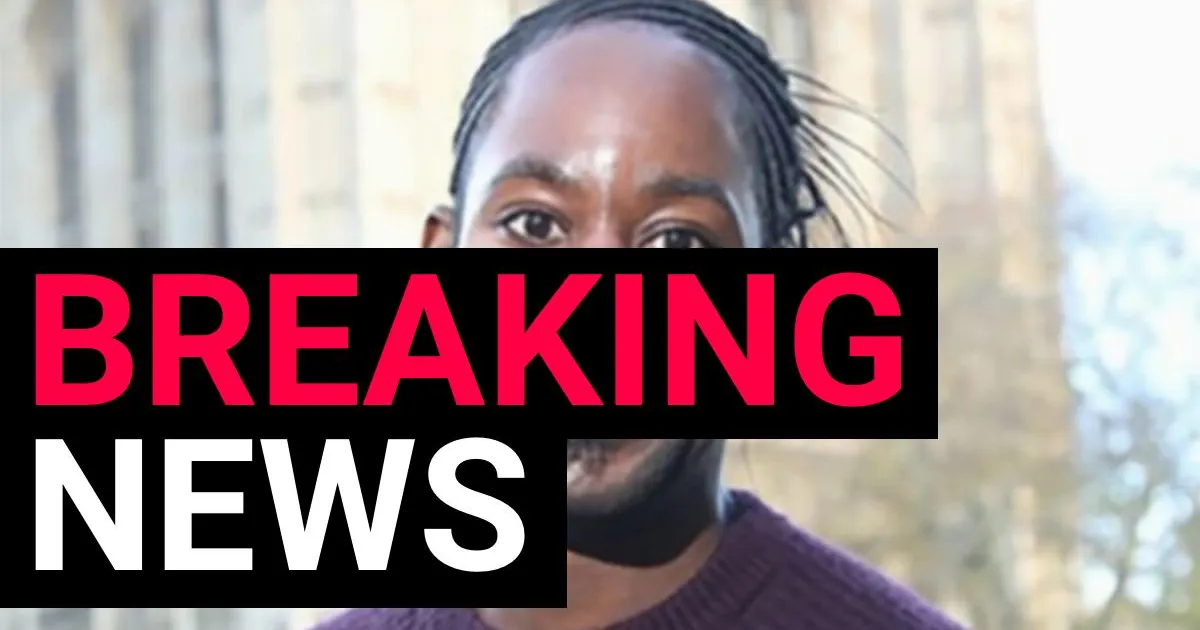
The announcement landed with a jolt of profound sadness, a somber coda to a narrative that had captivated and divided observers for months. Jason Arday, the 41-year-old academic who had etched his name into history as Cambridge University’s youngest-ever Black professor, was found dead at his home in Battersea, London. The Metropolitan Police confirmed that they were alerted by the London Ambulance Service at approximately 3:12 PM, responding to a residential property where Arday was discovered unresponsive. Despite the swift arrival of medical personnel, a heartbreaking outcome unfolded: the renowned sociologist was pronounced dead at the scene. The police statement, while terse, carried terrible weight: “Sadly, a 41-year-old man was pronounced dead at the scene. His next-of-kin have been informed and are being supported by officers.” At this critical juncture, authorities have determined that while his death was unexpected, it is not believed to be suspicious, with the case currently under investigation by officers from the Met’s Central South Command Unit. A file will ultimately be prepared for the coroner, whose inquiry will seek to provide answers for a family in mourning. The timing of this tragedy intensifies its complexity: Arday had resigned from his prestigious post at Cambridge just nine days earlier, stepping down amid a fierce controversy that had engulfed his professional reputation. The juxtaposition of his extraordinary ascent and his precipitous, tragic fall paints a stark picture of a man who, even in death, embodies the immense pressures lurking within the hallowed halls of academia.
Paragraph 2: A Life of Unprecedented Achievement
To fully comprehend the magnitude of what has been lost, one must revisit the remarkable trajectory of Jason Arday’s life, a journey defined by breaking barriers and illuminating the darkest corners of social inequity. His appointment to Cambridge in 2023 was not just a personal triumph; it was a monumental moment for British academia. At just thirty-eight years old, he shattered a glass ceiling that had remained stubbornly intact, becoming the youngest Black individual ever to hold a professorship at the historic university. His academic focus was profoundly centered on issues of race, education, and social inequality—areas where systemic prejudice has historically silenced or excluded marginalized voices. Arday dedicated his research to understanding how educational institutions perpetuate cycles of disadvantage, aiming to dismantle structures that hindered equal opportunity. His work was not abstract; it was a passionate, urgent examination of the living realities of underprivileged communities. He drew from his own experiences, embodying the very subject of his scholarship—a prodigious mind from a working-class background who had navigated an often-hostile environment to reach the pinnacle of his field. Colleagues and students often remarked on his electric energy, his ability to translate complex sociological theory into accessible, empowering terms. He was a mentor, a role model, and a beacon of hope for countless young people of color who saw in him the possibility of achieving the impossible. His research files, his publications, and his lectures all built toward a singular goal: to create a more equitable world. The news of his death leaves a void not just in the faculty roster, but in the broader fight for social justice that he so fervently championed.
Paragraph 3: The Fall and the Scrutiny
Yet behind this glittering façade of academic triumph lurked a tempest that would ultimately prove devastating. The controversy that led to his resignation was both extensive and corrosive, comprising allegations that stretched across his career. An investigation was launched into his academic appointment and tenure, prompted by purported similarities between passages in his doctoral thesis and earlier published papers. The scrutiny expanded to encompass other aspects of his published work, casting a suspicious lens over his entire bibliography. But the allegations did not stop at his writing; they delved into the very narrative of his personal history. In a striking development, his claims regarding a 600-mile endurance challenge—initially stated to have been completed in a remarkable six days—were later revised to a period of twelve days. Similarly, the widely circulated figure of £5.5 million he claimed to have raised for charity was subjected to clarification, with Arday explaining that this amount was the result of a massive group fundraising effort, rather than a feat accomplished single-handedly. Perhaps the most baffling claim involved his supposed appearance on the iconic UK television documentary Seven Up!, despite the fact that the original installment of that program had been broadcast two decades before his birth. These contradictions, seized upon by critics and amplified across media platforms, painted a picture of an individual who seemed to blur the line between his genuine, significant accomplishments and a fabricated mythology of self.
Paragraph 4: The Personal Battle
The subsequent fall from grace was as swift as his rise had been meteoric. On August 5th, Arday made the gut-wrenching decision to resign from his esteemed position in the sociology of education at Cambridge. For a man who had dedicated his life to the institution, this was an act of profound personal sacrifice. In a candid interview with The Times conducted before his formal resignation, Arday did not hide his anguish. He openly acknowledged the gravity of the situation, stating, “I am accountable for the mistakes I’ve made. I hold myself accountable, and other people should hold me accountable.” However, he drew a stark line between accountability and the nature of the attacks. “We’re talking about academia here. I didn’t murder somebody. I think the cruelty that I’ve experienced and the positioning of me as this kind of liar and fantasist is totally unacceptable.” These words reveal a man grappling with a profound sense of unfairness, feeling that the punishment far outweighed any actual transgression. He specifically addressed the plagiarism accusations, refuting any deliberate intention to copy the work of others. In a deeply human disclosure, he attributed certain citation errors in his earlier academic output to his autism. He described how he utilized mimicry as a learning mechanism, a cognitive strategy that, while instrumental in his intellectual development, had unfortunately led to unintentional overlaps in his writing. He described the reaction to these issues as a “personal attack,” and concluded that stepping away from Cambridge was “the only way to bring this chapter to an end.”
Paragraph 5: The Wider Context and Unanswered Questions
This final chapter of his life—the resignation, the public scrutiny, and ultimately the tragedy of his sudden passing—raises deeply unsettling questions about the institutions we build and the individuals we place upon pedestals. The controversy did not just affect Arday personally; it prompted a broader, uncomfortable discourse regarding Cambridge’s own appointment procedures. How was a man subjected to such intense scrutiny allowed to ascend to the highest echelons of scholarly prestige? Should the university have conducted more rigorous vetting before granting him such a historically significant role? These questions, while valid in the abstract, must now be reframed in the shadow of his death. The investigation into his tenure had effectively concluded with his resignation, but the personal toll was inescapable. For a man with autism, who had navigated a world of meticulous academic rigor while processing information in his unique way, the “unrelenting level of public scrutiny” he cited was likely a source of immense psychological distress. Being branded a “liar” and “fantasist” on a national scale, having every achievement double-checked and every historical statement dissected for error, is a form of psychological warfare that few could withstand. The police have stated that his death is not viewed as suspicious, and the coroner’s inquest will formally determine the cause. However, the circumstances leading to his final day paint a picture of a man isolated, embattled, and burdened by a weight that proved insurmountable. The tragedy is twofold: the loss of an academic genius, and the realization that the very systems meant to uphold scholarly integrity may have inadvertently contributed to crushing a vulnerable individual.
Paragraph 6: Reflection and Legacy
As the news of Jason Arday’s death filters through the academic community and beyond, it serves as a devastating reminder that genius and vulnerability are not mutually exclusive. Arday was a groundbreaking figure—a young, autistic, Black scholar who defied every statistical probability to reach the summit of his profession. He used his platform to advocate for those who lacked one, dedicating his research to the dismantling of systemic oppression. Yet, in the arena of public opinion, he was torn apart, held to an impossible standard of perfection that no human being could ever meet. The allegations of plagiarism, the inconsistencies in his personal anecdotes, and the perceived embellishments created a narrative of deceit that overshadowed his legitimate, substantial contributions to sociology. In his final public statements, he expressed a poignant defiance and also a deep hurt, caught between accepting responsibility for his documented errors and feeling aggrieved by the disproportionate cruelty of his treatment. His death, now confirmed as unexpected and non-suspicious, brings an abrupt, sorrowful halt to a career that promised so much more. The “case” is now closed for the police, except for the formalities of the coroner’s court, but the emotional and intellectual void left by his passing is profound. His family, who have been informed and supported, must now navigate a grief compounded by the very public nature of his final months. He leaves behind a body of work meant to uplift the marginalized, and a cautionary tale about the fragility of the human spirit under the blinding glare of modern media and academic politics. Jason Arday was only 41 years old—far too young to leave us, and leaving with a story that highlights the immense, often unbearable, pressure placed upon those who break down barriers. He will be remembered for his courage, his intellect, and the tragic circumstances that ended his journey.