


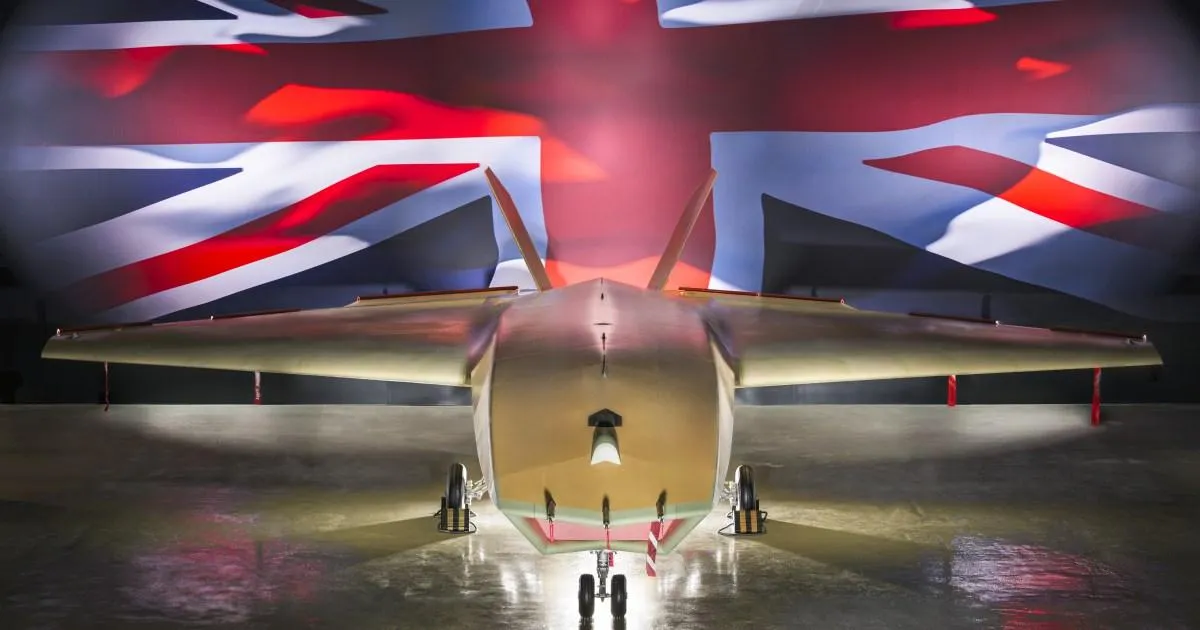
The British defence landscape is on the brink of a technological revolution with the unveiling of “Brontanax,” a cutting-edge unmanned fighter jet. Developed by BAE Systems at their facility in Warton, Lancashire, this aircraft represents the UK’s first foray into the world of Collaborative Combat Aircraft (CCA). Its name, derived from ancient Greek terms meaning “thunder” and “king,” captures the ambition behind the project: a powerful, autonomous aerial partner designed to dominate the modern skies. By offering a high-tech solution that can operate alongside traditional crewed aircraft, like the formidable Typhoon, the UK is positioning itself at the forefront of global air power innovation.
What makes Brontanax truly revolutionary is its strategic balance between cost and performance. While conventional fighter jets are often prohibitively expensive to manufacture and risk highly trained personnel in dangerous territory, Brontanax delivers 70% to 80% of a standard pilot-flown fighter’s capabilities for just a quarter of the price—approximately £19 million per unit. This economic approach allows for “combat mass,” or the ability to deploy larger numbers of aircraft to overwhelm potential threats. It effectively acts as a loyal wingman, providing precision strikes and electronic warfare support while keeping human pilots at a safe remove from the most volatile combat environments.
The British government has thrown its full support behind this initiative, signaling a commitment to an estimated £300 million “Storm Fighter” programme. Defence Secretary Wes Streeting has praised the project as a beacon of sovereign industrial talent, noting that every aspect of the aircraft is a product of British engineering prowess. This isn’t just about building a drone; it is about cultivating a high-tech ecosystem where large defence primes work in tandem with small-to-medium enterprises across the country. The initiative serves as a clear statement that the UK intends to retain its competitive edge by investing in homegrown technology rather than defaulting to foreign imports.
For the Royal Air Force (RAF), Brontanax is the cornerstone of their goal to become Europe’s first sixth-generation air force. Air Marshal Sir Harv Smyth has emphasized that in a battlespace that is becoming increasingly crowded, complex, and contested, the RAF must innovate faster than its adversaries. By integrating autonomous, AI-driven platforms with experienced human crews, the RAF aims to redefine how air superiority is achieved. This vision is not merely theoretical, as the hardware is already moving from concept to reality, bridging the gap between manned intuition and the relentless, digital efficiency of autonomous systems.
A key feature of the Brontanax design is its adaptability, utilizing an “open architecture” that allows engineers to swap out components or software as the nature of warfare changes. As Simon Barnes of BAE Systems explained, the modern battlefield demands speed and the ability to scale operations rapidly. By creating a modular machine, BAE ensures that the aircraft won’t become obsolete the moment a new threat emerges. This flexibility is essential in an era where cyber-threats and electronic jamming capabilities evolve almost as quickly as the hardware designed to counter them, ensuring the aircraft remains relevant for decades to come.
As the program moves toward its next phase, all eyes are on the Warton site, where ground-based testing is currently underway. These rigorous evaluations are the final hurdles before the Brontanax takes to the UK skies for its maiden flight, a milestone expected as early as next year. This transition from the hangar to the clouds marks a pivotal moment in military history. By successfully blending human decision-making with the raw, cost-effective power of autonomous technology, the UK is not only modernizing its fleet but potentially setting the standard for how the rest of the world will conduct aerial operations in the future.