


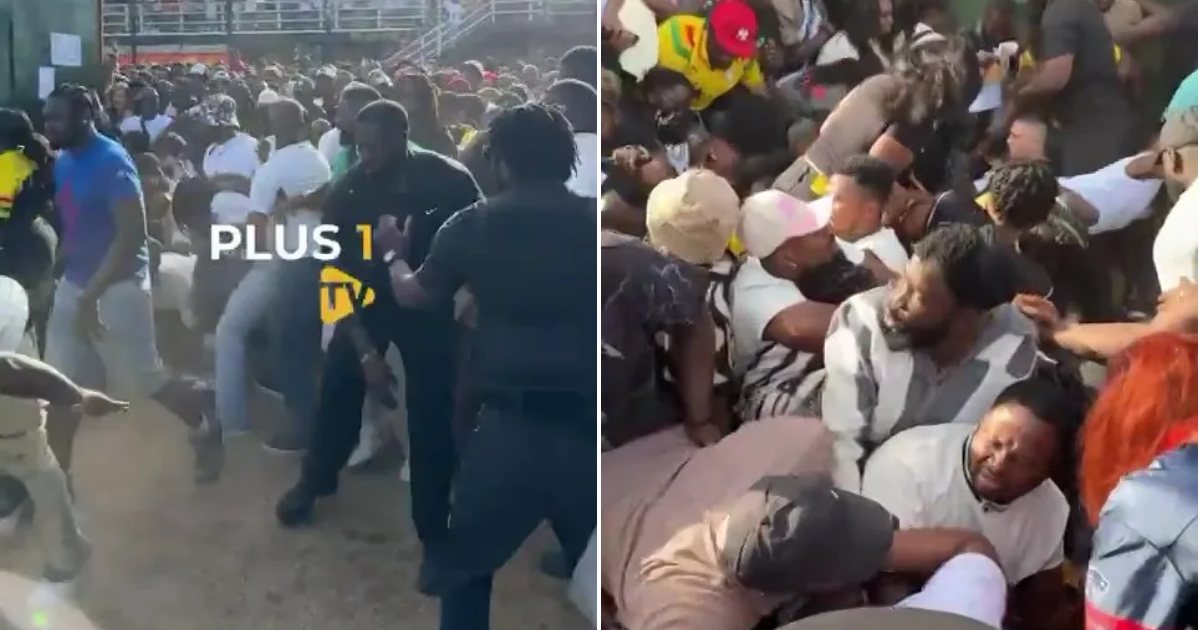
What was intended to be a vibrant, rhythmic celebration of Ghanaian culture at North London’s Copthall Playing Fields turned into a harrowing scene of chaos yesterday evening. The “Ghana Party in the Park,” a beloved annual fixture that draws thousands of people to honor the heritage and spirit of Ghana, was meant to be a day of joy, music, and community connection. However, the atmosphere shifted abruptly around 6:00 p.m. after a minor fire ignited near the festival entrance. This unforeseen hazard forced security to temporarily seal the gates, which unfortunately created a pressurized buildup of eager festival-goers desperate to get inside. When the barriers were eventually lifted, the resulting surge proved uncontrollable, turning a peaceful entry process into a dangerous stampede.
The scene that unfolded as the gates reopened was deeply distressing. As hundreds of people pushed forward in a collective rush to enter the venue, the momentum became overwhelming for those in the front. Footage from the event captures the frightening reality of the moment: individuals stumbling and falling, only to find themselves trapped under the weight of the encroaching crowd. Despite desperate pleas from event staff and police officers using megaphones to demand a halt to the movement, the momentum of the throng was difficult to curb. Witnesses described a environment of total disarray, where the energy of a music festival was replaced by the frantic need to help those who had fallen underfoot.
Emergency services were dispatched immediately, transforming the festival site into a triage area. Police officers and paramedics were seen working with urgency, moving through the crowd to reach those who had been injured. According to reports from the scene, multiple people had to be carried away on stretchers, and responding officers provided vital, immediate medical support, including CPR, to those who had been caught in the crush. While the confusion led to online rumors about more serious incidents, both the police and the organizers were quick to clarify that no deaths or stabbings occurred, emphasizing that the primary concern throughout the incident was the stabilization and safety of the injured.
The human cost of the event was significant, with at least 23 people sustaining injuries, three of whom required transport to a hospital. For an event that has been running since 2005 and is widely regarded as one of the largest Ghanaian cultural gatherings outside of the country itself, the termination of the festivities was a somber conclusion. The organizers acted swiftly to cancel the remainder of the evening, stating that the decision was driven solely by health and safety imperatives. They expressed their deep regret for the outcome, offering their heartfelt wishes for a speedy recovery to everyone who was hurt during the struggle.
Headlining artist Shatta Wale, who was anticipated to lead the night’s performances, shared a poignant statement reflecting the collective disappointment of the community. Acknowledging that the event had turned from a joyous celebration into a moment of genuine pain, the artist expressed his devastation, noting that his performances are built entirely on the hope of providing memories for his fans, not trauma. His words underscored the mood of the attendees: that for a community that prides itself on coming together to celebrate diversity and heritage, the sight of a celebration unraveling so violently was a heavy blow to the spirit of the day.
As the dust settles on the incident at Copthall Playing Fields, the focus turns to the necessity of improved crowd control and safety protocols for large-scale public events. The Ghana Party in the Park remains a pillar of cultural expression, but yesterday’s events served as a stark reminder of how quickly a festive gathering can turn perilous when unexpected emergencies occur. For the thousands who had gathered to celebrate their roots, the day will unfortunately be remembered less for the music and more for the bravery of those who stepped in to help their neighbors. It was a day that tested the resilience of the Ghanaian community in London, proving that even in the midst of a frightening stampede, the instinct to protect one another remains the most enduring part of their heritage.