


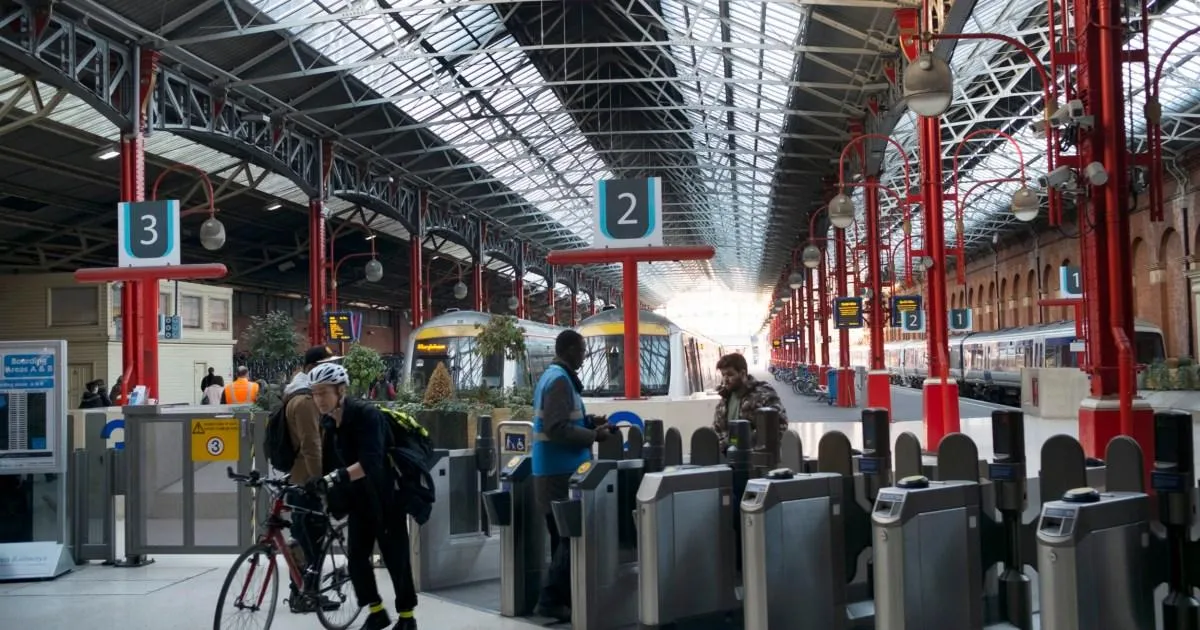
Transport for London (TfL) has recently come under fire following a stinging report from the Centre for Government Reform, which suggests that the network’s efforts to balance its books are being fundamentally undermined by rampant fare evasion. Earlier this year, in a move that drew mixed reactions from commuters, TfL raised fares across its bus and Underground networks. The stated goal was to generate roughly £168 million to support essential maintenance and service improvements. However, the data now suggests that this financial sacrifice by the public has been largely negated, as the network is bleeding nearly £165 million annually due to passengers bypassing ticket barriers and dodging fares—an almost perfect match to the projected revenue gained from the price hike.
Ameer Kotecha, Chief Executive of the Centre for Government Reform, didn’t mince words when describing the situation, characterizing it as a failure of management rather than a simple lack of funding. According to Kotecha, Londoners were sold the narrative that higher fares were mandatory for a better service, yet they weren’t informed that a systemic inability to collect those existing fares was costing the network the very amount they were trying to raise. For the average passenger, who likely witnesses people pushing through barriers on a daily basis, this creates a deep sense of frustration. The prevailing sentiment is that honest, hard-working commuters are being forced to subsidize the behavior of those who treat travel as a free entitlement.
The issue isn’t just local; it is part of a broader national struggle against “chronic free-loaders,” a group that costs the UK taxpayer approximately £350 million every year. In response, the government has begun rolling out new measures, including a validation system for railcard holders. By requiring users to verify their discounts through online platforms or station scanners, authorities hope to cut down on the misuse of fare reductions. Ideally, this technology will eventually be integrated into a unified “Great British Railways” app, streamlining travel while ensuring that only those entitled to lower fares benefit from them, thereby closing one of the many loopholes currently exploited by evaders.
In defense of their operations, TfL maintains that they are actively managing the crisis by deploying a workforce of over 500 uniformed officers. These teams are tasked not only with curbing fare evasion but also with managing anti-social behavior to ensure the safety of both staff and passengers. TfL points to their recent statistical successes as evidence of progress, noting that the system-wide evasion rate has dropped from 3.9% in the 2022/23 period to 3.5% today. They emphasize that they are targeting the most persistent offenders by utilizing data to identify, intercept, and prosecute those who view ticket barriers as optional obstacles rather than a necessary requirement for transit.
The scale of the enforcement effort is significant, with the network reporting over 69,000 penalty fares issued and more than 21,000 individuals reported for potential prosecution in the last financial year alone. TfL officials describe these actions as part of a long-term strategy to restore integrity to the fare system. They have set a public goal of driving the evasion rate down to 1.5% by the 2030/31 financial year. By prioritizing enforcement at high-traffic hotspots and embracing new technology to crack down on repeat offenders, they hope to reassure the public that their contributions are actually being protected rather than wasted by the status quo.
Ultimately, this clash of perspectives highlights a widening gap between the transit authority and the commuting public. While TfL views the problem as a manageable technical challenge that requires consistent, steady enforcement, the public views it through a lens of fairness and social contract. For a Londoner standing at a ticket gate, the nuances of reduction percentages matter far less than the daily observation of evasion occurring right before their eyes. If the network intends to win back the trust of the city, it must move beyond simply managing statistics and start demonstrating that the system is truly robust enough to ensure everyone—without exception—pays their fair share for the services they use.