



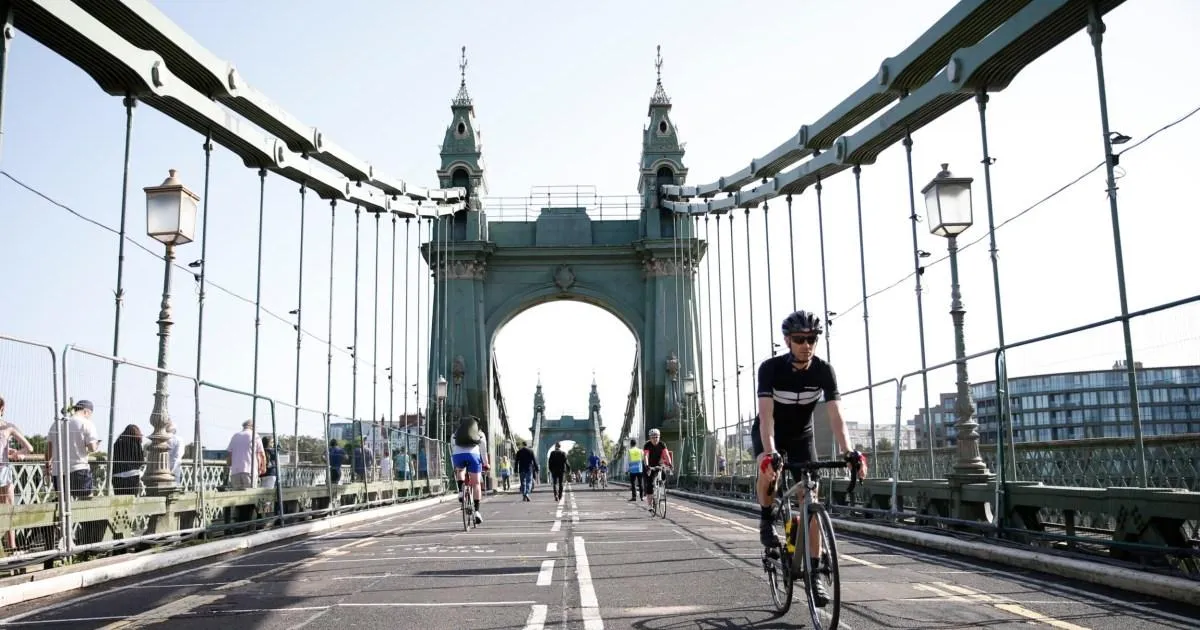
For years, the iconic Hammersmith Bridge in west London has stood as a frustrated symbol of urban decay. Since structural cracks were discovered in 2019, this 138-year-old landmark has been shuttered to motor vehicles, leaving residents and commuters in a difficult spot. Local authorities have suggested that the damage is so extensive that the crossing might essentially require a complete rebuild—a costly and time-consuming prospect that offers no immediate relief. However, a local community group known as the Barnes and Hammersmith Electric Light Transit (BHELT) has stepped forward with a forward-thinking, agile solution that could turn this logistical headache into a pioneer site for modern urban mobility.
The proposed solution involves a fleet of lightweight, autonomous electric vehicles affectionately described as pods. These “Ohmio AV Shuttles” are compact, box-shaped shuttles designed to prioritize efficiency over size. Weighing under three tonnes, they are perfectly suited for the bridge’s fragile state, exerting far less stress on the Victorian architecture than the buses and heavy lorries that once crossed it. Despite their modest size, they are remarkably versatile; each pod can carry up to 14 passengers—eight seated and six standing—and even includes a ramp to accommodate wheelchair users, ensuring that this innovative transit remains accessible to everyone in the neighborhood.
Technologically, these pods represent a leap into the future of transport. They operate without steering wheels or traditional brakes, instead relying on advanced LiDAR technology—the same sensor-based system used by autonomous taxis—to map their surroundings. These lasers allow the shuttle to “see” pedestrians, detect obstacles, and maneuver around unexpected roadworks, all while communicating with a centralized system to ensure that no two pods overwhelm the bridge’s capacity at once. According to BHELT chair Charles Campion, the AI is already being trained through “virtual tracks,” with human safety drivers currently using joysticks to guide the pods and teach them the nuances of the Hammersmith-to-Barnes route.
The vision for these pods goes beyond mere bridge hopping; it is about reclaiming the urban landscape from the grip of congestion. Campion is a vocal proponent of a “green” future for the city, arguing that the era of heavy car traffic choking the streets of London must come to an end. By integrating these shuttles with existing railway stations and bus networks, the project aims to create a seamless, low-impact connection that encourages people to leave their personal cars at home. In a symbolic nod to this community-driven spirit, the group has even invited the public to participate in the project by suggesting names for the pods, sparking local excitement and engagement.
However, the path to implementation is not without its hurdles. Transitioning from experimental trials to a city-wide transit service requires navigating strict legal frameworks, as current regulations still mandate that a human driver be present during operation. Furthermore, official bodies like Transport for London (TfL) remain cautious, stating that they currently have no plans to adopt these autonomous shuttles or introduce driverless buses elsewhere on their network. While the BHELT team is busy mapping routes and testing the technology, they are essentially working ahead of the current regulatory and administrative curve, waiting for the city to catch up with their vision of a leaner, cleaner, and smarter transit system.
Ultimately, the Hammersmith Bridge pod project serves as a compelling case study of how localized, grassroots innovation can challenge the status quo. While TfL may be hesitant, the pods represent an undeniable shift in how we think about moving people through historic spaces. They offer a way to preserve fragile landmarks while simultaneously providing the high-frequency, reliable transport that modern cities desperately need. Even if this specific fleet doesn’t hit the streets tomorrow, the experiment has successfully sparked a vital conversation about the future of green travel—proving that sometimes, the best way to move forward is to think small, automate the commute, and leave the heavy, polluting metal behind.