


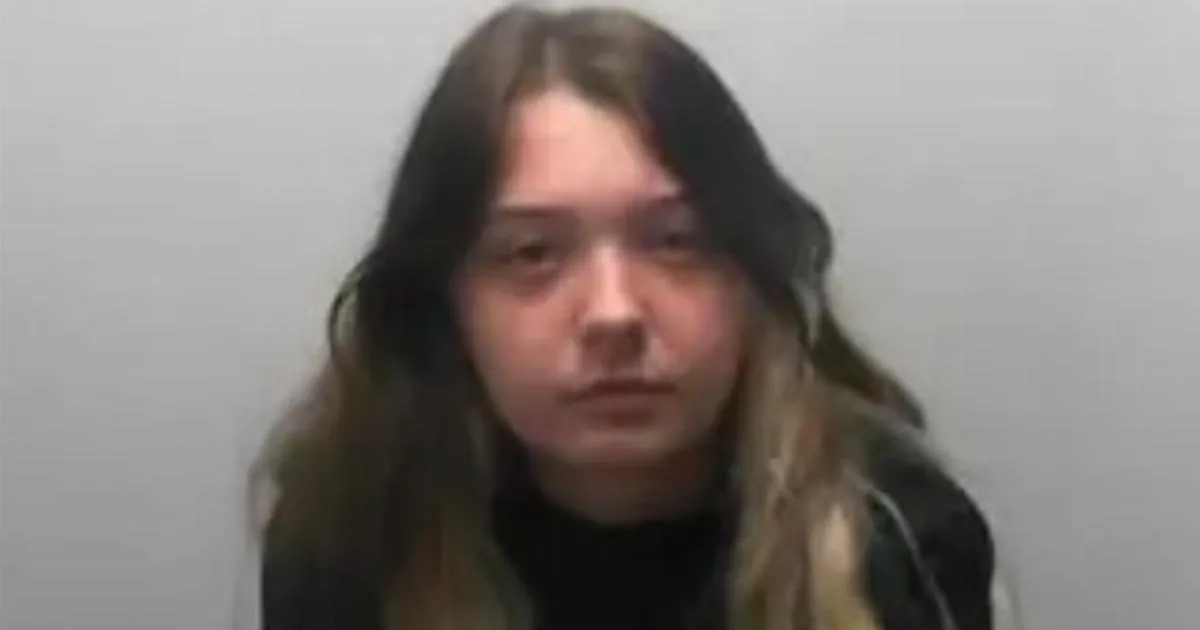
Some stories are measured not in legal terms but in the weight of a single loss. The case of Mia Howarth and Alfie Lovett is one of those. On September 12, 2023, a small car carried four teenagers along a quiet rural road in North Yorkshire. They were heading to Brimham Rocks, a beautiful National Trust site near Harrogate, with music playing and the kind of careless excitement that marks the last golden afternoons of summer. By the end of that journey, Alfie, a 17-year-old boy, was dead. Mia, his girlfriend, was at the wheel. Now 21, she has spent much of her young adulthood at HMP Low Newton, a women’s prison in Durham, having been locked up since she was 18. In the years since the crash, she has been a prisoner not only of the justice system but of her own guilt. This week, the Court of Appeal increased her original sentence from three years to four and a half years after the Attorney General ruled it ‘unduly lenient.’ But no sentence can bring Alfie back, and no punishment can undo the moment when a day out became a funeral. The word ‘accident’ feels too soft, but ‘crime’ feels too simple. It was both, and neither. The details are simple to recite but almost impossible to absorb. Alfie was not just a name in a press release. He was a young father whose daughter was only twelve weeks old. He was the boy who, by all accounts, had been steadied by Mia’s presence in his life. She was not a stranger to his family; she was woven into it. That is what makes this case so painful. It is not a story about a monster and a victim. It is a story about two young people who loved each other and whose lives were shattered in seconds. The law now says Mia must spend longer in prison. But the law cannot say what any of this means. When a young person is sentenced, society hopes they will learn and change. But the dead cannot learn, and the dead cannot change.
Here is what happened on that road. Howarth was driving a Peugeot 107, a small and unassuming car, at about 35mph. It was not a high-speed chase or a joyride gone wild. It was ordinary driving, at ordinary speed, with an ordinary distraction. Alfie was sitting on the frame of the open passenger window, hanging out in a way that many teenagers would think was harmless fun. Alfie had chosen to perch there rather than sit back in a seat, and in that choice lay the difference between life and death. Howarth had her phone out, filming him for Snapchat. The video was meant to be a memory, not a final record. Perhaps she wanted to freeze the joy of the afternoon; perhaps it was simply an automatic reflex of a generation that documents everything. But a car is not a stage, and a road is not a backdrop. She lost control, veered off the carriageway onto a grass verge, and crashed into a dry stone wall. The impact was fatal for Alfie, who died at the scene. For everyone else in the car, the sound of the crash became a permanent memory. The young passengers who survived will have to live with that sound, that image, and the knowledge that they were part of something unspeakable. Howarth did not try to run or hide. According to her lawyer, she admitted at the roadside that she had killed Alfie. She later told police that she had asked the boys to wear their seatbelts and warned them that it would be ‘her fault’ if they took them off. She pleaded guilty to causing death by dangerous driving at York Crown Court in March. There was no trial, no attempt to shift the blame. She accepted responsibility from the beginning, even as the reality of what had happened must have been unbearable. And yet, for all her remorse, the fact remained: Alfie was dead because of a decision she made while driving. That is the cold, hard centre of this tragedy. No one in that car woke up planning to destroy a family.
The legal aftermath has been as painful as the crash itself. In March, Howarth stood at York Crown Court and pleaded guilty to causing death by dangerous driving. The judge who sentenced her gave her three years. But three years is also a long time when you are 18 and watching your youth disappear through a prison window. To many people, that must have felt like a life sentence for Alfie’s family and barely a dent in Howarth’s future. Three years for a 17-year-old life—a life that had already produced a child, a life that was just beginning—seems impossible to reconcile. But Howarth was only 18, and the court heard a long list of mitigating circumstances. The judge heard about her age, her remorse, her place in the Lovett family, and the fact that she had already been punished by guilt long before the state caught up. The Attorney General, however, took the unusual step of referring the sentence to the Court of Appeal on the grounds that it was ‘unduly lenient.’ That is not a step taken lightly; it is reserved for cases where the public might lose confidence in the justice system because the punishment is so out of step with the offence. On Friday, the Court of Appeal agreed. Three senior judges—Lord Justice Popplewell, Mr Justice Linden and Mrs Justice Hill—increased the sentence to four and a half years. It means Howarth, who has already been in prison for a significant period, will serve considerably more time before she can start rebuilding her life. The extra 18 months may not sound vast, but in the closed world of a prison cell, every extra month is a lifetime. For her, the added months may feel like a second sentence. For Alfie’s family, no sentence will ever feel long enough. That is the impossible arithmetic of loss. It is a maths that no court can solve.
The judges’ reasoning was careful and firm. It was not a decision made in anger, and it was not a decision that ignored Howarth’s suffering. Lord Justice Popplewell said the original judge had made a clear error by reducing the sentence because of poor conditions in UK prisons. It is true that British prisons are overcrowded and under-resourced, and many people sympathise with the idea that sending a young person into that environment is a punishment in itself. But the appeal court said that practical problems inside the prison system cannot be allowed to distort the sentence for a serious crime. The judges also ruled that the original judge had reduced the sentence too much simply because Howarth was young. Youth is relevant, especially in a case where someone’s future is at stake, but it is not a free pass. A young offender can be given time to grow and change, but a judge cannot ignore the fact that someone is dead. ‘We agree the judge fell into error in the way he applied a reduction for youth,’ Lord Justice Popplewell said. The message was clear: dangerous driving that kills is a grave offence, and the sentence must reflect the harm that was done, not just the character of the offender. Kelly Brocklehurst, representing the Attorney General, put it plainly. She acknowledged that there was ‘a significant amount of mitigation’—the facts that made Howarth deserving of sympathy—but said the sentence still had to punish and to deter. That is the difficult balance at the heart of every criminal case, and especially this one. The courts are not asked to choose between compassion for the offender and compassion for the victim. They are asked to do both, and that is never easy. Yet the appeal judges knew that their decision would be watched by other young drivers, and by families who have lost children in similar crashes.
Then came the defence, and the room heard a different kind of truth. The first truth was legal; the second was human. Glenn Parsons, representing Howarth, called the case a ‘profound tragedy’ and said her grief was ‘overwhelming.’ He did not ask the court to forget Alfie. He asked the court to remember that Mia was also a victim of her own actions. He described a young woman who was not a threat to society but a person ‘embedded’ in Alfie’s family. He painted a portrait of a relationship that was not perfect but was real, with all the complications of teenage life. She had been a good influence on Alfie, he said, a steadying presence in the life of a boy who had become a father just twelve weeks before his death. That baby daughter will never know her father. She will learn about him through photographs and stories, through the grief of his family and the guilt of the woman who loved him. It is a bond that makes this case different from a stranger committing a crime against another stranger. Howarth had also shown remorse from the very beginning. Remorse, of course, cannot resurrect the dead, but it tells us something about a person’s character. She admitted killing Alfie at the roadside, before anyone had time to craft a defence. She told police she had warned the boys to keep their seatbelts on and said it would be ‘her fault’ if anything happened. The delay in charging her, her lawyer argued, was unacceptable—she had to live with that burden for months before the legal process caught up. For more than a year, she sat in a kind of limbo, waiting to be charged, waiting to be judged, waiting to be punished. Throughout the appeal hearing, Howarth appeared by video link from HMP Low Newton, sobbing as the details of the crash and its aftermath were read out. In that courtroom, she was not a symbol of reckless youth. She was a 21-year-old woman drowning in grief, watching the story of her worst moment play out in public. There were no excuses, no claims that she had been provoked or misunderstood. There was only a young woman facing the consequences of a few seconds of inattention. It is possible to feel sympathy for her and still believe that the longer sentence was right. In fact, that may be the only honest way to look at this case.
Ultimately, this case leaves us with no easy answers. There are only responsibilities, and the slow, painful work of living with what has happened. The Court of Appeal has done its job: it has corrected a sentence it considered too lenient and reaffirmed the seriousness of causing death by dangerous driving. But for Alfie Lovett’s family, no increase in Howarth’s sentence will bring back the boy they loved. For his daughter, now growing up with a father-shaped absence, four and a half years is just a number. A child she will never meet will carry the weight of this case forever. For Howarth, the longer sentence is the cost of a single decision—a decision made in a moment, with a phone in her hand and a boy she loved hanging out of a window. It is a choice that most people make without thinking, and most people get away with. Alfie did not. She will eventually be released, still young, with the rest of her life ahead of her. Alfie will never have that chance. Instead, he has become a memory, a name, a case study, a boy who was here and then gone. The least the law can do is make sure his death is not treated as a footnote, and that others understand the consequences of picking up a phone while driving. It is easy to judge Howarth from a distance. The internet has already made its judgment, as it always does. But the court had to do something harder: look at the whole person, not just the worst thing she ever did. It is harder to sit with the reality that she is both responsible for a death and utterly broken by it. The road near Brimham Rocks is still there, and teenagers still go there on summer afternoons. The National Trust will continue to welcome visitors, families will picnic, children will run, and life will go on, which is both a comfort and an outrage. Maybe this story will make some of them put their phones down, put their seatbelts on, and hold on to the people they love a little more tightly. That would be the only meaningful tribute to Alfie—and the only way to turn an unbearable tragedy into something that protects the next generation. Justice, in the end, is not about revenge. It is about saying clearly that some actions have consequences, and that every life deserves to be mourned with the full weight of the law. For Mia Howarth, the sentence is now longer. For Alfie Lovett, the only sentence that matters was already delivered on a quiet road in North Yorkshire.