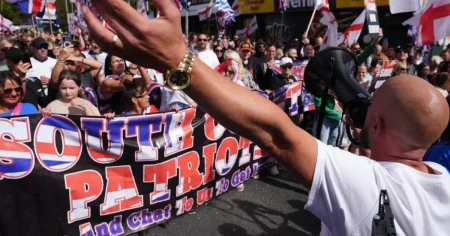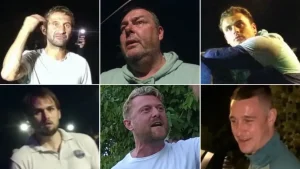


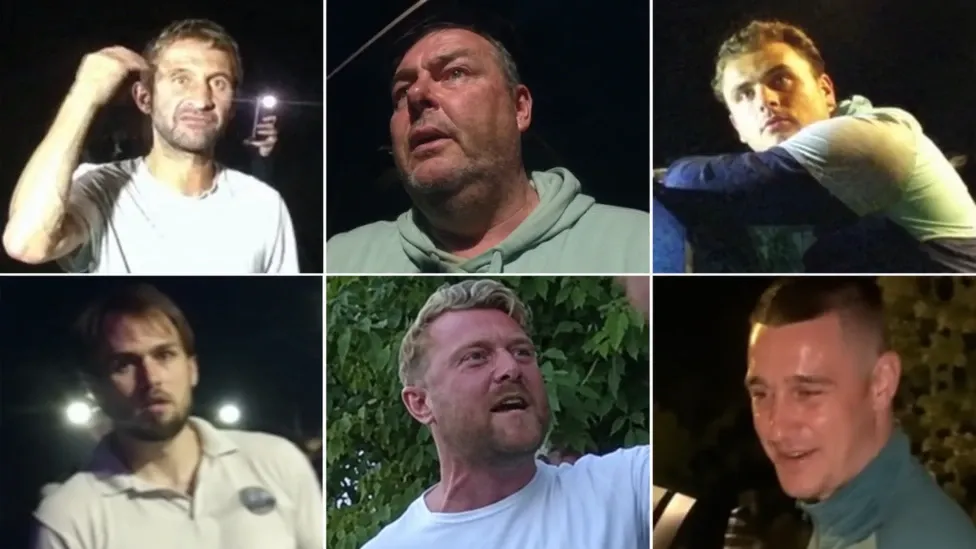
On the evening of Sunday, 6 September, a modest stretch of coast at Eastney Marina in Portsmouth became the backdrop for a scene of raw, unsettling tension. It had been the kind of late-summer weekend when the sea looks calm and the streets feel quiet, but by dusk the tranquility was gone. Around 200 people gathered at the small port, their voices loud and their mood angry, determined to disrupt the landing of a small boat that had crossed the English Channel. Some carried flags, some covered their faces, and some simply stood at the water’s edge, watching. The crowd was not simply protesting from a distance; it tried physically to stop people from being loaded off the vessel and taken to a processing centre in Kent. They were, in their own words, blockading the port to prevent the arrival of migrants. Whatever the original intentions were, the evening did not remain a peaceful demonstration. Violence flared, vehicles belonging to the police, Coastguard and Border Force were damaged, and the disorder stretched late into the night before the crowd was eventually dispersed at 4am. By then, several officers had been injured and treated at the scene, and the small marina had become a symbol of how quickly fear and anger can tip into chaos. Hampshire & Isle of Wight police have now released images of six men they want to trace, hoping that someone in the public will recognise the faces and help investigators bring them to account. It is, in effect, a manhunt conducted through the eyes of the community. For anyone who lives near Portsmouth, it was the kind of event that stays with you: a seaside evening transformed by confrontation, and a reminder that the migration debate is not abstract—it lands on harbours, streets, and the shoulders of the people who live and work there.
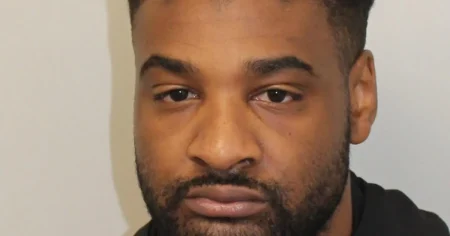
After the crowds scattered and the marina grew quiet, the hard work of justice began. There were no arrests on the night itself, which might seem surprising in the face of such obvious criminal damage and violence. But in the middle of a shouting, shifting crowd, with masked faces, poor light and conflicting accounts, officers often cannot safely pick out individual offenders. Instead, detectives have had to piece the evening together from hundreds of hours of video footage, body-worn cameras and mobile phone clips. It is painstaking, unglamorous work. It involves pausing frames and tracing faces, then trying to match them to names. That patient investigation has already produced some results. A 42-year-old man from Paulsgrove has been charged in connection with the protest. A 16-year-old male was arrested on Saturday in connection with the same incident and has since been bailed. But six men remain outstanding. Their faces have been published with the simple, direct request: do you know them? It is a strangely intimate form of detective work, because it relies on the community rather than on forensics. Somewhere, perhaps in a house, a pub, or a workplace, someone will look at those pictures and feel a jolt of recognition. They may be family members, friends, colleagues or neighbours. The challenge for them is deciding what to do with that knowledge. The police are not asking for speculation or online accusations; they are asking for information that can be checked, tested and used fairly. That careful approach matters, because it protects the innocent as much as it pursues the guilty. It also gives the six men a chance to tell their side of the story, should they choose to come forward. In the meantime, the officers injured that night have their own stories—bruises and scrapes that may heal, but also the memory of being attacked simply for doing their job.
Understanding what drove so many people to Eastney Marina requires looking at the protest’s organisers and its mood. Witnesses described masked groups who called themselves patriots, and at the centre of the livestream was Daniel Thomas, better known to his followers as Danny Tommo, an associate of the right-wing activist Tommy Robinson. As the night unfolded, Thomas stood knee-deep in the sea and drew a striking comparison: he said the action was like the call to help people stuck on the beaches of Dunkirk. It was a powerful historical image, meant to cast the blockade as a rescue mission, a group of ordinary citizens answering a call to protect their country. But that framing only works if you believe the people on the boat were a threat to be stopped, not human beings in need of safety. A coach carrying groups of people thought to have landed at the small port was blockaded by the masked men, and for the occupants of that coach, the scene must have been terrifying. To be met by a jeering, masked crowd after an already dangerous Channel crossing is not a welcome; it is a siege. The sea is a strange place for a political standoff: it is cold, wet, and indifferent, and the tide does not care who is right or wrong. The Dunkirk reference also reveals a deeper emotional pull: the idea that these protesters were defending their home. That sentiment is real, and it should not be casually dismissed. People along the south coast have watched small boats arrive for years, and they have questions about who is coming, how they are processed, and what it means for local communities. But anger, when it curdles into criminal damage and assault, stops being a political statement. It becomes public disorder. And whatever the organisers claimed, the evening was not about patriotism or protection. It was about a crowd using its numbers to intimidate, to block official work, and to damage public property. That is not how a coastal community becomes safer. It is how it becomes more divided.
The official response has been careful, firm, and surprisingly reflective. Assistant Chief Constable Tony Rowlinson did not reach for insults or dismiss concerns. He made a clear distinction between peaceful protest and the violence that unfolded. “We have been consistently clear that violence and criminal damage have no part in peaceful protest,” he said, “and we will investigate incidents like this thoroughly and take robust action against those responsible.” Then he added the crucial judgment: “Clearly events on Sunday evening were not peaceful protest, rather violent public disorder, and this will not be tolerated.” It is a distinction that matters. There is a legal and moral difference between holding a placard and throwing a punch, between chanting a slogan and smashing a vehicle. Policing a protest in Britain is one of the hardest jobs there is, because officers must protect the right to dissent while also preventing harm and preserving order. Rowlinson also addressed one of the most frustrating realities of public order policing: arrests at the time are not always possible. In a shifting, hostile crowd, officers have to balance immediate action with the need to gather evidence that will actually lead to conviction. He urged anyone who recognises the six men to contact the police, and he spoke about the seven officers who were injured and treated at the scene, thankfully none seriously. They did not, as he pointed out, deserve to be assaulted while working diligently to ensure everyone’s safety. And he added a warning about online abuse, saying officers and partner agency staff do not deserve to be singled out or threatened on social media. That is a very modern part of policing—not just dealing with what happens on the street, but with the digital echo that follows it. Threats made online will be investigated too, and that is an important message. The response, taken as a whole, suggests a force trying to be fair as well as firm, aware that public trust is built through consistency rather than through anger.
This incident did not happen in a vacuum. It is part of a larger, sadder story playing out across Britain, as small boats crossing the English Channel become a regular feature of the news. For some, those boats symbolise chaos and a loss of control. For others, they symbolise desperation and hope. That gap is where incidents like Eastney Marina are born. When migration is talked about in abstract terms, it is easier to fear. But a small port is not an abstraction. It is a place where ferry workers clock in, where sailors tie up their boats, where families walk their dogs along the shore. On that Sunday evening, it became a battlefield over national policy. There are legitimate questions to be asked about immigration policy, about border enforcement, and about the pressure on processing centres like the one in Kent. Those questions deserve to be answered through politics, through law, and through peaceful democratic engagement. They do not get answered by masked men blocking a coach and damaging police vehicles. Nor do they get answered by shouting at an exhausted person whose shoes are still wet from the sea. Behind every headline about protests and patrols are real human beings: the migrants who have risked everything, the officers who stand between two sides, and the residents who feel confused and anxious about change. It is possible to hold those feelings in mind without excusing violence. The events at Eastney Marina were not an example of a community losing its patience; they were an example of a group choosing to break the law. The task for the rest of us is to understand the fear without legitimising the harm, and to demand accountability while also looking for ways to talk about migration with less hatred and more honesty.
For now, the appeal to the public is the most important thread. Hampshire & Isle of Wight police have released images of the six men and are asking anyone who recognises them to come forward, or to call 101 with information. The wording is ordinary, but the request is profound: someone knows these men. Maybe they are husbands, sons, brothers. Maybe they went home that night and told no one what they had done. Maybe their faces have been changed by the knowledge that their actions are being investigated. The police say the investigation is thorough and robust, and that online threats will be dealt with as seriously as street violence. That is the message that should be heard. Protest has a long and necessary place in British society. The right to gather and object is precious, and it must be protected. But that right does not include the right to assault officers, damage vehicles, or terrorise vulnerable people. The six men themselves know who they are, and if they have any sense of the harm done that night, they will consider doing the right thing rather than hiding from it. If they come forward, they will have their chance to explain. If they are identified, they will face the consequences. In the end, the marina will heal, the damaged vehicles will be repaired, and the officers will recover. But the deeper wound—the one left in a community forced to choose sides, and in migrants who saw hatred instead of help—will take longer to close. The best way forward is to acknowledge what happened honestly, to hold accountable those who crossed legal lines, and to recommit to a politics that treats every person, whether born here or arriving by boat, as human. That is not a slogan. It is the only way to make sure a small marina in Portsmouth does not become remembered only for the night the migration debate turned into violence.