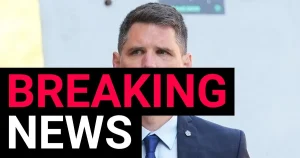


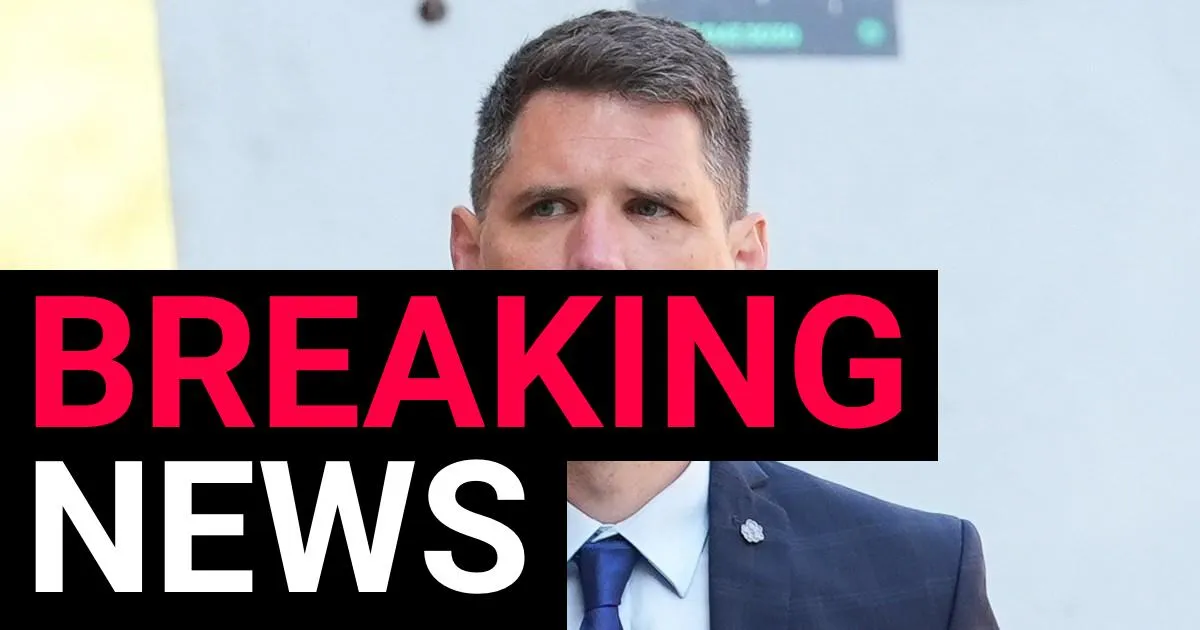
Paul Street once seemed the very image of a modern police officer: confident, effective, and visible. He was a sergeant who appeared on BBC and Channel 4 programmes, holding himself out as an authority on tackling serious crime, particularly the brutal reality of county lines drug dealing and organised criminal networks. In those broadcasts, viewers saw someone committed to protecting the public and taking dangerous offenders off the streets. Behind the professional veneer, however, lay a profoundly different reality. By the time his offending was exposed, Street had created and nurtured what prosecutors and judges would later describe as a “toxic” working environment at Cambridgeshire Constabulary. His bullying, misogyny, and blatant disregard for the rights of vulnerable people were not accidental lapses in judgment; they were embedded in a culture he encouraged, normalized, and even celebrated among his subordinates. When the full story emerged in court, the fall from grace was staggering. The man who had once represented the force on national television stood in the dock at the Old Bailey, stripped of his rank, his reputation, and ultimately his liberty. On that Wednesday morning, with Judge Mark Lucraft KC presiding, Street learned he would spend four years in prison. For a serving police officer, whose entire professional identity rested on the idea of enforcing the law fairly and protecting those who could not protect themselves, the sentence was a stark and necessary rebuke. Yet for those who came into contact with Street’s misconduct, especially a teenage detainee and a female suspect whose private images were passed around like trophies, the damage was far deeper than any prison term can truly repair.
The investigation that unraveled Street’s career began not with a formal audit, but with a single act of conscience. In 2021, a newly appointed police officer at Cambridgeshire Constabulary reported concerns about his conduct. That report prompted anti-corruption officers to open a file, and what they discovered was chilling. Street had been running two WhatsApp groups in which he encouraged his team to abuse their authority, dehumanise vulnerable people, and treat their positions as tools for personal gratification. The messages were not idle banter; they were direct instructions and requests from a senior officer to those beneath him, creating an environment where cruelty and contempt became the norm. When investigators examined the extent of the problem, they found that Street’s influence had reached far beyond his own behavior. Eleven other officers were investigated over their conduct arising from the culture he fostered. The outcomes were a damning indictment of what had been allowed to develop within the unit: two officers resigned, one was dismissed for gross misconduct, another received a final warning, two received written warnings, and five were dealt with for low-level performance issues. That so many officers were implicated suggests Street did not act in isolation. His “robust” style, as it was euphemistically described, had created a climate of fear and complicity, where speaking out was difficult and going along with the crowd was far easier. But it also proves that the rot was not total. The officer who reported him chose to break rank, to challenge the prevailing culture, and in doing so triggered the accountability that had long been absent. That whistleblower deserves recognition, for they stood up against a superior officer who appeared untouchable, and they did so at the very start of their own career, knowing full well the risks of retaliation and isolation.
The details of Street’s crimes, laid bare during the Old Bailey trial, are as disturbing as they are specific. In April 2020, Street used WhatsApp to call on his team to “bully” a 17-year-old detainee named Robiul Islam. The messages were not vague or ambiguous. He encouraged his officers to “hit him” and “smash his head in,” language that came from a man who was supposed to be responsible for the welfare and safety of people in custody. This was not a moment of misplaced frustration; it was a sustained attempt to incite violence against a child, a person who was wholly in the power of the state and entitled to protection. The same disregard for human dignity was evident in Street’s treatment of a female suspect. In the autumn of 2020, while examining the phone of a woman he described as “quite fit,” officer Josh Williams brought her to Street’s attention. Street immediately asked whether there were “any nudes” on the device. Williams replied that there was a video of the woman committing a sexual act, and then went further, sending Street a photograph from her phone showing her in underwear. The following year, Street asked Williams if he still had the intimate video because he wanted to show it to “the lads from footy.” For these two officers, the woman’s privacy meant nothing. She was released without charge, but her images were treated as entertainment, passed between police officers and, at least potentially, shared beyond. When Street was later interviewed about this behaviour, he offered a bizarre and unconvincing excuse: he claimed he had wanted to see the images to reassure himself that the woman was not a victim of exploitative behaviour. The jury was not persuaded. As prosecutors pointed out, it was not Williams’s job to discuss or share private images from a suspect’s phone, and it was certainly not Street’s job to request them for any reason, let alone for the amusement of his friends.
At trial, Street attempted to explain away his messages as “poor” and conceded they were embarrassing. But he also sought refuge in a defence that has become all too familiar in cases of police misconduct: he called his behaviour “gallows humour” and claimed it was simply part of the culture at the time. He admitted, almost as an aside, that he had become “arrogant” because of his professional success. That arrogance, perhaps, is what allowed him to believe he could say and do whatever he wanted without consequence. Yet the jury saw through the excuses. In June, after hearing all the evidence, they found Street guilty of two charges of misconduct in public office. He had previously admitted two offences of unlawful disclosure of personal data, relating to information and screenshots he had sent to his partner in 2020. His co-defendant, Josh Williams, 38, pleaded guilty to misconduct in public office. For Williams, the moment of accountability also came, though the precise terms of his sentence were decided separately. The convictions represent more than just legal outcomes; they are a public acknowledgment that the behaviour of these officers was not harmless banter or a rough-and-ready version of policing. It was an abuse of power, a violation of the trust placed in police officers by the public, and a betrayal of the very principles that distinguish lawful authority from tyranny. When police officers use their position to bully a teenage detainee, to objectify and mock a vulnerable woman, and to treat private data as a source of entertainment, they do not just harm their direct victims. They poison the well of public confidence, making it harder for every honest officer to do their job.
The Street case raises urgent questions about the culture within British policing, and specifically within Cambridgeshire Constabulary. How did a man with such a toxic approach to leadership rise to a position of responsibility? Why did it take a new officer’s report to trigger an investigation, rather than the routine oversight that should have detected such behaviour long before? What does it say about the institution that eleven other officers were caught up in the fallout, with two resigning and one being dismissed? These are uncomfortable questions, but they are necessary. Policing is not merely a profession; it is a public trust. Officers are granted extraordinary powers: the power to arrest, to detain, to search, and to use force. With those powers comes an obligation to treat every member of the public with dignity and respect, no matter the circumstances. Street abused that obligation, and his actions have consequences far beyond his own imprisonment. For the young detainee Robiul Islam, the memory of being told that police officers wanted to hit him and smash his head in will not easily fade. For the female suspect whose private images were shared, the knowledge that men in uniform saw her as a sexual object rather than a person is a profound violation. And for the officers who served under Street, many of whom may have felt trapped in a culture of bullying and complicity, the process of rebuilding their own sense of professionalism will take time. The case should serve as a wake-up call to police forces across the country: there is no place for “gallows humour” when it comes to the rights and humanity of suspects, and there is no excuse for looking the other way.
Ultimately, the sentencing of Paul Street is a moment of justice, but it is not a moment of celebration. Four years in prison is a significant sentence, one that reflects the seriousness of his crimes and the breach of trust they represent. Yet no sentence can fully undo the harm that was done. The woman whose images were shared did not ask to become a cautionary tale; she was simply caught up in a system that failed to protect her. The teenage boy who was the target of Street’s violent language did not choose to be the object of a police officer’s cruelty; he was already in a vulnerable position, dependent on the very people who wished him harm. The police officers who blew the whistle, and the anti-corruption investigators who pursued the case, deserve recognition for their courage. They demonstrated that accountability is possible, even when the offender wears a badge. And perhaps, in the end, that is the most important lesson of this case: no one is above the law, not even those whose job it is to enforce it. Street’s television appearances, his “impressive results,” and his robust reputation counted for nothing when weighed against the reality of his behaviour. He was not a great officer who made mistakes; he was a man who allowed his power to corrupt him, and who then used that power to corrupt others. The sentence handed down at the Old Bailey sends a clear message that such conduct will not be tolerated. But the work of rebuilding trust in policing continues long after the courtroom empties. It begins with officers who refuse to stay silent, with forces that take complaints seriously, and with a public that demands better. Paul Street is now a prisoner, but the culture he fostered must not survive him. Only by confronting the toxic patterns that allowed this abuse to flourish can British policing hope to move forward, and only then can victims like Robiul Islam and the unnamed woman know that their suffering was not in vain.