

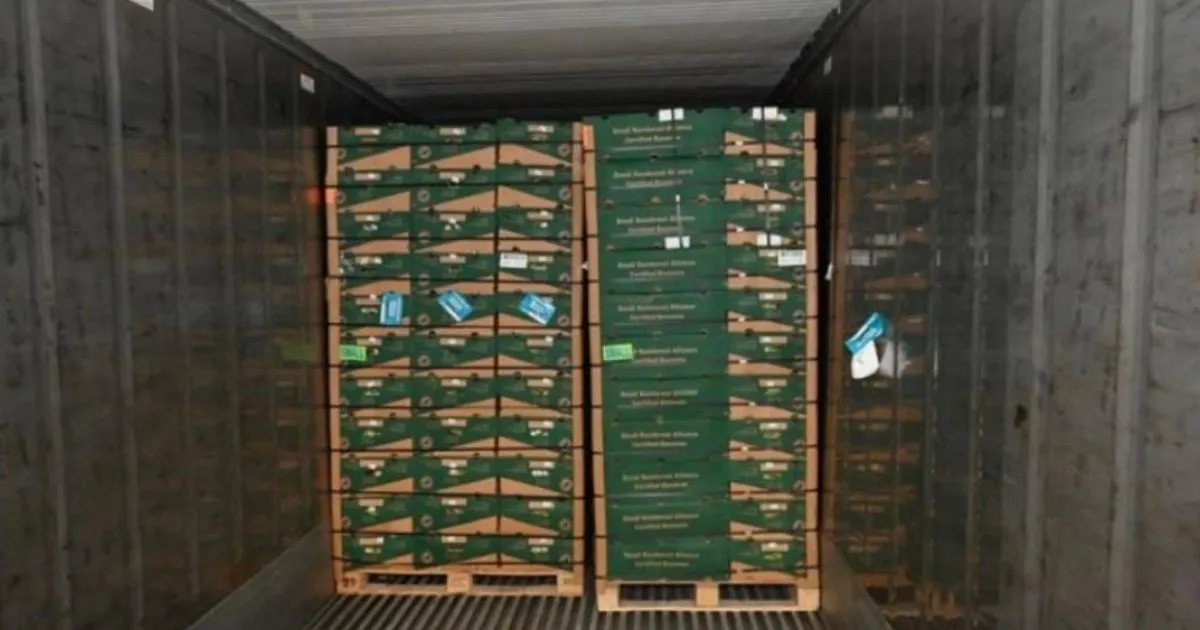
In a striking operation at London Gateway Port in Essex, Border Force officers have successfully intercepted a massive smuggling attempt, seizing nearly three tonnes of cocaine concealed within a shipment of South American bananas. The sheer scale of this discovery is staggering, with the street value of the contraband estimated at a monumental £200 million. This high-stakes intervention serves as a stark reminder of the relentless battle authorities face in securing the UK’s borders against the sophisticated networks that facilitate the international drug trade, ensuring that a significant haul of dangerous substances never makes it onto the streets.
Following the discovery last Thursday, law enforcement wasted no time in launching an investigation, resulting in the immediate arrest of nine men linked to the illicit cargo. While those individuals have since been released on bail, the case remains a top priority for the National Crime Agency (NCA). Dave Phillips, the senior investigating officer for the NCA, emphasized the gravity of the bust, noting that by hitting these organized crime groups where it hurts most—their finances—authorities are effectively preventing these profits from being reinvested into further criminal endeavors that threaten the stability of local communities.
The emotional and social impact of such seizures cannot be overstated. Beyond the impressive logistics of the operation, the core mission is one of public safety. Class A drugs are inherently toxic, acting as a catalyst for violence, exploitation, and the destruction of individual lives. By removing £200 million worth of poison from the supply chain, the NCA and Border Force are not just calculating monetary losses for cartels; they are actively working to shield neighborhoods from the devastating ripple effects that follow the distribution of these illicit substances.
This incident is far from an isolated event; it underscores a worrying pattern of increasingly massive shipments attempting to infiltrate the UK. The scale of this recent seizure is reminiscent of a record-breaking incident in February 2024, when authorities intercepted nearly six tonnes of cocaine at Southampton Port—also hidden within a shipment of bananas. With the Home Office reporting over £1 billion in intercepted drugs during a single record-breaking summer, it is clear that law enforcement is currently engaged in a high-intensity “cat and mouse” game against global traffickers who are becoming increasingly bold.
Criminal organizations have proven themselves to be relentlessly inventive, constantly evolving their tactics to bypass security protocols. Traffickers have moved far beyond simple hollowed-out containers, now embedding narcotics into legitimate, everyday household goods. A particularly notorious example occurred in 2022 at the US-Mexico border, where agents discovered over 1,500 pounds of cocaine disguised within packages of baby wipes. This level of deception highlights the immense pressure on border officials, who must screen millions of items to distinguish between legitimate commerce and deadly cargo.
As the NCA continues its work, the strategy remains focused on a multi-layered approach that includes domestic interdiction and global cooperation. By collaborating with source and transit countries, officials aim to “head off” these threats before they even reach British waters. While the battle against international drug trafficking is an ongoing struggle, the recent success at London Gateway is a testament to the vigilance of those working on the front lines, proving that no matter how cleverly traffickers attempt to hide their goods, the authorities remain committed to dismantling these criminal operations piece by piece.