
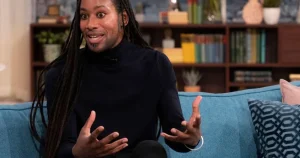



The meteoric rise of Professor Jason Arday once stood as a beacon of progress and inspiration. In 2023, he shattered glass ceilings to become the University of Cambridge’s youngest-ever Black professor, a milestone that resonated far beyond the walls of academia. His journey—often framed as one of resilience and triumph—turned him into a symbol of what is possible when barriers are broken. However, the narrative surrounding this celebrated scholar has shifted dramatically in recent weeks, as a storm of controversy threatens to unravel the very foundation of his success. The public’s perception of Arday has moved from admiration to intense scrutiny as he finds himself at the center of a mounting scandal.
The catalyst for this sudden fall from grace was a series of investigative reports that brought serious allegations of academic misconduct to the forefront. Experts and journalists began raising significant questions regarding Arday’s PhD thesis and various other scholarly works, specifically alleging instances of plagiarism. These revelations sent shockwaves through the academic community, prompting the University of Cambridge to launch a formal inquiry into his qualifications and his history of honorary appointments. As the university delved into its research misconduct procedures, the integrity of Arday’s entire academic background was placed under a harsh, unforgiving spotlight, leading many to question the legitimacy of his meteoric climb.
Beyond the scholarly allegations, the scrutiny has extended into Arday’s personal narrative, which he documented in his upcoming memoir, Great And Unfortunate Things. Critics and press outlets began questioning the veracity of several bold claims made by the professor, including the assertion that he completed a grueling 600-mile run in just six days to raise £5.5 million for charity. These inconsistencies, when paired with the ongoing plagiarism investigation, created a perfect storm. The publisher of his book is now under mounting pressure to delay or even cancel the August 27 release, as the public waits to see if the “truth” behind his memoir will align with the reality of the investigations now surrounding him.
In a candid letter to his colleagues, released through the Good Law Project, Arday attempted to humanize his experience, describing the suffocating weight of the public backlash. He admitted that the situation had become untenable, noting that while scholarly debate is a natural part of academic life, the relentless nature of the current accusations had crossed a line. He characterized the media cycle and the constant speculation as something that has taken a “profound toll” not just on his professional life, but on his mental well-being and the lives of those he loves. It is a stark reminder that even those who achieve positions of immense prestige are susceptible to the crushing pressure of public opinion when a scandal erupts.
Ultimately, Arday’s decision to step down from his post was framed as a necessity for his own survival. In his resignation, he made it clear that his departure should not be viewed as an admission of guilt or an acceptance of the narratives circulating in the press. Instead, he described it as the reaching of a breaking point—a realization that there are limits to what any individual should be expected to endure in the court of public opinion. By stepping away from the University of Cambridge and cancelling his book promotional tour, including upcoming events in Edinburgh and various speaking engagements, he is attempting to distance himself from the noise, hoping to bring this turbulent chapter to a close before it consumes him entirely.
The case of Professor Jason Arday serves as a complex and cautionary tale about the nature of public success and the fragility of reputations in the digital age. It highlights how quickly an individual can go from being a celebrated pioneer to a pariah when the foundation of their achievements is challenged. While the University of Cambridge continues its investigation into the allegations of misconduct, the broader conversation remains focused on the human element: how we define “success,” the pressures placed on those who represent diversity in elite institutions, and the devastating impact of public downfall. For now, the story of Britain’s youngest Black professor remains in a state of suspended animation, waiting for the formal findings to provide the final word on a career that started with such promise and ended in such abrupt silence.