

Paragraph 1
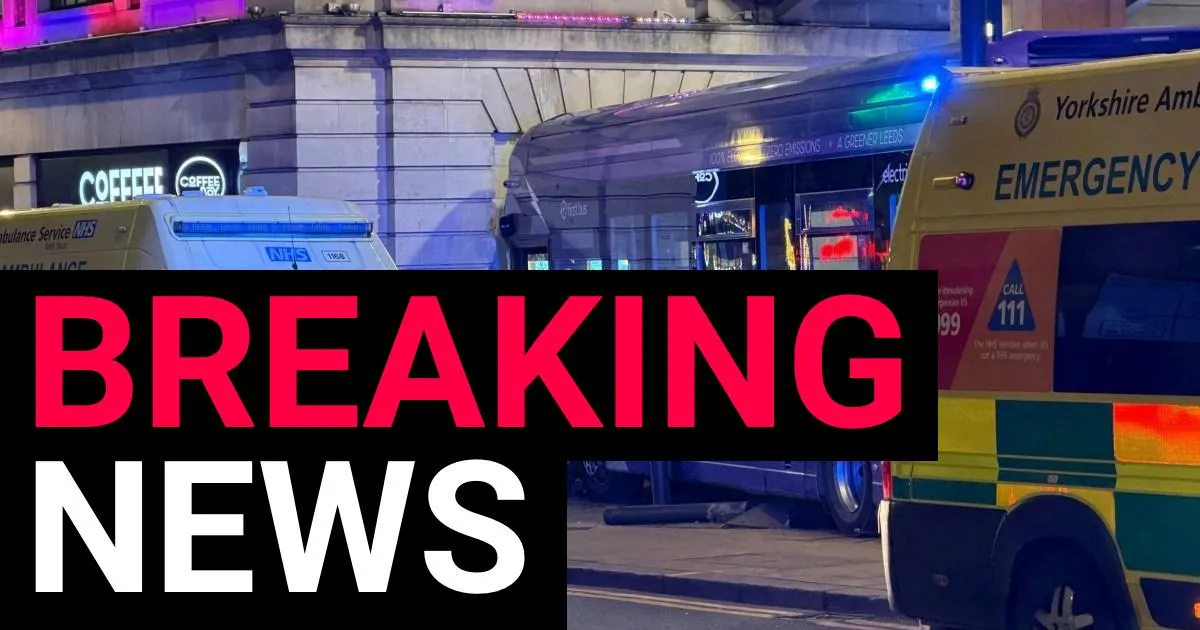
It began as a perfectly ordinary afternoon in Leeds city centre, the kind of hour when the streets are thick with shoppers, students, workers heading home, and families squeezing in a bit of retail therapy before the evening settles in. Then, at around 4:35pm, everything changed in a matter of seconds. A bus, for reasons not yet fully explained, mounted the kerb along The Headrow, tore through a line of protective bollards, and slammed into The Light, the busy leisure complex that sits at the heart of the city. The impact was close enough that the phrase “narrowly missing shoppers” carries a weight that is hard to fully express. It was one of those moments where the difference between a scary story and an unthinkable tragedy is measured in inches, in timing, in pure chance. Footage shared by the citizen news outlet YappApp captured the scene in the immediate aftermath: the vehicle came to rest facing Coffee Boy, the popular café set within the complex, its front pressed against the building like a great metal animal that had run out of space. The pavement around it was scarred, bollards bent or snapped, and Albion Street was quickly sealed off beneath blue tape. What had been a noisy, lively part of the city became suddenly, eerily still, with only the murmur of worried onlookers and the crackle of police radios disturbing the quiet.
Paragraph 2
There is something deeply unsettling about a bus leaving its designated path. These are vehicles we trust instinctively, enormous machines that we board without a second thought, assuming that the person behind the wheel will keep them safely on the road, following the familiar city routes. To see one resting against a shopping centre is to have that trust momentarily shaken. The footage shows the bus angled awkwardly, its front pressed into the complex, with no evident emergency braking or swerve to avoid a pedestrian. It simply seems to have arrived in a place that a bus should never be. The fact that no serious injuries were reported feels close to miraculous. In the seconds after the crash, there must have been a horrible, frozen moment as people waiting for coffee, heading for the cinema, or simply walking past realised what had almost happened. Then came the rush of adrenaline, the checking of limbs, the shaky laughter born of relief. A crash like this is not just a traffic incident; it is a reminder of how fragile our ordinary routines are. We cross roads, we stand at bus stops, we browse shop windows, all while giant machines rumble past, and we rarely think about what could go wrong. When it does go wrong, even without major casualties, it leaves a strange residue of anxiety in the air, a feeling that lingers long after the wreckage is cleared.
Paragraph 3
The official response was swift and, as is always the case in such moments, rather routine in its language. Connecting Leeds Travel Info posted a brief message on X, formerly known as Twitter, informing the public that Albion Street had been closed in Leeds city centre between the junctions with The Headrow and Great George Street due to a road traffic collision. For anyone who knows Leeds, that message will have triggered a familiar sinking feeling: the scramble to find an alternative route, the frustrated sighs of drivers sitting in sudden queues, the delayed bus journeys and missed connections. The area around The Light is not a remote corner of the city; it is a bustling intersection of commerce and movement, a place where thousands of people pass every hour. Closing it off at rush hour meant that transport networks across the centre had to absorb the shock. Buses were diverted, pedestrians redirected, and the careful choreography of a city in motion was disrupted. West Yorkshire Police, meanwhile, were approached for comment, and their silence in the immediate aftermath was itself part of the story. No arrests were mentioned, no criminal suspicion, just the steady, methodical process of investigative work: measuring skid marks, photographing damage, speaking to witnesses, and trying to piece together how this particular moment of chaos unfolded.
Paragraph 4
The location of the crash added an extra layer of poignancy. The Light is not a grim or industrial place; it is a destination for pleasure, for escape, for the small joys of an afternoon out. Inside, visitors would have been browsing shops, grabbing a bite to eat, or settling into a cinema seat, unaware that just outside, a bus was about to cross the line between street and building. Coffee Boy, the spot the bus ended up facing, is exactly the kind of place where people sit with a latte and a book, watching the world go by through large windows. The idea that they could have been watching the world when the world suddenly came crashing toward them is chilling. This is what makes such incidents so human: they happen not in some abstract, dangerous place, but in the everyday spaces we all populate without thought. The bollards that were damaged were not just civic furniture; they were a first line of defence, a silent promise that the pavement is protected from the road. And yet, here they were, pushed aside as easily as matchsticks. For the people inside The Light, the sound of the impact must have been dreadful, a deep crunch of metal and glass that sent vibrations through the floors. It is impossible to know how many of them paused, looked at each other, and wondered what had happened, only to later realise how close they had come.
Paragraph 5
In any incident of this kind, the immediate relief is always followed by questions. How did the bus end up on the kerb? Was it a mechanical failure, a medical emergency behind the wheel, a simple misjudgment, or something else entirely? At the time of reporting, none of those answers were available. The authorities were still at the scene, still gathering information, and the public was left to fill the gaps with speculation. It is a natural human response to search for meaning, for a clear explanation, because the alternative is the unsettling thought that accidents can happen without warning, that a quiet Tuesday afternoon can be shattered in an instant. The lack of serious injuries does not diminish the need for a thorough investigation. It is exactly these kinds of near misses that reveal vulnerabilities in our city infrastructure. If bollards were meant to stop a bus, why did they fail? If the driver was unwell, what earlier signs could have been noticed? These are not questions of blame, but of prevention. Every incident, even a lucky one, teaches us something about how to make the world a little safer. And so, as the evening wore on, the focus shifted from shock to inquiry, from the spectacle of a damaged building to the more sober task of understanding what had gone wrong and how to ensure it never happened again.
Paragraph 6
By the time the news began to spread beyond the immediate area, the story had already taken on a familiar shape: a close call, a lucky escape, a city holding its breath. Social media filled with the footage, and people who had been nowhere near Leeds found themselves transfixed by the image of that bus pressed against The Light. It is a strange thing, how a local accident can resonate so widely, but that is the nature of urban life. We all share a common vulnerability when we step out into the streets, and when we see that vulnerability made real, we cannot help but imagine ourselves in the scene. For the people of Leeds, the aftermath will be visible for some time: barriers, repair crews, the slow mending of glass and stone. But the deeper mending, the psychological one, is quieter. It happens in the small hesitation at the edge of a pavement, in the extra second people take to check the road, in the grateful glance toward an officer redirecting traffic. The city will return to normal quickly enough, because cities always do. Shops will reopen, buses will reroute, and the story will fade into the collective memory of a community that has seen worse and recovered. But for those who were there, for those who felt the ground tremble and saw the bus where a bus should not be, it will remain a moment forever marked in time, a reminder that safety is never guaranteed and that every ordinary afternoon is, in its own quiet way, a gift.
Want us to review, revise, or shorten this before you use it? Let me know.
Paragraph 1
It began as a perfectly ordinary afternoon in Leeds city centre, the kind of hour when the streets are thick with shoppers, workers heading home, and families squeezing in a bit of retail therapy before the evening settles in. Then, at around 4:35pm, everything changed in a matter of seconds. A bus, for reasons not yet fully explained, mounted the kerb along The Headrow, tore through a line of protective bollards, and slammed into The Light, the busy leisure complex that sits at the heart of the city. The impact was close enough that the phrase “narrowly missing shoppers” carries a weight that is hard to fully express. It was one of those moments where the difference between a scary story and an unthinkable tragedy is measured in inches, in timing, in pure chance. Footage shared by the citizen news outlet YappApp captured the scene in the immediate aftermath: the vehicle came to rest facing Coffee Boy, the popular café set within the complex, its front pressed against the building like a great metal animal that had run out of space. The pavement around it was scarred, bollards bent or snapped, and Albion Street was quickly sealed off beneath blue tape. What had been a noisy, lively part of the city became suddenly, eerily still, with only the murmur of worried onlookers and the crackle of police radios disturbing the quiet.
Paragraph 2
There is something deeply unsettling about a bus leaving its designated path. These are vehicles we trust instinctively, enormous machines that we board without a second thought, assuming that the person behind the wheel will keep them safely on the road, following the familiar city routes. To see one resting against a shopping centre is to have that trust momentarily shaken. The footage shows the bus angled awkwardly, its front pressed into the complex, with no obvious emergency braking or swerve to avoid a pedestrian. It simply seems to have arrived in a place that a bus should never be. The fact that no serious injuries were reported feels close to miraculous. In the seconds after the crash, there must have been a horrible, frozen moment as people waiting for coffee, heading for the cinema, or simply walking past realised what had almost happened. Then came the rush of adrenaline, the checking of limbs, the shaky laughter born of relief. A crash like this is not just a traffic incident; it is a reminder of how fragile our ordinary routines are. We cross roads, we stand at bus stops, we browse shop windows, all while giant machines rumble past, and we rarely think about what could go wrong. When it does go wrong, even without major casualties, it leaves a strange residue of anxiety in the air, a feeling that lingers long after the wreckage is cleared.
Paragraph 3
The official response was swift and, as is always the case in such moments, rather routine in its language. Connecting Leeds Travel Info posted a brief message on X, formerly known as Twitter, informing the public that Albion Street had been closed in Leeds city centre between the junctions with The Headrow and Great George Street due to a road traffic collision. For anyone who knows Leeds, that message will have triggered a familiar sinking feeling: the scramble to find an alternative route, the frustrated sighs of drivers sitting in sudden queues, the delayed bus journeys and missed connections. The area around The Light is not a remote corner of the city; it is a bustling intersection of commerce and movement, a place where thousands of people pass every hour. Closing it off at rush hour meant that transport networks across the centre had to absorb the shock. Buses were diverted, pedestrians redirected, and the careful choreography of a city in motion was disrupted. West Yorkshire Police, meanwhile, were approached for comment, and their silence in the immediate aftermath was itself part of the story. No arrests were mentioned, no criminal suspicion, just the steady, methodical process of investigative work: measuring skid marks, photographing damage, speaking to witnesses, and trying to piece together how this particular moment of chaos unfolded.
Paragraph 4
The location of the crash added an extra layer of poignancy. The Light is not a grim or industrial place; it is a destination for pleasure, for escape, for the small joys of an afternoon out. Inside, visitors would have been browsing shops, grabbing a bite to eat, or settling into a cinema seat, unaware that just outside, a bus was about to cross the line between street and building. Coffee Boy, the spot the bus ended up facing, is exactly the kind of place where people sit with a latte and a book, watching the world go by through large windows. The idea that they could have been watching the world when the world suddenly came crashing toward them is chilling. This is what makes such incidents so human: they happen not in some abstract, dangerous place, but in the everyday spaces we all populate without thought. The bollards that were damaged were not just civic furniture; they were a first line of defence, a silent promise that the pavement is protected from the road. And yet, here they were, pushed aside as easily as matchsticks. For the people inside The Light, the sound of the impact must have been dreadful, a deep crunch of metal and glass that sent vibrations through the floors. It is impossible to know how many of them paused, looked at each other, and wondered what had happened, only to later realise how close they had come.
Paragraph 5
In any incident of this kind, the immediate relief is always followed by questions. How did the bus end up on the kerb? Was it a mechanical failure, a medical emergency behind the wheel, a simple misjudgment, or something else entirely? At the time of reporting, none of those answers were available. The authorities were still at the scene, still gathering information, and the public was left to fill the gaps with speculation. It is a natural human response to search for meaning, for a clear explanation, because the alternative is the unsettling thought that accidents can happen without warning, that a quiet afternoon can be shattered in an instant. The lack of serious injuries does not diminish the need for a thorough investigation. It is exactly these kinds of near misses that reveal vulnerabilities in our city infrastructure. If bollards were meant to stop a bus, why did they fail? If the driver was unwell, what earlier signs could have been noticed? These are not questions of blame, but of prevention. Every incident, even a lucky one, teaches us something about how to make the world a little safer. And so, as the evening wore on, the focus shifted from shock to inquiry, from the spectacle of a damaged building to the more sober task of understanding what had gone wrong and how to ensure it never happened again.
Paragraph 6
By the time the news began to spread beyond the immediate area, the story had already taken on a familiar shape: a close call, a lucky escape, a city holding its breath. Social media filled with footage, and people who had been nowhere near Leeds found themselves transfixed by the image of that bus pressed against The Light. It is a strange thing, how a local accident can resonate so widely, but that is the nature of urban life. We all share a common vulnerability when we step out into the streets, and when we see that vulnerability made real, we cannot help but imagine ourselves in the scene. For the people of Leeds, the aftermath will be visible for some time: barriers, repair crews, the slow mending of glass and stone. But the deeper mending, the psychological one, is quieter. It happens in the small hesitation at the edge of a pavement, in the extra second people take to check the road, in the grateful glance toward an officer redirecting traffic. The city will return to normal quickly enough, because cities always do. Shops will reopen, buses will reroute, and the story will fade into the collective memory of a community that has seen worse and recovered. But for those who were there, for those who felt the ground tremble and saw the bus where a bus should not be, it will remain a moment forever marked in time, a reminder that safety is never guaranteed and that every ordinary afternoon is, in its own quiet way, a gift.