

Paragraph 1
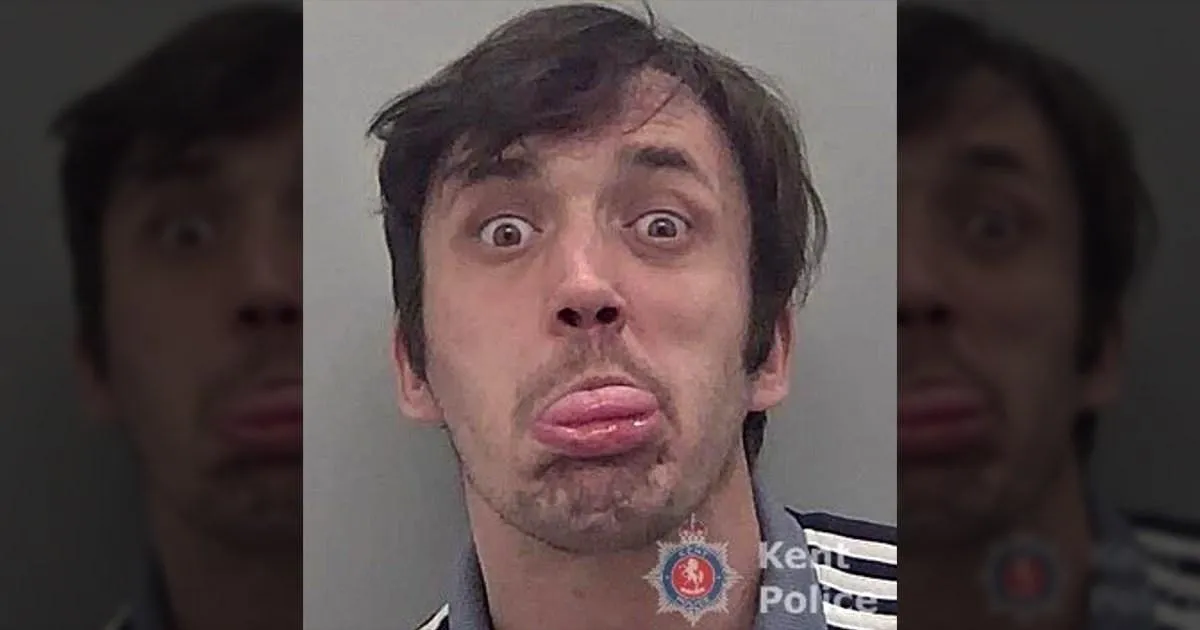
In the chilling stillness of the early hours of February 13th, an act of brutal aggression unfolded in Chatham, Kent, forever altering the life of a woman who simply found herself in the wrong place at the wrong time. The perpetrator was 35-year-old Charlie Stefano, a man who would later be described by law enforcement as a “clear danger to women.” His mugshot, taken after his arrest, captures a disturbing lack of remorse; instead of the hollow, regretful expression seen in most criminal bookings, Stefano chose to stick his tongue out at the camera, a defiant and juvenile display of contempt that eerily foreshadowed the callousness he displayed during his attack. This visual metaphor of arrogance would become a defining image of a case that underscores the terrifying reality of male violence. The incident began as an assault on a woman in the quiet hours of the night, a time when most people are safe in their homes, but for her, it became a nightmare from which she is only now beginning to awaken. The details of that night reveal a pattern of escalating violence, marked by a terrifying control and a disregard for human life that goes far beyond a simple altercation.
According to the prosecution’s case, the attack was swift, brutal, and intimate, suggesting a level of rage that was both targeted and indiscriminate. Stefano grabbed the woman by the throat not once, but twice, using the most vulnerable part of the human body as his primary weapon. This act, brazenly defined in law as intentional strangulation, is one of the highest-risk indicators of future homicide in domestic abuse cases, a fact that lends a grave weight to his actions. The attack did not stop there; no, the cruelty was methodical. He dragged her across the floor, her body a rag doll in his grip, exhibiting a physical dominance intended to strip her of agency and dignity. The sheer terror of being manhandled in such a way, helpless and at the mercy of a much stronger assailant, is a trauma that cannot be overstated. In a final act of symbolic violence, he held her over a staircase, a precipice from which she could have fallen, turning her own home into a landscape of lethal peril. Each of these actions—the strangulation, the dragging, the suspension over the void—was a deliberate assertion of power, leaving physical bruises and psychological scars that will take years to heal.
Paragraph 2
The aftermath of such an attack is often a chaotic blur, a desperate scramble for safety punctuated by fear and panic. For the victim, the moments after Stefano finally released his grip were a race against time and a test of sheer survival instinct. Realizing the gravity of his actions and perhaps anticipating the arrival of law enforcement, Stefano made a cynical attempt to assess the damage. He tried to check whether the neighbours had called the police, likely calculating his chances of escape versus the risk of being caught. It was in that fleeting moment of his distraction that the woman, showing incredible presence of mind, managed to flee. She ran from the address into the cold, dark streets of Chatham, her heart pounding, her body aching, and the lingering taste of fear in her throat. Her destination was a nearby petrol station, a beacon of light and human presence where she could finally feel a semblance of safety. It was there, in the fluorescent glare of a 24-hour garage, that she could collapse, explain what had happened to a member of staff or a passing stranger, and alert the authorities. The journey from the hell of her home to the temporary sanctuary of the petrol station required a level of courage that is difficult to comprehend, especially considering she had just survived an assault that could easily have turned fatal.
The report to the police triggered a manhunt that lasted for hours. Stefano, whose home address was given as Dagenham in east London, had slipped away from the Chatham scene, attempting to vanish into the vast network of roads and streets that connect the capital to the Kent coastline. But the net was closing in. The police, armed with a description and the urgency of a violent crime, tracked him down later that same day and took him into custody. The arrest brought a temporary end to the ordeal, but for the woman, the journey was just beginning. The assault had not only been a physical attack but a profound violation of her safety and autonomy. She now faced a legal process that, while designed to deliver justice, requires the victim to relive the trauma through testimony and cross-examination. The courage it takes for a survivor to stand against their aggressor in a court of law is immense. She would have to walk into a courtroom, face the man who choked her and held her over a staircase, and describe in vivid detail the terror she felt. The strength to do so, to ensure that a dangerous man is held accountable, is precisely what Detective Sergeant Leighton Prior would later commend, acknowledging that her bravery was instrumental in putting a violent offender behind bars.
Paragraph 3
The case against Stefano was clear and compelling, leading to a swift resolution when he appeared before Maidstone Crown Court. Facing the overwhelming weight of evidence, he admitted the charges of intentional strangulation and causing actual bodily harm. These are not minor infractions; they are serious offences that speak to a pattern of violence and a profound disregard for the wellbeing of another human being. Furthermore, two additional charges of criminal damage and engaging in coercive and controlling behaviour were ordered to lie on file. While these charges did not proceed to a full trial or sentence, their existence paints a broader, more disturbing picture of the relationship between Stefano and his victim. Coercive and controlling behaviour suggests that the physical assault was not an isolated incident, but potentially the culmination of a sustained period of psychological manipulation, isolation, and intimidation. This is the insidious backdrop of domestic abuse, where the chains wrapped around a victim’s mind are just as binding as the hands around their throat. The fact that he also snapped her phone in half speaks to a desire to cut her off from the outside world, to ensure she remained isolated and helpless, a classic tactic of an abuser who wants complete dominion over his partner.
The smartphone, in the modern world, is a lifeline—it is our connection to family, friends, and emergency services. By destroying it, Stefano was attempting to sever that lifeline, leaving his victim alone in a silent world of fear. This calculated destruction of property, bad behaviour in and of itself, becomes a tool in the abuser’s arsenal, a precursor to the physical violence that followed. Together, these charges paint a picture of a man who systematically dismantled his victim’s independence. He was controlling her movements, her communications, and her sense of self-worth, creating an environment where she might feel trapped and powerless. The violence of that February night was merely the explosive, physical manifestation of the psychological terror she had likely been enduring. The court acknowledged the gravity of the situation by delivering a sentence of two years and ten months in prison. For a crime that involved strangulation—an act so dangerous it is used as a predictor for future homicide—some might argue the sentence is too lenient. However, it also came with a six-year restraining order, a legal barrier designed to keep him away from his victim and offer her a modicum of protection as she rebuilds her life in the months and years to come.
Paragraph 4
The official reaction to the sentencing came from Detective Sergeant Leighton Prior, whose words served as a validation of the victim’s nightmare and a stark warning about the nature of the perpetrator. “A woman has been traumatised by Stefano’s actions and I hope the prison sentence and restraining order could bring her some closure,” he stated, acknowledging the deep, lasting impact of the assault. A trauma response is not just a bad memory; it rewires the brain’s threat detection system, making the world feel like a permanently unsafe place. For this woman, the sound of a raised voice, the feeling of a hand near her neck, or even the sight of a man resembling Stefano could trigger a panic response for years to come. The detective’s hope that the sentence will bring “closure” is a modest one, as closure is rarely a linear destination for survivors of such violence. More realistically, the judgement serves as a form of official acknowledgement that what happened to her was wrong, that she was not to blame, and that society, through its legal system, stands firmly on her side. It provides the validation that is so often cruelly withheld from victims, transforming the trauma from a shameful secret into a matter of public justice.
Prior’s commendation of the victim’s courage is a critical element of this case. “I would like to commend her courage in supporting his prosecution and ensuring a man who is a clear danger to women is now behind bars,” he said. These words are not just a formality; they are a recognition of the extraordinary bravery required to see a case through to the end. In a system that can be intimidating and an process that is emotionally draining, many victims drop out, unable to withstand the pressure. This woman did not. By supporting the prosecution, she not only secured justice for herself but also protected other potential victims. The phrase “a clear danger to women” is a chilling assessment, indicating that this man’s violence was not an anomaly but a character trait. By putting him behind bars, the court has temporarily removed a predator from the streets, preventing future incidents of strangulation, assault, or worse. In this sense, the woman’s courage has a ripple effect, making the community of Dagenham and Kent safer. Her actions are a testament to the human spirit’s capacity for resilience and the profound impact one person’s bravery can have on the safety of others. The detective’s statement closes the loop, framing the case not merely as a punitive measure, but as a protective one, ensuring a dangerous individual can no longer harm women for a significant period of time.
Paragraph 5
Beyond the specifics of this case, the jailing of Charlie Stefano shines a harsh light on the pervasive issue of violence against women and the complex dynamics of domestic abuse. The term “coercive and controlling behaviour,” while now a criminal offence, is often the invisible web in which violence is allowed to flourish. It encompasses a range of subtle and overt tactics—gaslighting, financial restriction, social isolation, and constant monitoring—that strip away a victim’s independence and confidence. When physical violence is added to this mix, the result is a terrifying trap. The case is a sobering reminder of how these assaults often escalate, moving from psychological to physical violence with terrifying speed. Strangulation, in particular, has become a focal point of domestic violence awareness in recent years. The fact that this case was charged as “intentional strangulation” demonstrates the justice system’s growing understanding of the extreme danger of this specific act. It is often not an isolated event but a sign that an abuser is crossing a line from which there is no return, a line that, statistically, too often leads to homicide. For the victim, having that level of violence acknowledged in the charge and the subsequent conviction is crucial.
The image of Stefano sticking his tongue out at the camera remains a haunting symbol of the case. It is an image that encapsulates the mindset of a man who feels he is above the law, who views his punishment as an inconvenience rather than a consequence, and who shows not a shred of empathy for the woman he terrorized. In his mind, she was likely the cause of his problems, the one who “made him angry,” a prime example of victim-blaming that enables abusers to justify their horrifying actions. The cocksure arrogance in the mugshot reflects a broader cultural issue where some men believe they have the right to dominate and punish their partners. It is a stark contrast to the sober reality of the justice he will face. Over the next two years and ten months, he will be confined, stripped of his autonomy, and forced to confront the consequences of his actions to some degree. While the justice system may not be able to force him to feel remorse, it can temporarily neutralize the threat he poses, giving his victim the time and space to rebuild her life without constantly looking over her shoulder. The sentence may be temporary, but for her, it provides a critical window of safety.
Paragraph 6
In reflection, this story is one of survival against an overwhelming and brutal display of violence. It is also a story about the justice system working as it should, taking a domestic abuser out of circulation and acknowledging the harm he inflicted. The victim’s flight to the petrol station, her cooperation with police, and her strength in court are the pillars upon which this successful prosecution was built. Without her, Stefano would likely be free, continuing his pattern of intimidation and violence. Her actions are a powerful example for other victims that speaking out, though terrifying, can yield results. While the sentence of two years and ten months might spark debate about the adequacy of sentencing guidelines for strangulation, the six-year restraining order offers a continued layer of protection. It sends a message that the court recognises the long-term risk he poses, even after his release. This combination of punishment and prevention is the image of a justice system attempting to balance retribution, deterrence, and rehabilitation. The case also serves as a grim reminder to the public: violence against women often happens behind closed doors, breaking the thin veneer of normalcy that neighbours and acquaintances see.
The story of Charlie Stefano is not just a headline about a mugshot and a prison sentence; it is a cautionary tale about the hidden dangers lurking in ordinary lives. It underscores the importance of community vigilance, the need for robust policing, and the courage of survivors who break their silence. When a woman runs to a petrol station in the early hours of the morning, dishevelled and terrified, a passerby or staff member made a choice to listen and help. That, too, is a form of heroism. For the victim, the aftermath will be long and difficult. She will have to navigate life with the trauma of being dragged across a floor, of being held over a staircase, of having a man’s hands clasped around her throat. The prison sentence does not erase those moments. But it does provide a period of respite. It is now a period in which she can sleep, work, and live with a reduced risk of seeing her attacker again. The hope is that this sentence, and the closure the detective mentioned, will allow her to begin the slow process of healing. While Charlie Stefano sticks his tongue out in his cell, defiant and unrepentant, she is free to start the rest of her life, proving that despite the brutality she endured, she is the one who ultimately triumphed.