


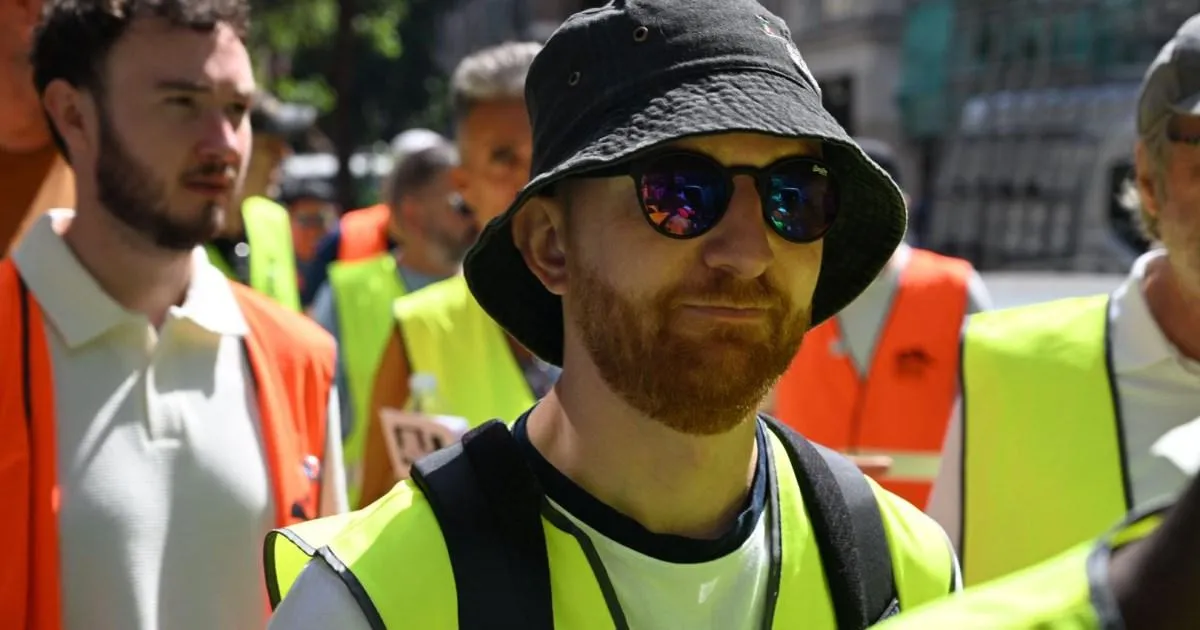
In the sweltering heat of a London summer, a sea of high-visibility jackets cut a striking figure against the city skyline. At first glance, the hundred or so men walking through the streets looked like any construction crew heading to a job site. However, their mission today was not to build structures, but to dismantle deep-seated cultural norms. This event, titled the “Hard Hats & Open Minds Walk for Change,” saw construction workers marching ten kilometers alongside grieving families to demand a profound shift in how men address the national emergency of violence against women and girls. By stopping at various construction sites on their way to Downing Street, these men aimed to carry a message of accountability into the heart of a traditionally masculine, male-dominated industry.
At the core of the march was a desire to offer a new roadmap for young men, who are increasingly susceptible to the influence of online “manosphere” figures like Andrew Tate. Michael Alan Hook, a veteran of the construction industry and co-organizer of the event, spoke with raw emotion about the necessity of this intervention. For Hook, the sight of “gnarled old veterans” of the building trade walking shoulder-to-shoulder with the relatives of victims sent a powerful signal. He argued that it is vital to provide young men with alternative pathways to success and self-worth, steering them away from toxic ideologies and toward a professional life grounded in respect, control, and healthy relationship dynamics.
The march also served as a stark reminder of the personal toll of femicide. Among the participants was Leon Westcarr, whose 25-year-old niece, Kennedi Westcarr-Sabaroche, was brutally strangled by her partner in 2024. Westcarr’s presence on the march reflected both his grief and his resolve: he firmly believes that because men are disproportionately the perpetrators of these heinous crimes, they must also be the ones to lead the solution. Watching his niece’s killer receive a hospital order for manslaughter—a sentence that left the family feeling betrayed by the justice system—has fueled Westcarr’s urgency to challenge the behaviors and attitudes that allow such violence to flourish unchecked within male social circles.
For many, the march was an deeply personal act of solidarity. Daniel Wing, who lost his mother, Tina, to an unsolved murder when he was only an infant, joined the march because it hit so close to his own background. Coming from a family of working-class builders, Daniel felt a unique connection to the participants; his mother’s death, involving multiple stab wounds and strangulation inside a facility that should have been safe, serves as a haunting reminder of the persistent danger many women face. By standing with men who work in the trade his own family knows well, he highlighted that the protection of women is not an abstract political goal, but a protective measure for mothers, sisters, and daughters that requires active, daily participation from every man.
The challenge, as identified by younger participants like 19-year-old builder Malachi Lynch, is breaking the social stigma that makes many men afraid to speak out. Lynch noted that within many male environments, confronting domestic abuse or casual misogyny is often dismissed as “uncool” or “cringey.” This peer-pressure-fueled silence is exactly what the organizers hope to break. By encouraging workers to spot the early warning signs of domestic abuse in their colleagues and fostering an environment where it is “cool” to call out toxic behavior, the movement hopes to transform the culture of construction sites. The goal is to move beyond passive observation and toward a collective responsibility to keep one another—and, ultimately, the women in their lives—safe.
Ultimately, this initiative is about more than just a single march through London; it is a call for a fundamental change in the identity of the modern man. Through the “This Is Not Right” campaign and community-led efforts, the message is clear: the epidemic of violence against women is a failure of male responsibility that can only be corrected by men. By engaging with industries that have historically been insulated from these conversations, the marchers are challenging their peers to look in the mirror. They are demanding that men everywhere drop the “tough guy” facade, confront their own biases, and take real, proactive steps to ensure that their workplaces and homes are sanctuaries of safety rather than breeding grounds for violence.