

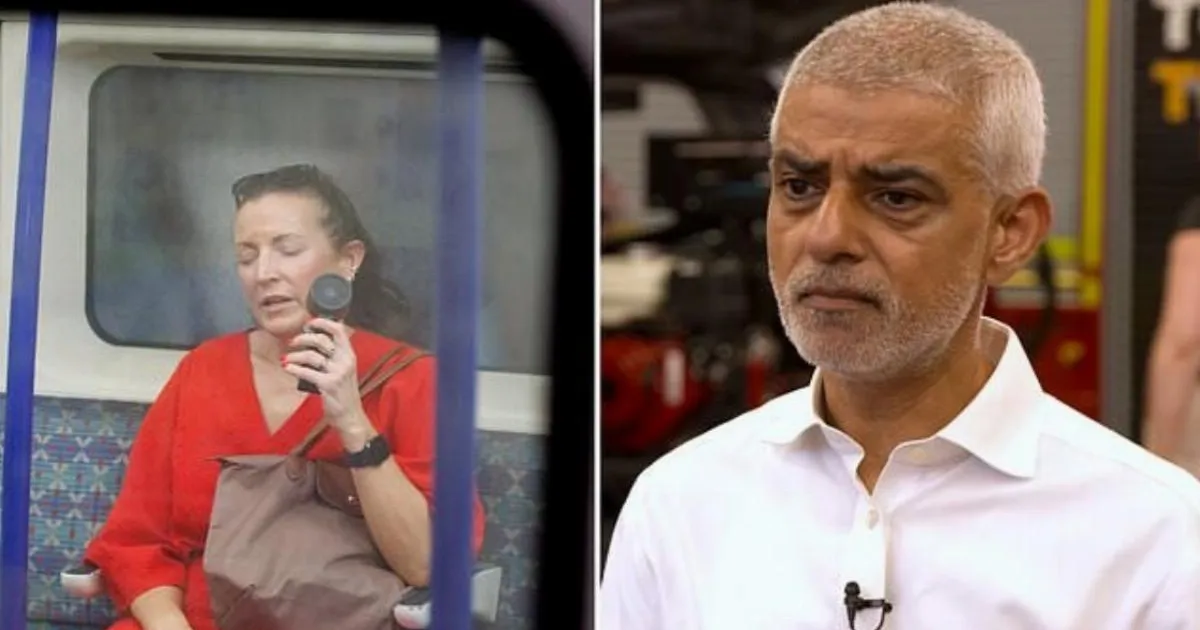
London is currently facing a harsh reality check: the capital city, famous for its grey skies and temperate climate, is woefully unprepared for the blistering heatwaves that are now becoming our new standard. As temperatures climb, Londoners have been found enduring sweltering commutes on the Central line, suffering in stifling tower block flats, and huddling in cafes just to catch a breath of air conditioning. The recent red weather warnings aren’t just about discomfort; they serve as a stark indicator of a breaking point. From homes ravaged by flash flooding after summer storms to hundreds of passengers trapped in gridlocked—and overheated—trains, the city is buckling under the weight of a climate we aren’t built to house.
Mayor Sadiq Khan has acknowledged the inevitable, noting that the sweltering 40C summers of 2022 are no longer an anomaly but the “new normal.” In response, the City is looking abroad for solutions, turning to cities that have lived with intense heat for generations. By consulting with experts in Phoenix, Los Angeles, Paris, and Milan, the Mayor’s new “Heat Ready London” plan aims to overhaul how we build and live. These global cities are decades ahead in adapting their infrastructure, and London is now looking to mirror their strategies—everything from specialized reflective roof paints to more strategic urban forestry—to better insulate the city against the rising mercury.
The human cost of this delay is significant, and the emergency services are on the front lines of the crisis. London Fire Commissioner Jonathan Smith has been coordinating with the Los Angeles Fire Department, utilizing their advanced AI and algorithmic models to predict where wildfires and high-risk hotspots are most likely to emerge. It’s a sobering admission: the city needs a digital, high-tech shield to handle the physical fire risks that climate change has brought to our doorstep. This is no longer a matter of just managing “warm spells”; it is about modernizing an entire city’s defensive posture against a changing environment.
The scale of the vulnerability is immense, with the new report identifying over 1,300 schools, 60 hospitals, and 350 care homes that are currently at significant risk of overheating. The plan, “Heat Ready London,” focuses on six key sectors, including the built environment, health care, and green space, to ensure that these critical hubs can actually function during extreme spikes. Retrofitting these buildings with cooling systems and increasing access to blue and green spaces are the first steps in a long-term plan to ensure that the city doesn’t just survive the summer, but remains a safe place for its most vulnerable residents—many of whom are currently left to “cook” in poorly ventilated social housing.
This crisis also raises a loud, necessary debate about social justice. The heat doesn’t impact everyone equally; it disproportionately affects those in poorer areas who lack private gardens or adequate cooling, and the statistics are grim. With 400 premature deaths during the 2022 heatwave and thousands of emergency room visits, the Mayor has framed the issue not just as one of environment, but of social equity. Prioritizing these communities for retrofits and improved cooling is seen as a moral obligation. However, the prospect of a fully air-conditioned Tube network remains a distant dream for many commuters, as the engineering realities of London’s deep-level tunnels make retrofitting nearly impossible until fresh, modern train sets can replace the aging fleet.
Ultimately, “Heat Ready London” aims to weave resilience into the very fabric of the city. By focusing on 37 key areas of improvement—such as expanding public water points, protecting the vulnerable, and hardening critical infrastructure—the city is finally forced into a transition. While the transition from a city designed for drizzle to one designed for heat is a massive undertaking, the era of ignoring the risks is over. As Londoners continue to adapt to a changing planet, the goal is to shift from a city that merely struggles through the heat toward one that is engineered to protect its people, no matter what the thermometer reads.