


Buckingham Palace has always been a place of polished grandeur, a stage for state banquets, royal weddings, and the slow, stately pageantry of the British monarchy. But beneath its gilded ceilings and beneath the feet of kings and queens, the building has been quietly keeping secrets. During an ongoing £370 million restoration project, workmen have uncovered a trove of forgotten items hidden under floorboards and inside forgotten cavities of the royal residence. These are not crown jewels or priceless works of art. They are the small, unremarkable flotsam of everyday life: a ticket to a staff whist drive, a pair of battered hobnail boots, an empty packet of Silk Cut cigarettes, and a set of Littlewoods Football Pool betting slips from 1957. There is also a typed schedule from 1977, detailing every timing and direction for Queen Elizabeth II’s Silver Jubilee diplomatic reception, including the note that the monarch would work the room in a “clockwise direction.” For decades, these misplaced belongings remained preserved within the fabric of the palace, waiting for a team of electricians, plumbers, and builders to pull back the floorboards and reveal a hidden history of the people who lived and worked behind the scenes at monarchy HQ.
Take the little whist drive ticket, for example. It is a small, once-white card, priced at 6d—a sixpence—and dated April 14, 1949, during the reign of King George VI. It was found embedded in a lump of building rock, as if the palace itself had swallowed it whole. The ticket was for a “whist drive” run by the Royal Household’s social club, a modest evening of card games, tea, and small prizes that gave servants and staff a rare chance to relax and laugh together. In April 1949, Queen Elizabeth II was still Princess Elizabeth, a young wife married to Prince Philip for less than eighteen months, with a five-month-old baby son, the future King Charles, asleep somewhere in the palace. While the royals lived their carefully choreographed lives upstairs, the people who polished the silver and made the beds were buying tickets to their own little entertainments, spending a few pennies for an evening of friendly competition. Alongside the ticket, workmen found the betting slips from 1957, a flutter on the football pools that spoke of ordinary dreams of sudden wealth, and a pair of battered black hobnail boots that had clearly seen years of hard work. An empty Silk Cut cigarette packet completed the picture: these were people who wore sturdy shoes, allowed themselves small vices, and hoped for a bit of luck. They were not so different from any of us.
If the whist drive ticket and betting slips reveal the private pleasures of the palace’s staff, the typed schedule from 1977 shows the exacting machinery of monarchy at work. The document was a detailed, typed itinerary for Queen Elizabeth II’s hosting of a diplomatic reception in her Silver Jubilee year, and it is a fascinating glimpse into the precision required to run a royal event. The instructions reveal that the Queen and other members of the royal family would move around the Ballroom in a “clockwise direction,” a small but crucial detail that ensured the monarch would meet as many guests as possible without confusion or awkward backtracking. The schedule also laid out the strict timetable for drinks: guests in the Blue Drawing Room, State Dining Room, and West Gallery would be served between 9.30 and 10.00pm, while those allotted to the Ball Room would be served in the Ball Room Annexe from 9.30pm until approximately 10.15pm. Smoking, the document warned, would not be permitted in any of these rooms. One can imagine the scene: the Queen, resplendent in evening dress and jewels, moving steadily clockwise through a glittering crowd of ambassadors and dignitaries, while footmen in livery carried silver trays and staff watched the clock with quiet anxiety. It is a reminder that even the most seemingly effortless royal occasions are built on paper, planning, and the tireless work of dozens of people behind the scenes.
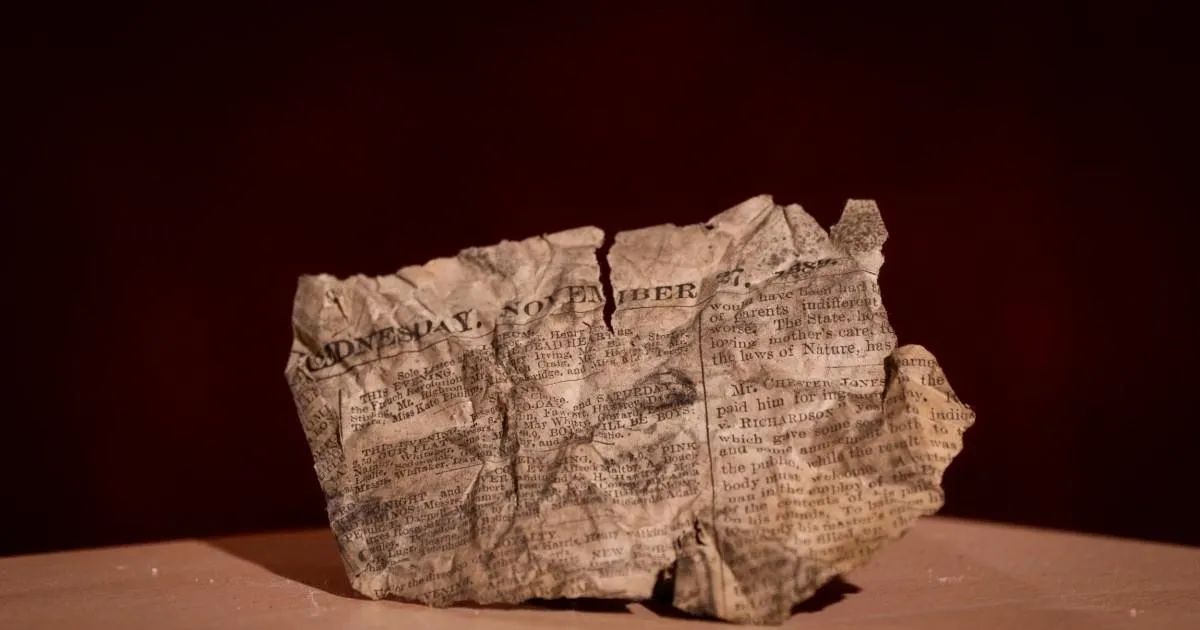
The other discoveries are a strange and wonderful mixture of the personal and the historical. Among the finds was a section of Minton decorative ceramic tiles from a fireplace hearth, with a design dated to around the mid-1800s, a time when the palace was being transformed into the grand residence we know today. There was also an aged pewter tankard, perhaps from a Victorian pantry or a servants’ hall, and a bottle of Schweppes Still Malvern English Spring Water, a relic from an era when bottled water was still a novelty rather than a daily habit. A wooden junction box hinted at the early days of electricity, when the palace was slowly being wired for a modern age after centuries of candlelight. Perhaps most poignant of all was a faded box containing six Christmas cards, personal messages that were never displayed, perhaps dropped behind a piece of furniture and forgotten for decades. There were also pages from the Daily Express newspaper from 1966, detailing the “maximum security” prison that housed the Great Train Robbers, a reminder that even within the walls of the royal residence, the outside world always seeped in. Each object is a tiny time capsule, a fragment of a life that was once lived in the shadow of the throne.
These discoveries are accidental by-products of a massive and necessary overhaul. Buckingham Palace has been undergoing a decade-long reservicing project to rewire its electrics, upgrade its plumbing and heating, and overhaul its aging infrastructure to prevent long-term damage. The building, for all its splendor, is not a static museum; it is a living, aging, breathing structure that has been in constant use for centuries. Outdated wiring has been removed, old pipes replaced, and hidden cavities opened up for the first time in generations. As workers have carried out the refurbishment, they have become accidental archaeologists of the recent past. Every lifted floorboard is a chance to find something dropped in a hurry, kicked into a corner, or hidden by a workman decades ago. The palace is being reborn, its systems modernized for the twenty-first century, but its ghosts remain. The forgotten ticket stubs, betting slips, and cigarette packets are not rubbish; they are the traces of human hands, the small marks left behind by people who swept floors, carried coal, served dinner, and kept the great machine of monarchy running smoothly.
What do these forgotten items ultimately mean? They humanize an institution that can often seem remote and untouchable. We tend to think of Buckingham Palace as a symbol of continuity and tradition, a place where everything is perfect and polished. But the objects found beneath its floorboards tell a different story. They remind us that the people who served the Crown were not so different from us. They played cards, gambled a few pennies, smoked cigarettes, wore out their boots, sent Christmas cards, and read the morning newspaper. They had hopes and worries, small pleasures and quiet vices. The 1977 schedule shows a monarch at work, but it also shows a team of people making sure that everything ran on time, that the drinks were poured, and that the Queen moved in the right direction. As the restoration continues, more objects may surface, and each one will add another stitch to the rich tapestry of royal history. In the end, the greatest treasure of Buckingham Palace is not gold or silk or diamonds. It is the accumulated evidence of ordinary lives lived in extraordinary surroundings, a reminder that history is made not only by kings and queens, but by the people who quietly served them, and who left behind the smallest, most human traces of themselves for us to find.