



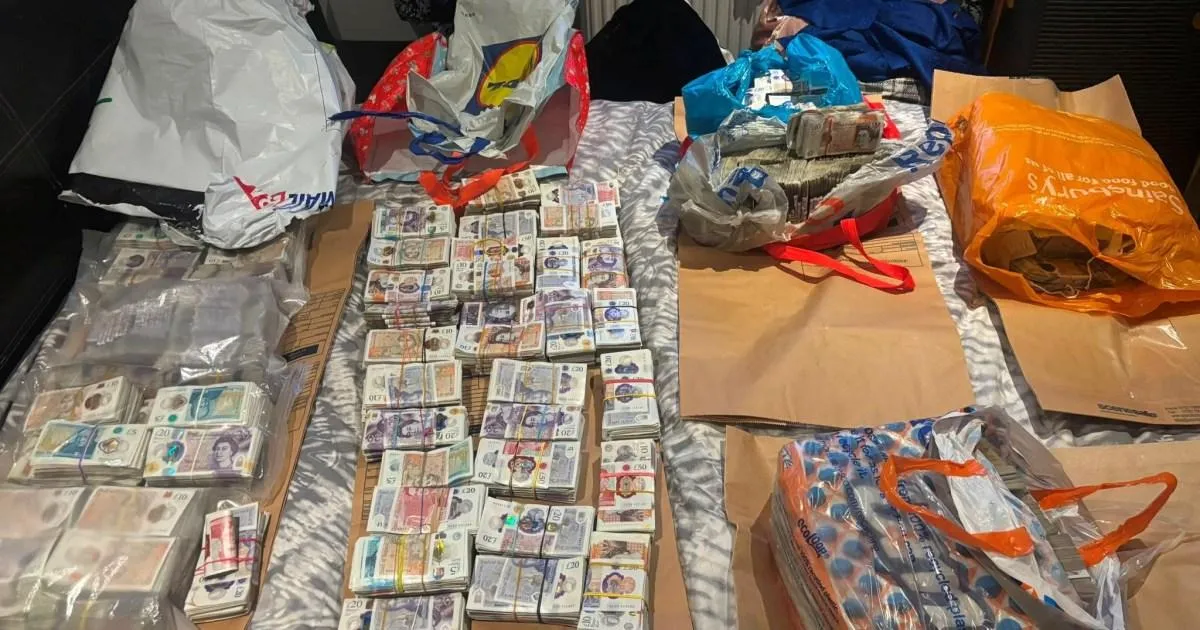
What started as a routine patrol on a quiet Wednesday evening in Catford, south London, quickly escalated into one of the most significant drug and cash seizures in recent Metropolitan Police history. Officers on the beat noticed a vehicle that simply didn’t look right, prompting them to conduct a standard stop. What they expected to be a routine check turned into a startling discovery: a single shopping bag stashed with £35,000 in cold, hard cash. This initial find led to the immediate arrest of a 54-year-old man on suspicion of possessing criminal property, but the police quickly realized they had only just scratched the surface of a much larger criminal operation.
The investigation took a dramatic turn when detectives arrived at the suspect’s home address to carry out a search. What they found inside was far beyond the scope of a typical local arrest. Stuffed into ordinary shopping bags tucked away in two different bedrooms, officers uncovered an astonishing haul: roughly £4 million in cash, accompanied by a kilogram of high-grade cocaine. It was a scene more reminiscent of a crime thriller than a suburban home, transforming a basic traffic stop into a massive breakthrough for the Specialist Crime division. Commander Paul Brogden later noted that this was one of the largest cash seizures the force had ever recorded, serving as a powerful reminder of how vigilant, proactive local policing can dismantle high-level criminal networks.
This operation highlights the quiet, often overlooked importance of “bread and butter” police work. While the world of modern crime solving is often obsessed with high-tech surveillance and digital forensics, this incident proves that boots-on-the-ground intuition remains indispensable. By simply noticing a suspicious vehicle and having the resolve to follow through, those officers managed to pull a life-altering amount of illicit money and dangerous narcotics off the streets. Commander Brogden credited the result to the persistence and dedication of his team, emphasizing that the Met remains committed to relentlessly targeting those who profit from the drug trade and bring misery to local communities.
Beyond the immediate impact of this specific bust, the story offers a glimpse into the broader, often invisible efforts by London’s law enforcement to reclaim the streets from organized crime. The statistics are telling: over the course of 2025, officers intervened in the activities of organized crime groups over 21,000 times, successfully removing 3,570 lethal weapons—guns and knives—from circulation. These aren’t just numbers on a spreadsheet; they represent thousands of potential tragedies prevented. It is a grueling, persistent process of dismantling hierarchies, choking off supply lines, and creating an environment where criminal gangs find it increasingly difficult to operate with impunity.
The data suggests that this strategy is genuinely working. Shootings in the capital have plummeted, with current rates sitting at less than half of what they were just seven years ago. This success isn’t down to luck, but rather a more surgical approach to policing that focuses on the most dangerous offenders while emphasizing the protection of vulnerable youth who are often recruited as foot soldiers for these syndicates. By weakening the structural foundations of organized gangs, the police are creating a ripple effect that makes neighborhoods safer for everyone, turning the tide against the influence of those who prey on the vulnerable for profit.
Ultimately, cases like the Catford seizure serve as a clear message to those involved in illegal enterprise: no matter how hidden they think their wealth or their stash is, the law is watching. It is a win for the community, but also a sober reminder of the scope of the problem the police are tackling every day. While cleaning up a city as large and complex as London is a marathon rather than a sprint, the discovery of those shopping bags full of illicit cash proves that the authorities are hitting the criminal underworld where it hurts most—right in their pockets. As the Met continues its relentless pursuit, residents can take some solace in the fact that, one traffic stop at a time, the streets are becoming a much harder place for criminals to thrive.