



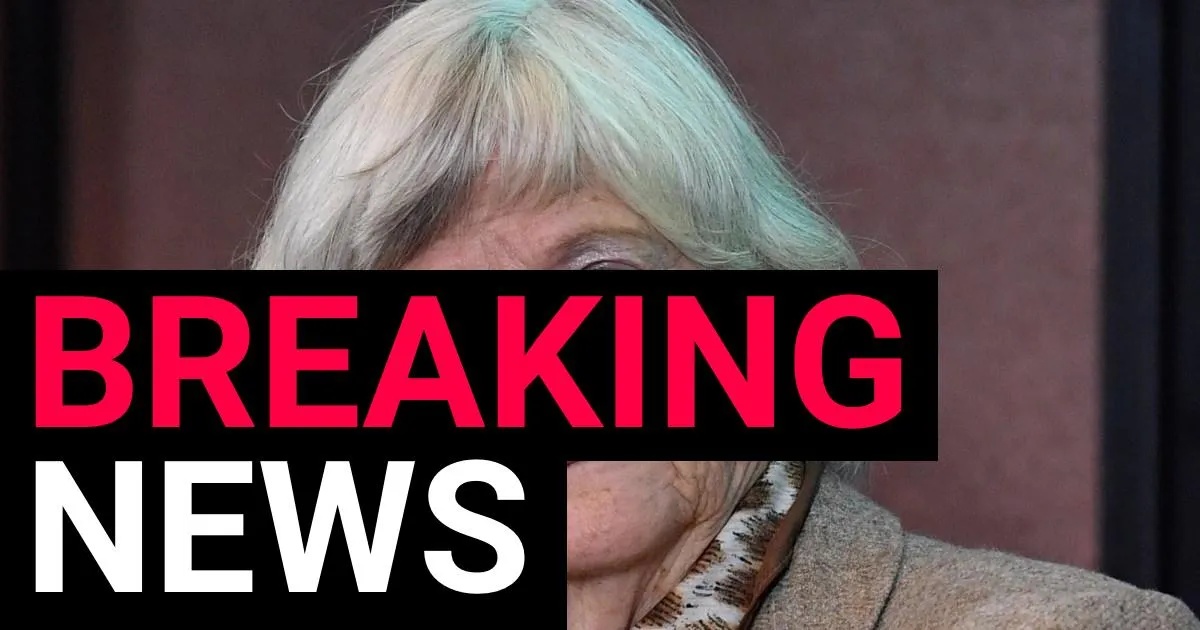
The sudden and tragic death of Ann Widdecombe, a formidable figure in British politics known for her unyielding principles and long-standing career as a Conservative minister and Brexit Party MEP, has sent profound shockwaves throughout the country. Found dead in her Dartmoor home, the circumstances surrounding her passing have moved from a site of mourning to a full-scale murder investigation. As authorities continue to piece together the timeline—believing she was killed roughly 24 hours before her discovery—a sense of disbelief has gripped both the political establishment and the public. A 28-year-old man was taken into custody three days after the tragedy occurred, marking the beginning of a legal process that many hope will eventually provide answers to the questions haunting those who knew her.
However, the tragedy has been compounded by a dark undercurrent of vitriol on social media. In an era where digital discourse is often stripped of empathy, the news of Ms. Widdecombe’s death was met by some with celebration rather than sorrow. This unsettling reaction—where political disagreements are weaponized to mock a violent death—has sparked a significant backlash. It serves as a stark reminder of the deep, often toxic divisions that characterize modern political life, where the basic tenets of human decency are sometimes sacrificed at the altar of online provocation. These early, callous comments were posted before it was even publicly confirmed that the police were treating the death as a murder, highlighting the impulsive and often dehumanizing nature of internet commentary.
Among those caught in the crosshairs of this social climate is Heather Herbert, a 50-year-old employee of the University of Aberdeen. Following reports of online posts that crossed the line from political criticism into something more sinister, the police began an assessment of the situation. While initial statements suggested that no criminality had been established, the situation shifted quickly as investigators deepened their probe. Ms. Herbert has since been arrested and charged in connection with these online comments. A spokesperson for Police Scotland confirmed that a report will be submitted to the Procurator Fiscal, signaling that the authorities are taking a firm stance against speech that incites or glorifies harm, even when directed at public figures with polarizing legacies.
The response to this incident reflects a broader anxiety within society about how we navigate disagreement in the digital age. When a public servant—or indeed any human being—is killed, the immediate instinct of a healthy society is to grieve, regardless of political affiliation. Yet, the presence of public cheering for the death of a human being underscores a profound degradation in our shared public sphere. By charging those who engage in this behavior, the state is drawing a line in the sand, suggesting that while free speech remains a cornerstone of democracy, the glorification of violence has no protected place in our discourse. It is a sobering development that forces us to question what we have allowed our online spaces to become.
For those who knew Ann Widdecombe, the focus remains on her immense impact on the British landscape. During recent sessions of Prime Minister’s Questions, Sir Keir Starmer expressed clear, cross-party support for the installation of a permanent memorial within the House of Commons. Such a gesture serves as a testament to the respect commanded by her long tenure, acknowledging that despite any opposition her policies faced, she remained a pillar of the parliamentary tradition. The grief expressed by her peers is a reflection of the loss felt by a generation of politicians who, regardless of where they sat on the ideological spectrum, recognized her contribution to the national conversation and the gravity of her unexpected end.
As the investigation into her death continues, the family of the 28-year-old suspect has expressed their own profound disbelief, adding another layer of deep human tragedy to this narrative. It is a reminder that behind every headline are families—both of victims and of suspects—navigating worlds that have been upended overnight. As the legal system grinds forward, the focus must shift from the noise of social media to the pursuit of justice. The lasting legacy of Ann Widdecombe should not be found in the vitriol that followed her death, but in the serious, measured reflection of those who see her passing as a tragic loss of life and a moment for the nation to pause and recalibrate how it speaks about its own.