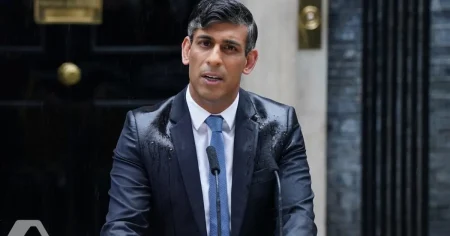



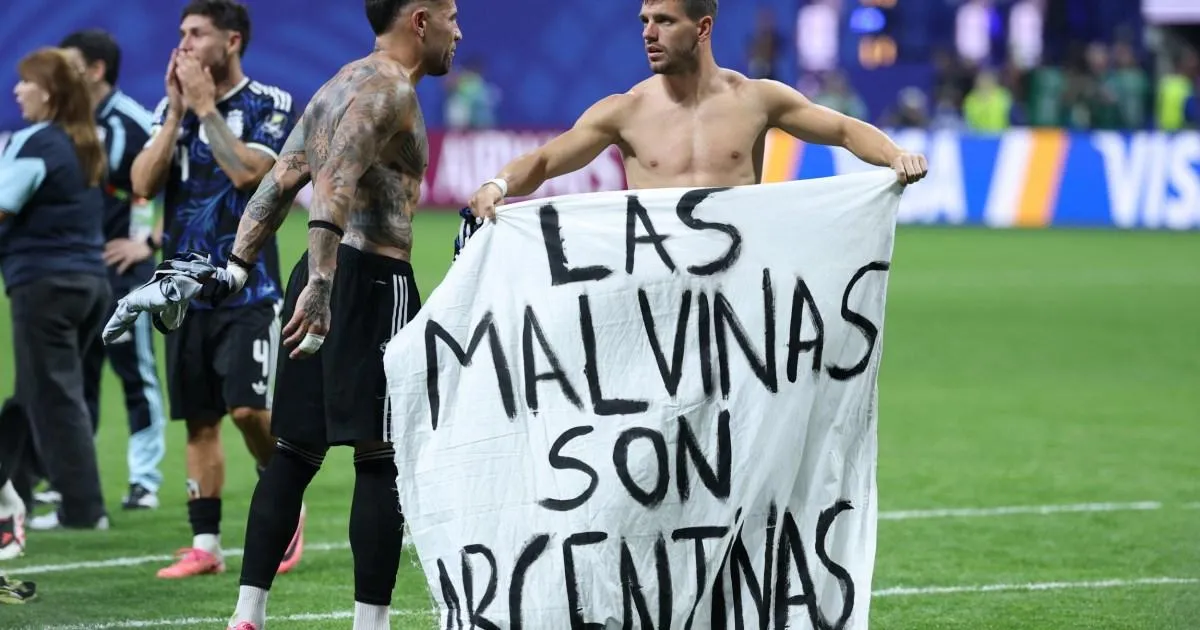
The intersection of sports and international diplomacy is rarely a graceful dance, but few incidents have highlighted the friction as sharply as the recent uproar following Argentina’s victory over England. Prime Minister Keir Starmer, a vocal football enthusiast, found himself in an awkward position as his hopes of celebrating a World Cup final during his final days in office were dashed by a late-stage surge from the Argentine team. While the loss was already a bitter pill for English fans, the sting was deepened significantly by the post-match actions of the Argentine players, who unfurled a banner declaring, “Las Malvinas son Argentinas” (The Falklands are Argentinian).
The display of the banner sparked immediate and heated condemnation from the British government, piercing the traditional veneer of sportsmanship that is expected on the global stage. Business Secretary Peter Kyle expressed the frustration of many, emphasizing that the intrinsic divide between political advocacy and athletic competition should remain sacred. By echoing the belief that football is not the venue for territorial claims, the UK government has formally requested that FIFA launch a rigorous investigation into the conduct of the Argentine squad, signaling that such provocations cannot be brushed aside as mere celebratory zeal.
Downing Street was quick to reclaim the narrative, offering a sharp-witted response that balanced statesmanship with a firm assertion of sovereignty. A spokesperson addressed the controversy with a dry, quintessential British response, stating that while they might have lost the match, there is no ambiguity regarding the status of the Falkland Islands. This served as a clear message that while the Prime Minister intends to maintain a professional distance, he will not allow the historical sensitivity of the islands—a site where hundreds of lives were lost in 1982—to be treated as a mere footballing prop by opponents.
The call for accountability has transcended party lines, with Liberal Democrat leader Sir Ed Davey leading the charge for more severe consequences. Referencing a precedent set in August 2024, when Spanish players were suspended for similar chants regarding Gibraltar, Davey argued that consistency is essential for the integrity of the sport. He has explicitly called for the Argentine players involved in the demonstration to be barred from the final, suggesting that if FIFA intends to uphold its own statutes against political sloganeering, it must apply those rules without fear or favor, regardless of the team’s pedigree.
The tension was further inflamed by Argentine Vice President Victoria Villarruel, whose social media activity pushed the incident from a sports controversy into the realm of nationalist agitation. By labeling the English team “usurping pirates” and sharing images from the 1982 conflict, she underscored the deep, unresolved historical wounds that continue to define the relationship between the two nations. These digital provocations have transformed the match from a simple loss on the pitch into a broader ideological clash, forcing the public to confront the uncomfortable reality that for some, a football match is rarely ever just a game.
Ultimately, this incident serves as a stark reminder of how fragile the “no politics in sport” doctrine truly is when nationalistic fervor takes center stage. As England digests the disappointment of its World Cup exit and the government pushes for formal FIFA sanctions, the event remains a testament to the fact that international sports tournaments act as high-pressure vessels for long-standing geopolitical grievances. Whether FIFA chooses to exercise its authority to penalize the Argentine side or opts for a diplomatic sidestep remains to be seen, but the mark left on this tournament goes well beyond the final score.