


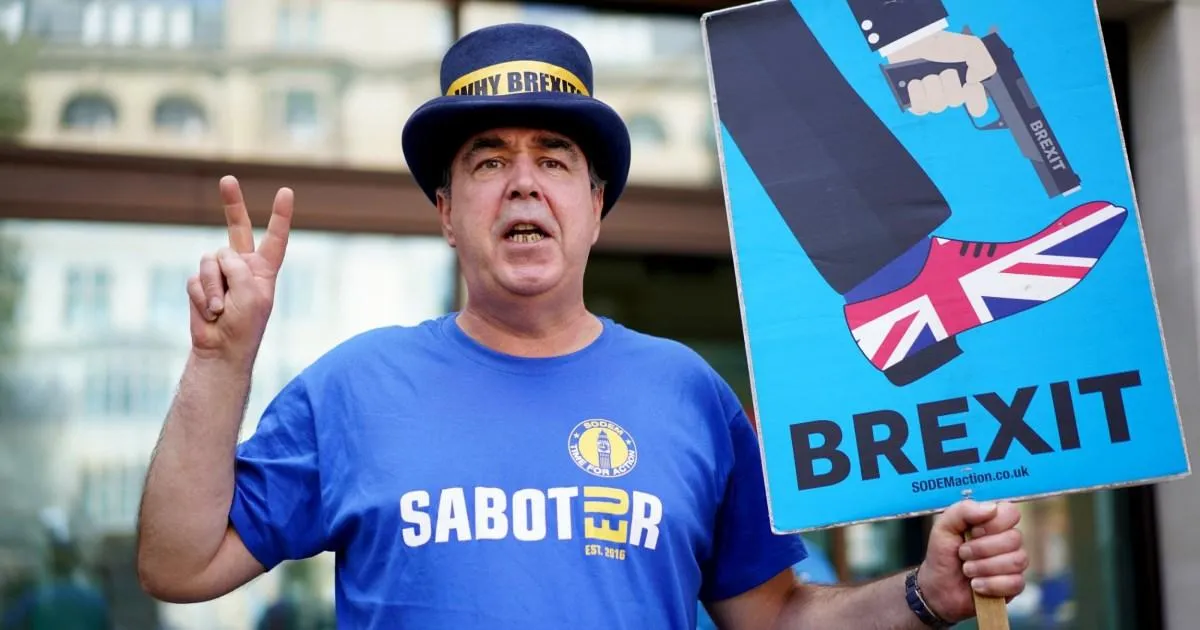
Steve Bray, the long-time activist affectionately and derisively known as “Stop Brexit Man,” found himself at the center of a national firestorm after he turned Sir Keir Starmer’s resignation announcement into an impromptu concert. As the Prime Minister attempted to deliver his historic address outside Downing Street, the booming, triumphant sounds of Beethoven’s “Ode to Joy” began to leak into the audio feed, effectively drowning out the leader’s solemn words. Rather than retreating, Bray took to social media to defend his actions, framing his choice as a calculated act of public service. He claimed that another protester armed with a megaphone was relentlessly haranguing the Labour Party, and that his own sonic intervention was actually an attempt to provide a more melodic—if equally disruptive—backdrop to the proceedings.
Bray’s defense, however, did very little to dampen the widespread indignation that followed. Within moments, the mood across both sides of the political aisle shifted from somber reflection to pure irritation. Journalists, parliamentarians, and members of the public alike expressed their disbelief that a moment of national constitutional importance could be so casually hijacked by a single individual with a loudspeaker. The backlash was sharp and unforgiving, painting a picture of an activist who, in his pursuit of protest, had arguably crossed the line into creating a public nuisance, turning what should have been a moment of gravitas into a surreal, soundtracked spectacle.
The reaction from the political establishment was nothing short of scathing, illustrating just how much Bray had managed to alienate everyone. High-ranking members of both Labour and the Conservative parties—who rarely agree on anything—found common ground in their condemnation. Labels like “yob,” “buffoon,” and “disgrace” were tossed about freely, with some even offering hyperbolic suggestions about where Bray should be silenced. Critics argued that there is a fundamental difference between a vibrant, healthy protest environment and the performative attention-seeking that Bray has perfected. For many, his decision to dominate the soundscape of Parliament Square at such a critical moment wasn’t just a political statement; it was an act of profound disrespect that made the nation feel decidedly unserious.
Yet, amidst the chorus of condemnation, voices emerged to defend the principles of free, albeit irritating, expression. Political analyst Owen Jones offered a nuanced take, acknowledging that while many might view Bray as an intolerable nuisance, the right to be a nuisance is essential to a free society. Jones warned that calls for authorities to crack down on loud or annoying activists could lead to a slippery slope of authoritarianism. He argued that the threat posed by a man with a speaker is far smaller than the threat posed by a state that feels empowered to silence unpopular or disruptive opinions. It serves as a reminder that the hallmark of a democracy is often the obligation to tolerate the people we dislike the most.
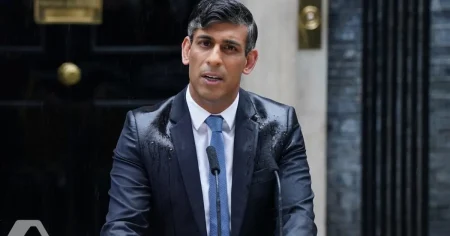
This incident is simply the latest chapter in Bray’s long history of “sound-bombing” political events, a tactic that has made him a household face in Westminster. He has become famous—or infamous—for using curated audio to highlight the irony of political shifts, such as when he famously blasted D:Ream’s “Things Can Only Get Better” during Rishi Sunak’s disastrously wet election announcement. For Bray, these moments are not just accidental disturbances; they are trolling campaigns engineered to mock the powerful and highlight the contradictions inherent in modern British politics. He views himself as a catalyst for awareness, using music as a weapon to puncture the carefully curated image of governmental announcements.
Ultimately, whether you view Steve Bray as a valiant defender of inconvenient civil liberties or a self-absorbed agitator ruining history, he remains a symbol of the changing face of political protest in the UK. He thrives on the very division and outrage he creates, using his megaphone to ensure he is never ignored. While the establishment sees his antics as an affront to decorum, Bray clearly sees them as a necessary disruption to the status quo. As long as he continues to roam the streets around Downing Street, the drama of British politics will likely continue to be accompanied by his eclectic, and often unwanted, musical accompaniment.