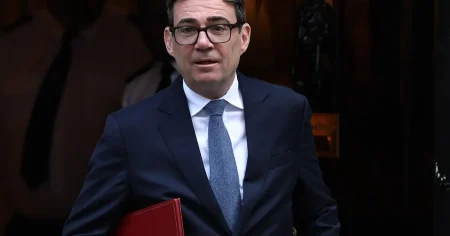


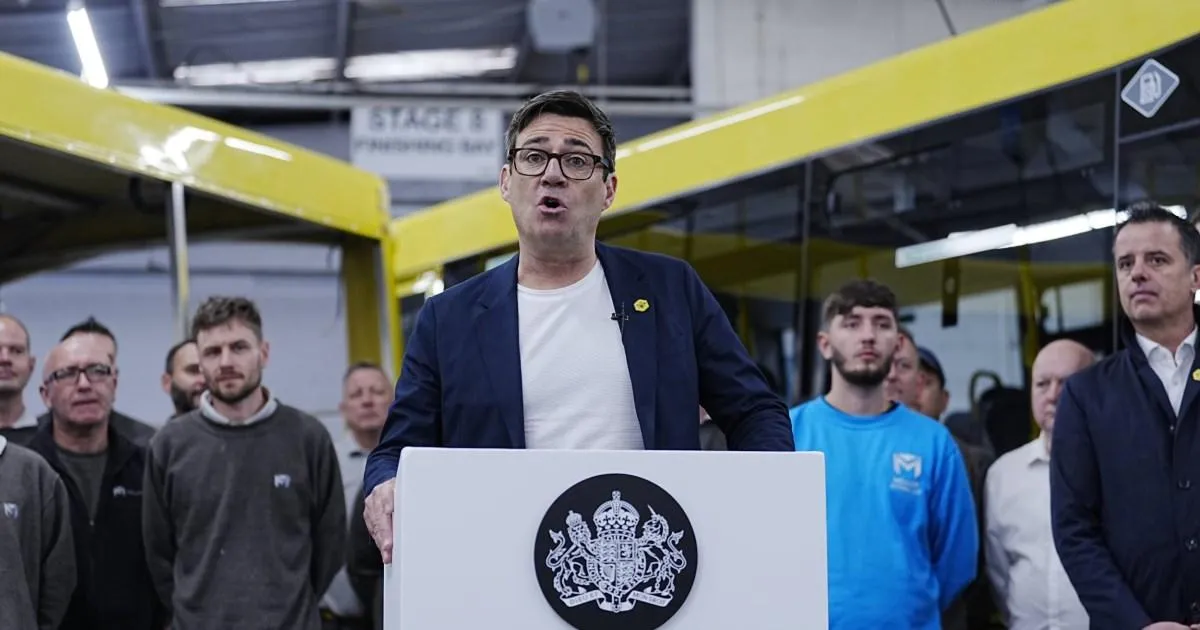
The political landscape of the United Kingdom has undergone a seismic shift, marking the end of the Sir Keir Starmer era and the sudden, dramatic rise of Andy Burnham. For years, the narrative surrounding Starmer’s leadership was defined by a perceived lack of a viable successor, a vacuum that left the Labour Party in a state of quiet apprehension. That uncertainty evaporated in the early hours of last Friday following the Makerfield by-election. By securing a crushing victory, with a majority of 9,000 over the Reform candidate, Burnham performed a feat that resonated deeply with his colleagues: he proved he could neutralize the challenge of Nigel Farage. The resounding nature of this mandate forced Starmer to honor his promise to step aside, leaving the path clear for the “King of the North” to potentially ascend to 10 Downing Street within weeks, with even his fiercest rivals, like Wes Streeting, now stepping behind him in solidarity.
To understand the man who may soon lead the country, one must look toward the industrial heartlands that shaped him. Born in Lancashire to a working-class family—his father a telephone engineer and his mother a receptionist—Burnham’s upbringing in Culcheth instilled in him a grounded, regional perspective that defines his politics to this day. Educated at a Catholic school before heading to Cambridge, he describes himself as culturally Catholic, a background that anchors his public service ethos without tethering him to strict religious dogma. His political education was long and winding, beginning in trade unionism and the NHS Confederation before he eventually secured his first seat in Parliament in 2001. His CV is extensive, spanning ministerial roles in the Home Office, the Treasury, and the Department of Health, all of which provided him with a comprehensive, if traditional, training in the mechanics of Westminster governance.
Burnham’s path to the premiership has been far from linear, defined by two unsuccessful leadership bids and a transformative pivot toward regional politics. His first attempt in 2010 saw him finish near the bottom of the field, while his 2015 run—though he entered as the frontrunner—was hampered by political gaffes and a failure to capture the shifting mood of the party. He ultimately suffered a painful defeat to Jeremy Corbyn. It was this struggle that prompted him to retreat from the center of national power to become the Mayor of Greater Manchester in 2017. This homecoming proved to be his making. By fighting for his region—tackling homelessness, campaigning for public transport reform, and holding the Conservative government to account during the pandemic—he cultivated a brand that felt both authentic and fiercely loyal to his constituents.
His success as Mayor, famously branded as the “King of the North,” is rooted in a pragmatic approach he calls “Manchesterism.” While the term remains somewhat nebulous, his track record offers clear clues: he successfully brought bus networks back under public control and capped fares at £2, directly contrasting his approach with the national government’s austerity. His policy platform is bold, aiming to revitalize public services by borrowing to build council homes and advocating for the renationalization of housing, water, and energy. It is an unashamedly populist but focused agenda designed to provide direct relief to the working class. However, his tenure was not without its controversies, such as the scrapped Clean Air Zone scheme, which serves as a reminder to skeptics that his big-picture ambitions can sometimes clash with the logistical realities of implementation.
As he prepares for the highest office, the primary question surrounding Burnham is whether his regional expertise can scale to the global stage. Having spent years focused on domestic issues, his foreign policy credentials remain largely untested. When pressed on complex international crises, such as the conflict in Gaza, he has treaded a careful line, acknowledging the necessity of investigation while balancing the emotional demands of his constituents with the cold, hard realities of international diplomacy. He has expressed support for a balanced relationship with the United States, maintaining professional ties with figures like Donald Trump without sacrificing British interests. These interactions suggest a leader who, while deeply rooted in the gritty reality of local governance, is acutely aware that the Prime Ministerial office demands a level of nuance that transcends the North-West.
Ultimately, Andy Burnham’s ascent represents a significant gamble for the Labour Party. He brings a reputation for straight-talking, a proven ability to win over diverse voters, and a deep, visceral connection to parts of the country that often feel abandoned by Westminster. Having learned from the mistakes of 2010 and 2015, he arrives at the doorstep of Downing Street as a more seasoned and battle-hardened politician. His supporters see him as exactly the kind of figure who can “turn the country around” with bold, state-led reforms, while his critics worry that his brand of populism may be difficult to sustain in the face of national debt and international pressures. For now, the narrative is his to write, and should he succeed, it will be because he transformed his local, regional “Manchesterism” into a viable, national vision for a fractured nation.