


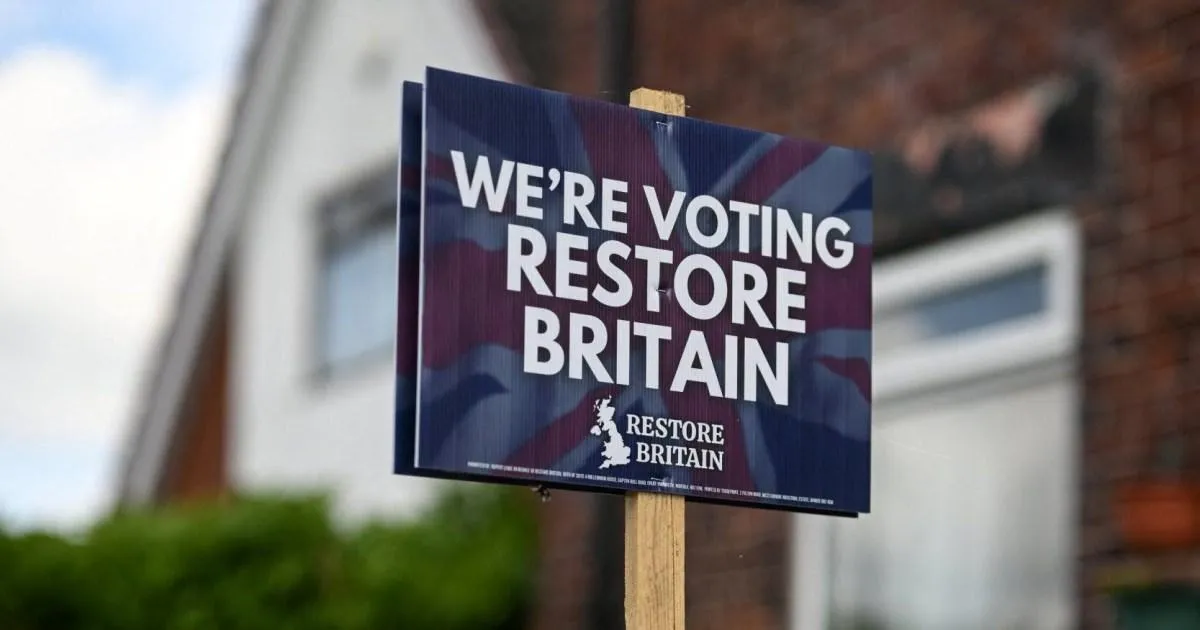
As the Makerfield by-election approaches, the atmosphere in this corner of Greater Manchester is thick with anticipation and political uncertainty. Residents are preparing to head to the polls to decide on a seat that has become unexpectedly crucial, serving as a bellwether for the future of Sir Keir Starmer’s Labour government and a test of strength for political heavyweights like Andy Burnham. While the national spotlight often fixes on these high-profile figures, the ground-level reality presents a curious spectacle: the rise of “Restore Britain,” an ultra-nationalist party that is causing significant headaches for Reform UK by potentially fracturing the right-wing vote in a contest that could ultimately define the local political landscape for years to come.
Amidst this tense backdrop, the presence of the Restore Britain candidate, 53-year-old local businesswoman Rebecca Shepherd, has remained remarkably ghost-like. While Reform UK leader Nigel Farage has been aggressively campaigning to mobilize his base, Shepherd has been largely absent from the public eye. Interviews with locals who intend to cast their ballots for her reveal a striking pattern: many of these voters are not actually voting for the candidate herself, but rather the ideological banner she carries. It is a testament to the current state of political polarization that people are willing to pledge their support to a face they have never met and a voice they have rarely heard.
When questioned, supporters of the party seem unfazed by their candidate’s elusive nature. For voters like 56-year-old Sean, the specific individual on the ballot is secondary to the party’s broader platform and the influence of its lone MP, Rupert Lowe. This sentiment is echoed by others, such as 35-year-old roofer Adam Rayley, who openly admitted to knowing next to nothing about Shepherd. For Adam, his vote is a reaction to personal hardship and a deep-seated frustration with the current state of the nation. He spoke about his life as a full-time carer struggling to support his family, articulating a common fear that the country’s resources are being stretched thin by uncontrolled immigration rather than being directed toward those already here.
The gap between the party’s rhetoric and its local visibility is further highlighted by the experience of those living in the ward. While Reform UK and Labour have been active on the doorstep, flooding letterboxes with pamphlets and engaging with the community, Restore Britain remains a distant entity. Even those working in the orbit of the party, like 64-year-old Joanna Lapniewsky—a cleaner at the local party headquarters—admitted to never having seen the candidate in person, relaying only hearsay about her being “down to earth.” This scarcity of personal interaction paints a vivid picture of a campaign that feels more like an ideological protest movement than a traditional local bid for representation.
As the final hours click away before the polls open, the residents of Makerfield find themselves at the center of a “nerve-wrecking” democratic process. The range of options on the ballot is vast, spanning from the mainstream allure of Andy Burnham to the fringe eccentricity of the Official Monster Raving Loony Party, the Libertarians, and the Greens. Each choice reflects a different slice of the national psyche, yet the focus remains fixed on that pivotal question: will the splintering of the right-wing vote allow Labour to maintain its grip, or will the simmering discontents articulated by supporters of Reform and Restore Britain force an unexpected shift in power?
By the time the sun sets on Thursday, the town will have held its breath for the final time before the counting begins. Regardless of the outcome, the Makerfield by-election serves as a profound case study in modern voter motivation. It reveals a public that is increasingly driven by broad, national anxieties rather than local charisma. People are voting for their own survival, their perceptions of borders, and their desire for a system that acknowledges their individual struggles. Whether or not Shepherd ever truly emerges from the shadows, her candidacy will have played its part in a contest that suggests politics is no longer about the person behind the desk, but the fears and demands of the person behind the curtain at the polling station.