

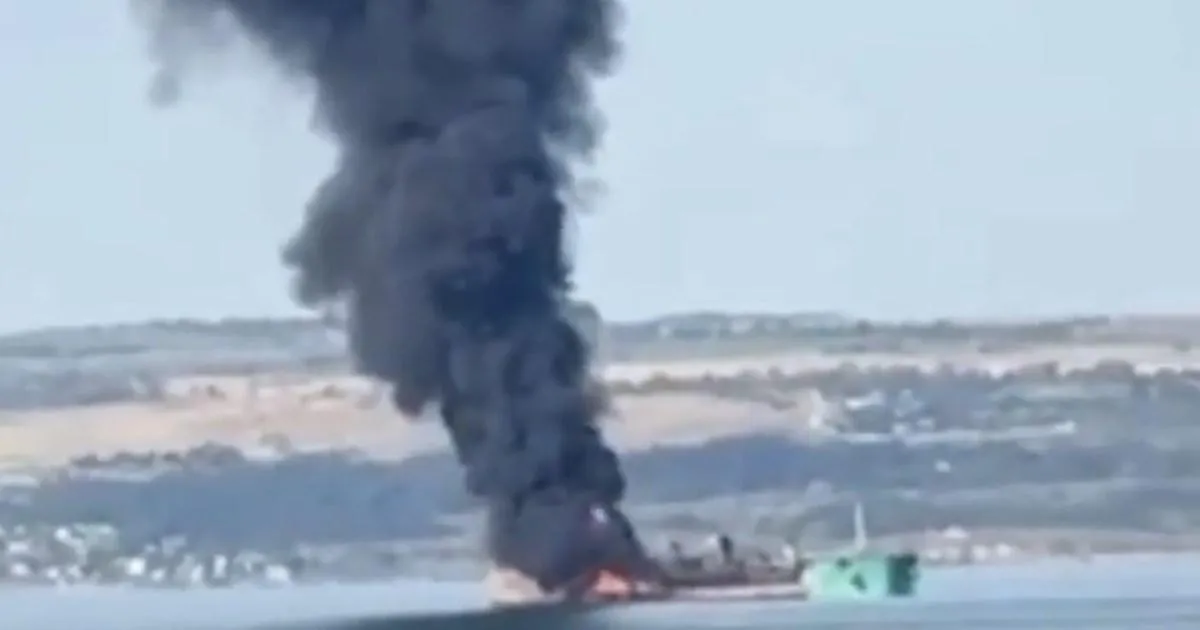
The relentless conflict between Ukraine and Russia has entered a volatile new chapter, with recent reports indicating that Vladimir Putin’s “shadow fleet”—an armada of oil tankers used to bypass international sanctions—has suffered staggering losses. In a span of just one week, 49 vessels have been taken out of commission, leaving the Kremlin struggling to maintain its supply chains for both occupied territories and its own domestic needs. This systematic targeting of Russian logistical infrastructure, characterized by 14 strikes in a single day, has pushed the Russian energy sector into a state of visible disarray. The implications of these attacks go beyond mere maritime damage, signaling a broader, deepening crisis as Ukraine attempts to fracture the economic engine that sustains Putin’s war machine.
The situation on the ground, particularly within Russia’s borders, is rapidly devolving from a manageable logistical hurdle into what many analysts are calling a “catastrophic” fuel crisis. Massive infernos at key facilities like the Kurgannefteprodukt oil depot in Taganrog have forced emergency evacuations and paralyzed regional distribution hubs. While the Kremlin continues its tradition of suppressing bad news, the reality is becoming impossible to hide from the average citizen. Reports from independent outlets suggest that the fuel market is experiencing a total collapse, with exchange trading volumes plummeting to roughly half of their typical levels while prices have soared toward 150 percent of their original costs. Even in distant Siberia, where the war can often feel like a far-off geopolitical abstraction, queues at petrol stations are growing, bringing the harsh cost of the conflict directly to the doorsteps of everyday Russians.
This energy vulnerability is creating a domino effect that reaches far beyond the fuel pumps and military logistics. Perhaps most concerning for the Kremlin’s long-term stability is the impact on Russia’s vast agricultural sector. Farmers, who serve as the backbone of the country’s food security, are finding themselves sidelined by chronic diesel shortages right at the peak of the harvest season. Across key southern provinces, combine harvesters and critical heavy equipment are sitting idle, leading to fears of a botched harvest that could have lasting consequences for the national economy. When a country that prides itself on being the world’s second-largest oil producer reaches a point where it must contemplate importing its own fuel, it is no longer just a tactical setback; it is an existential threat to the state’s internal function.
Beyond the agricultural and domestic turmoil, Ukraine’s tactics demonstrate a high level of precision and strategic intent. By utilizing kamikaze drones to target not just refineries but the military trucks transporting supplies to the front lines—specifically in the rear areas of the Luhansk region—Ukraine is essentially strangling the Russian occupation from the inside out. Russia continues to prioritize the annexation of the Donbas region, refusing to yield on its aggressive territorial ambitions, but this persistence is becoming increasingly disjointed from the reality of their logistical capacity. Every tanker sunk and oil depot set ablaze weakens the morale and kinetic capability of Russian forces who rely on that fuel to maintain their positions in trenches and armored columns.
The Kremlin’s response thus far has been characterized by denial and secrecy, as officials attempt to downplay the severity of the infrastructure damage to prevent domestic alarm. However, the data gathered by independent observers suggests that the damage is far more profound than the government is willing to admit. There is a disconnect between the state’s rhetoric—which maintains that everything is under control—and the daily experience of the Russian public, who are witnessing price hikes and shortages in real time. This discrepancy has the potential to erode public support for a war that, for most, was supposed to remain localized and distant. As the financial and physical barriers to fighting this war mount, the pressure on Putin to reconsider his objectives is intensifying, even if he remains publicly defiant.
Ultimately, this latest phase of the conflict highlights the importance of the economic “rear guard.” While attention is often focused on the front lines, the battle for fuel and logistics has become the true frontline for Russia’s ability to conduct large-scale warfare. If Ukraine can maintain this pressure and continue to degrade Russia’s refining capabilities and transport networks, the Kremlin faces a narrowing path to maintaining its military operations. We are witnessing a transition where the cost of the war is finally being measured not just in casualties, but in the stalled engines of its tractors and the empty pumps of its cities. Whether this will lead to a change in military strategy or an escalation in desperation, one thing is clear: the domestic price of Putin’s war has never been higher, and the ripples of these strikes are likely only just beginning to be felt across the Russian heartland.