


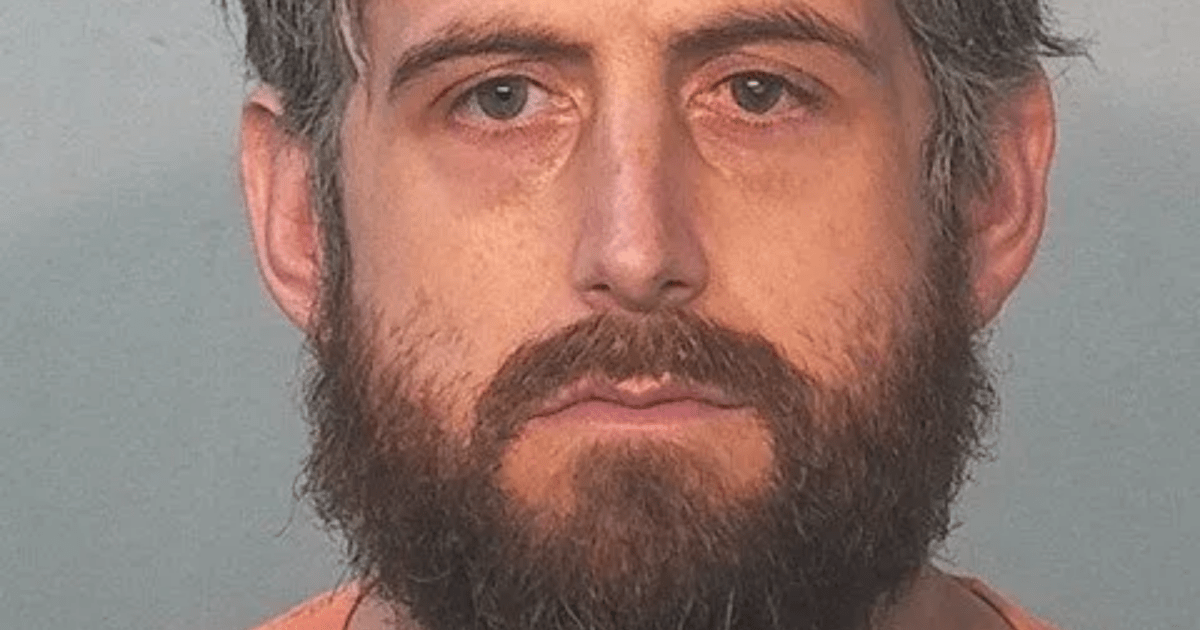
The small, quiet community of Fort Wayne, Indiana, was recently rocked by a bizarre and deeply harrowing sequence of events that began in the early hours of May 6. What initially appeared to be a routine emergency response to a residential fire quickly spiraled into a complex criminal investigation. As local firefighters rushed to extinguish a blaze consuming a detached garage, police were simultaneously alerted to a nearby stabbing. It soon became clear that these two disparate scenes were threads of the same tragic narrative, centered on a 36-year-old man named Christopher Peden, who had vanished from the very property now engulfed in flames after neighbors desperately alerted his family to the growing danger.
When authorities finally located Peden, he initially presented a story of victimization, claiming that he had been attacked and stabbed in downtown Fort Wayne by an unidentified assailant who had allegedly threatened him the previous day. His demeanor and claims led him to medical care, where the gravity of his trauma became apparent. However, as the medical staff treated him and the police began to piece together the forensic evidence from the fire scene, Peden’s narrative began to unravel. During questioning at the hospital, the facade shifted, and Peden eventually confessed to the officers that his earlier story had been a complete fabrication. He admitted that the wounds he suffered were not the work of a stranger, but were entirely self-inflicted.
The details of Peden’s confession, as outlined in court documents, are as shocking as they are difficult to comprehend. He explained to investigators that in the middle of the night, driven by an inner turmoil that remains largely unexplained, he had taken a kitchen knife and committed a severe act of self-harm. According to his own account, he then took the dismembered tissue, poured gasoline over it, and intentionally ignited it on the floor of his mother’s garage, near the entryway. The act was swift and catastrophic, turning a residential storage space into the epicenter of a fire that would soon threaten the lives and property of those living around him.
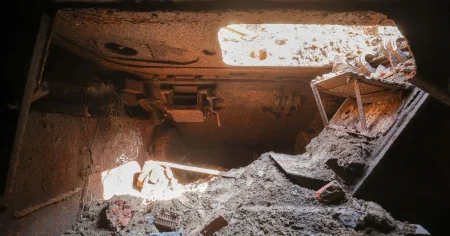
The physical evidence gathered by the police painted a grim picture of the cold preparation behind the act. Inside the charred remains of the garage, investigators recovered a red gasoline container, a handful of lighters, and the kitchen knife used in the incident. Peden’s family, who shared the property, told police that the garage was a simple, non-electrical structure intended only for basic lawn maintenance tools, leaving them completely unprepared for the destruction that followed. As the blaze spread, it didn’t just consume the garage; it traveled outward, causing significant damage to two neighboring properties and destroying two vehicles in the process, leaving the local residents to deal with the wake of an incident that defied rational explanation.
As the legal wheels begin to turn, Christopher Peden now faces a formal charge of felony arson—a Level 4 felony that carries a potential sentence of up to 12 years in prison and a fine of up to $10,000. Following his release on a $10,000 bond earlier this week, he is scheduled to appear in court in the coming days to establish a timeline for his trial. His attorney, David Felts, has indicated that he has only recently been retained to represent Peden and, having not yet had the opportunity for a deep, private consultation with his client, has offered no further comment on the confession or the circumstances surrounding the charges.
Ultimately, this case serves as a jarring reminder of how quickly mental health crises can manifest into public danger. While the legal system focuses on the destruction of property and the mechanics of the crime, the underlying human elements remain shrouded in mystery. For the residents of Fort Wayne, the incident is a sobering event that leaves behind more questions than answers. As the judicial process continues, society is once again forced to grapple with the uncomfortable intersection of extreme private suffering and the legal responsibility one carries for the safety of the community at large.