



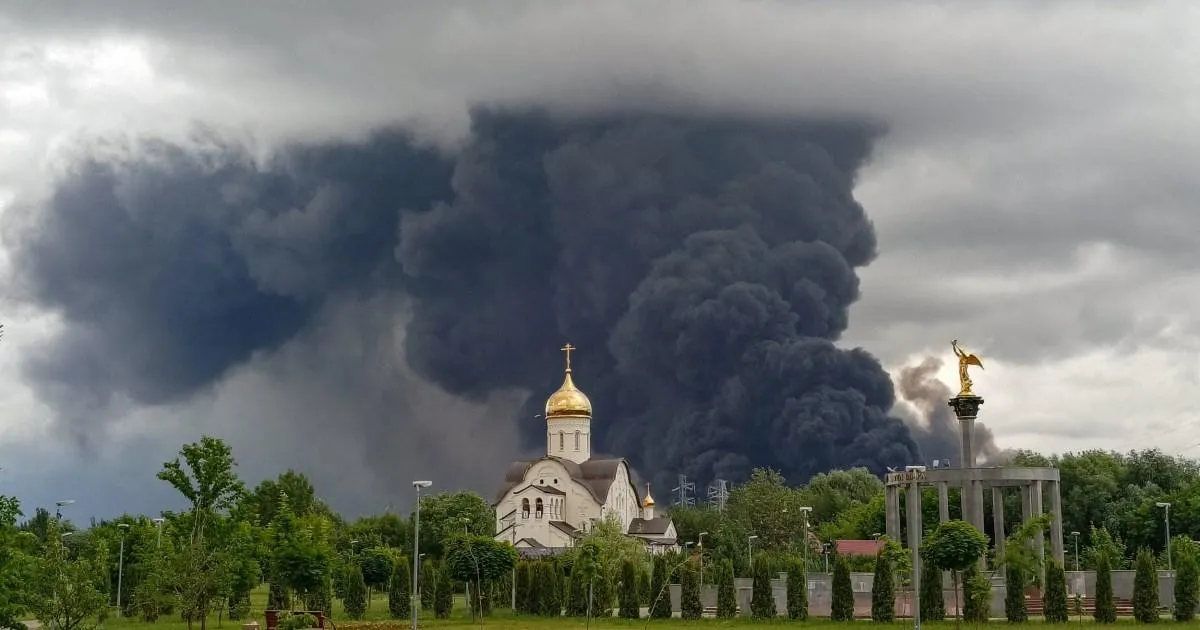
The ongoing conflict between Russia and Ukraine has reached a volatile new inflection point, as evidenced by a massive drone offensive targeted at Moscow. Recent reports confirm that Ukraine successfully penetrated the Russian capital’s sophisticated air defenses, causing tangible damage to critical infrastructure, most notably the Moscow Oil Refinery. While Russian state media has attempted to downplay the breach by claiming near-total interception of incoming threats, the visual evidence of rising smoke and industrial destruction tells a more complicated story of a war that is increasingly encroaching upon the Russian heartland.
In direct response to the escalating intensity on the front lines, the British government has announced a substantial commitment to bolster Ukraine’s defensive capabilities. Through a new package worth £750 million, the UK will supply 150,000 additional drones to the Ukrainian forces. This infusion of technology is designed to provide Ukraine with the aerial agility needed to counter Russian aggression, ensuring that they maintain the ability to hold the line against an adversary that dwarfs them in traditional artillery and troop numbers.
The funding mechanism for this aid highlights an innovative, albeit controversial, legal strategy in international warfare: using the proceeds from Russian assets seized shortly after the invasion began. The UK’s £2.26 billion Extraordinary Revenue Acceleration (ERA) loan effectively turns Russia’s own economic holdings against its war machine. Chancellor of the Exchequer Rachel Reeves has framed this as a matter of moral and strategic imperative, emphasizing that by leveraging these seized assets, the UK is ensuring that Ukraine has the resources to defend its sovereignty without placing an undue, unsustainable burden on British taxpayers.
Chancellor Reeves has been vocal regarding the UK’s position, describing the support as “steadfast” and an essential component of the international effort to keep pressure on the Kremlin. For the British government, this is not merely a financial transaction but a clear political signal that the West remains committed to Ukraine’s survival. By providing such a high volume of drones, the UK is betting on the effectiveness of asymmetrical, low-cost warfare—technologies that can disrupt expensive Russian infrastructure and complicate the logistics of a military campaign that has already proven more costly and prolonged than Moscow initially envisioned.
However, these developments occur against a backdrop of increasing global anxiety, as nations scramble to fortify their own borders and defensive postures. The news from the front lines in Moscow coincides with reports of Finland moving to lift its long-standing restrictions on the deployment of nuclear weapons, a defensive pivot prompted by a growing sense of vulnerability and mistrust toward Russian regional intentions. The cumulative effect of these announcements paints a grim picture of a world where the stability of Europe is increasingly dictated by the reach of drones, the movement of tankers in international waters, and the fraying nerves of neighboring states.
As the conflict continues to evolve, the human element—the logistics of survival, the shifting tides of international policy, and the relentless drone strikes—remains at the forefront of the narrative. While the headlines focus on the numbers of drones supplied or the financial details of loan packages, the reality on the ground is one of high-stakes attrition. With both sides intensifying their efforts, the world watches with bated breath to see if these technological and financial measures will force a shift in momentum or if the conflict is destined to widen further into an unpredictable new chapter of modern history.