


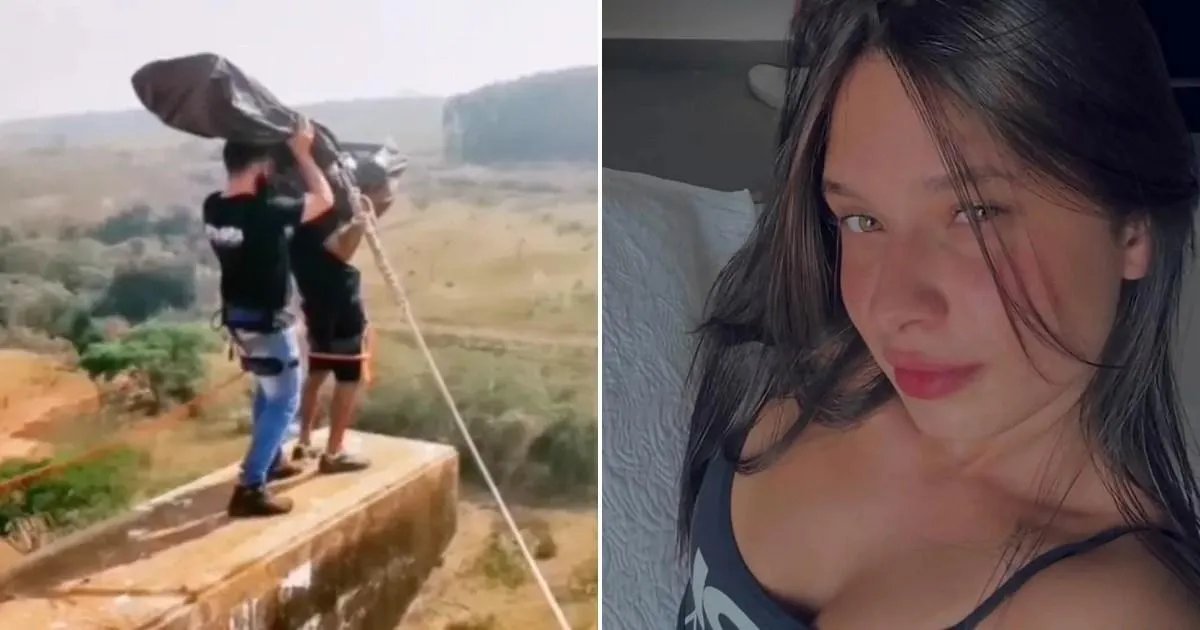
The tragic death of 21-year-old model Maria Eduarda Rodrigues de Freitas at the Ponte do Esqueleto bridge has sent shockwaves through Brazil, exposing a culture of extreme negligence that many fear was hiding in plain sight. Maria, a vibrant young woman who had excitedly shared her bungee jumping preparations on social media, lost her life because the very professionals tasked with her safety failed to perform a fundamental duty: clipping her harness to the safety line. Following the incident, investigations have moved swiftly, leading to the arrest of three instructors—Luis Felipe Feliciano Egoroff, Maicon Fernandes Cintra, and Vitor de Freitas Goncalves—who are now at the center of a criminal inquiry that has unveiled a deeply disturbing pattern of reckless behavior.
The investigation took a particularly haunting turn when authorities discovered social media content posted by Egoroff back in 2022. In a video that many are now calling “prophetic” and sickening, Egoroff and an associate were seen tossing a body bag off the exact same bridge where Maria would later meet her end, joking about “hiding the body.” The discovery of this footage, along with other alarming images showing Egoroff performing stunts while holding young children, paints a picture of an environment where thrill-seeking and dangerous incompetence were prioritized over basic human life. For the public, this retrospective look at the instructors’ history has transformed a tragic accident into a terrifying account of predatory negligence.
The horror of Maria’s final moments is captured in footage that shows her being carried by the instructors in a “Superman” pose toward the edge of the abandoned railway bridge. Moments later, the camera catches a devastating sight: the safety rope is still lying untouched on the platform even as the instructors look down, appearing completely oblivious to the fact that they had just sent a woman to her death unrestrained. It is a chilling reminder of how quickly professional oversight can vanish, turning an adventure sport excursion into a site of unimaginable carnage. The sheer carelessness displayed by the staff has understandably fueled public outrage, as the equipment designed to save lives was left completely discarded during the mission.
Despite the insurmountable odds caused by the fall, there was a fleeting, desperate hope at the scene initiated by a local nurse named Rayza Dias. Braving a treacherous, steep slope with only a single rope for support, Dias risked her own safety to reach Maria, who was miraculously still breathing, albeit weakly, when the nurse arrived. The physical toll of the rescue attempt—with Dias scraping her hands to the point of injury—stands in stark contrast to the reckless nature of the instructors who caused the tragedy. Sadly, the trauma of the impact was too great, and Maria passed away shortly after the nurse reached her, leaving behind only the cold, harsh reality of a life cut short by avoidable incompetence.
For Maria’s mother, the aftermath is a nightmare from which she cannot wake. At the funeral held in São Paulo this past Sunday, her grief was raw and unrelenting, directed toward the systemic failure that took her daughter. In a heartbreaking eulogy, she laid the blame directly on the faulty equipment and the people responsible for it, crying out that the “damned rope” had stolen her daughter and stripped her own life of meaning. The mother’s words resonate as a reminder that behind every sensational headline is a family shattered by a loss that never should have happened, forced to grapple with the painful absurdity of a death caused by those who were paid to protect their loved one.
As the legal proceedings against the three instructors continue, the case of the Ponte do Esqueleto bridge serves as a grim warning about the lack of regulation and the dangers of extreme sports operators who prioritize social media clout over safety. Maria Eduarda Rodrigues de Freitas had been looking forward to her jump with a sense of playful excitement, documenting her day like any other young person might. Now, that same energy is gone, silenced by a culture of bravado that thought nothing of “body bag” pranks or ignoring safety protocols. As Brazil mourns this young woman, the focus must now shift to ensuring that no other family has to endure this kind of preventable tragedy again.