


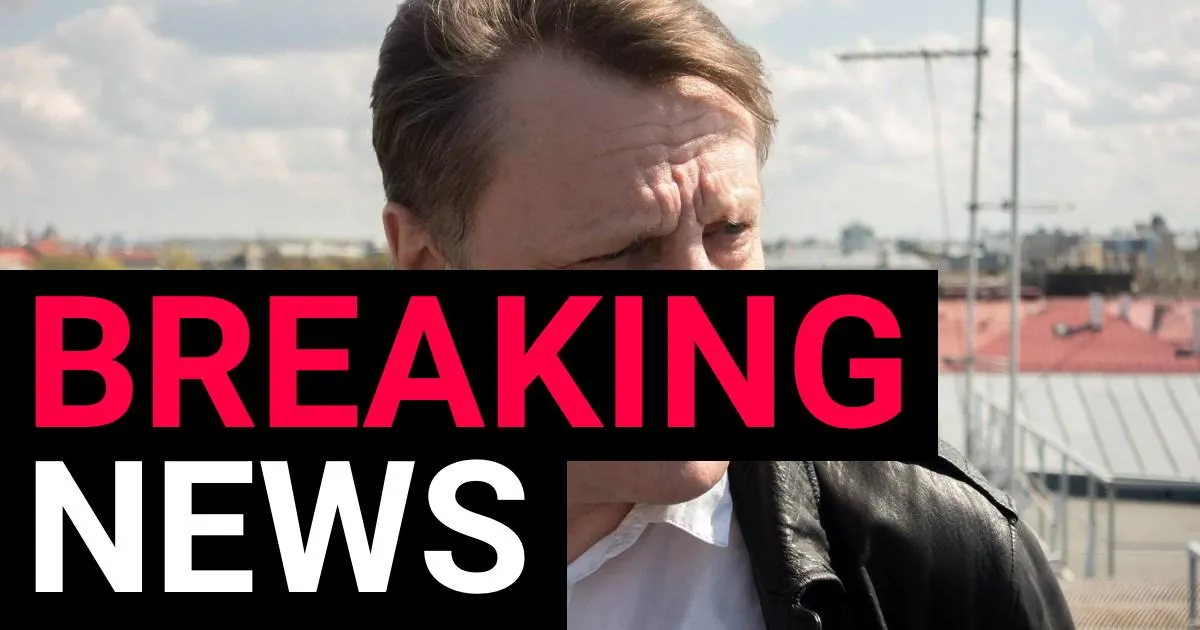
The sudden death of Grigory Nekhoroshev, a veteran journalist who once dared to cross the Kremlin’s most guarded personal boundaries, has sent a wave of shock and somber reflection through the exile community. At 69, Nekhoroshev was living a quiet, albeit cautious, existence in Riga, Latvia, having spent over a decade as a political refugee. His passing, reportedly caused by the consumption of poisonous mushrooms gathered near his home, feels heartbreakingly ordinary—yet, given his history as a man the Russian state viewed as a “personal enemy,” the circumstances have invited immediate and intense speculation. To those who knew him, he wasn’t just a headline; he was a vibrant, forward-thinking person who had been forced into the shadows of displacement for the simple act of telling the truth.
The roots of Nekhoroshev’s ordeal trace back to 2008, when he served as the editor-in-chief of Moskovsky Korrespondent. It was there that he oversaw the publication of a story that would eventually dismantle his career and force him into a permanent, wandering exile. The article revealed the hidden romantic entanglement between Vladimir Putin and Olympic gymnast Alina Kabaeva, a revelation that not only rattled the Russian leadership but also triggered a swift and brutal retaliation. The paper’s owner, Alexander Lebedev, was pressured into shuttering the publication entirely, while security services subjected Nekhoroshev to interrogations and thinly veiled threats. At the time, Putin famously dismissed the report with public vitriol, calling the journalists “snotty-nosed” trespassers, even as history eventually validated every word of the original report.
Living in Riga, Nekhoroshev existed in a state of perpetual hyper-vigilance. Friends and contemporaries have described him as remarkably “nervous,” a man keenly aware that the Russian intelligence apparatus possesses a long memory and a far-reaching arm. While he was an experienced mushroom forager—a common hobby in his culture—the irony of his death has not been lost on those who mourn him. Friends like Igors Vatoļins, who saw him shortly before the tragic incident, remember him as a man who was neither ill nor resigned to his age, but rather one full of plans and intellectual vigor. That such a man could be silenced by a forest accident is a bitter pill for his inner circle, many of whom have spent years watching the Kremlin systematically eliminate its most vocal critics, often in ways that look like anything but state-sponsored assassination.
The skepticism surrounding his death is deeply rooted in the grim pattern of “suspicious circumstances” that has defined the last two decades of Russian expatriate life. From the cold, targeted murder of Anna Politkovskaya in her own stairwell to the radioactive horror inflicted upon Alexander Litvinenko in London, the list of those who fell afoul of the regime and subsequently met tragic ends is long and chilling. Even in recent years, the deaths of high-profile figures like Boris Nemtsov, Yevgeny Prigozhin, and Alexei Navalny have reinforced the terrifying reality that distance from Moscow provides no guarantee of safety. When a critic of Putin dies unexpectedly, the world no longer asks if it could be foul play; it asks how, and why, the shadow of the Kremlin finally caught up to them.
As investigations into Nekhoroshev’s death continue, the tragedy serves as a poignant reminder of the heavy, silent cost of speaking truth to power. Nekhoroshev was not a soldier or a world leader; he was a journalist who believed that a ruler’s personal life was a matter of public interest, a stance that cost him his homeland, his career, and ultimately his peace of mind. Even if his death was truly the result of a simple, tragic mistake in the woods, his life stands as a testament to the courage required to challenge an authoritarian regime. He existed in a state of high alert, his spirit marked by the trauma of being a marked man, proving that the exile experience is rarely a safe harbor, but rather a different, quieter form of siege.
In the end, Grigory Nekhoroshev’s legacy will be tied to that explosive 2008 story—a piece of journalism that proved prophetic regarding the private lives of Russia’s elite. While he lived his final years as a refugee in Latvia, his contributions to the truth remained a thorn in the side of a system that thrives on disinformation. As we look at his death through the lens of history, we are forced to grapple with the vulnerability of those who operate outside the protection of the state. Whether by a toxic fungus or something more sinister, his loss is a stark, human-centered reminder that the price of integrity, even in a distant exile, is often a life lived in the shadow of potential retribution.