

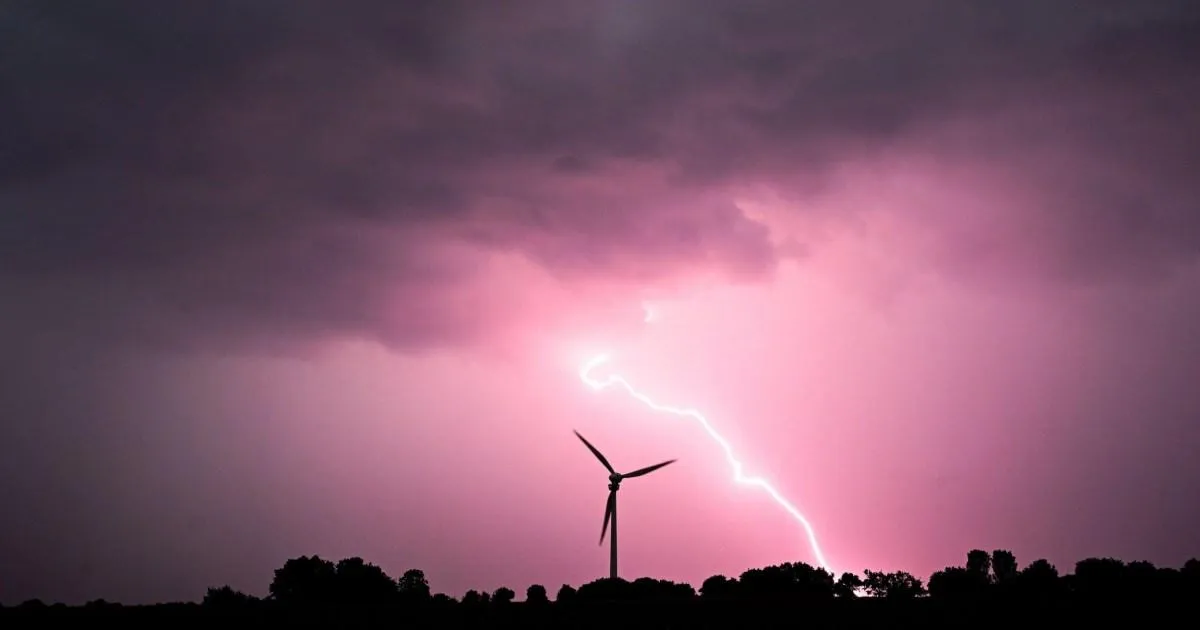
What began as a weekend of community spirit and athletic competition in southwestern Germany quickly turned into a terrifying ordeal as severe storms swept across the region. At a bustling handball tournament in Rastatt, Baden-Württemberg, hundreds of athletes and their families had gathered with high hopes for the event. Instead, they found themselves in the path of a volatile weather system that unleashed powerful lightning strikes. The incident left ten people injured, including a 13-year-old child and several adults, as the storm transformed an open sports field into a scene of chaos and panic. The injuries occurred during a desperate attempt to stabilize tents that were being threatened by fierce winds, demonstrating how quickly the environment can shift from a friendly gathering to a life-threatening crisis.
The emotional toll of the tragedy was compounded by the suddenness of the event. While most of the victims fortunately sustained only minor injuries, one individual was severely struck, serving as a sobering reminder of the raw power of nature. This wasn’t an isolated incident; shortly after the chaos in Rastatt, a 71-year-old woman in Münsingen-Dottingen faced a similar fate. She had been preparing food in a marquee tent when the lightning struck, delivering a life-altering electric shock. Her experience highlights the vulnerability of those caught in the open during unpredictable summer storms, turning even the most mundane activities—like preparing a meal—into moments of profound danger.
Beyond the immediate physical injuries, the storm’s impact rippled through the local infrastructure, leaving thousands of residents in the dark. For nearly an hour and a half, large parts of the surrounding towns lost power, paralyzing daily life and complicating emergency response efforts. Hospitals, businesses, and private residents suddenly found themselves cut off from essential services. Government officials, including state minister-president Cem Özdemir, were quick to acknowledge the severity of the situation. Through social media, he extended his solidarity to those struggling with the aftermath, noting that authorities were working at “full throttle” to restore power and mitigate the economic and healthcare disruptions caused by the sudden blackouts.
The scale of the wreckage extended well beyond the immediate injuries, as the weather system demonstrated an unpredictable and widespread reach. While the power grid eventually stabilized—with engineers reporting that the main substations miraculously remained intact—the psychological impact on the affected communities lingered. There is a specific kind of helplessness that comes with a power failure, especially when it follows a violent natural event; it strips away the comforts of modern safety, leaving people to confront the darkness and the lingering uncertainty of what the next hour might bring while emergency crews scramble to clear roads and restore order.
Looking at the broader meteorological picture, the storms hitting Germany are part of a volatile transition as the country faces record-breaking June heat. Meteorologists have been sounding the alarm, tracking a dangerous pattern where extreme heat often acts as a precursor to violent, electrical storms. Residents across regions as diverse as Bavaria, Hesse, and even the capital city of Berlin were urged to remain vigilant. In Berlin, the reality of the deluge was captured in striking images of localized flooding, specifically in the Gleim Tunnel, where commuters found their cars trapped in rising waters. It is a stark contrast: the quiet, oppressive heat of the day broken by the cacophony of thunder and the deluge of flash floods.
As the region continues to recover, the events of this past Friday serve as a sobering chapter in what has become a challenging summer for many parts of Europe. For the victims in the handball tournament and the residents left in the dark, the weather is no longer just a backdrop to their lives but a formidable force that commands respect and caution. As temperatures rise and the climate continues to behave with increasing unpredictability, the focus shifts to community resilience. Whether it is through the rapid response of emergency personnel or the solidarity shown by neighbors, the human spirit is being tested alongside the infrastructure. Moving forward, these events remind us to prioritize safety, stay informed, and never underestimate the potential for a peaceful day to take a turn for the extreme.