

The deepening fuel crisis across Russia has pushed the nation to a volatile breaking point, casting a long, dark shadow over Vladimir Putin’s authority. As the Kremlin continues its costly war in Ukraine, the domestic consequences are no longer confined to political boardrooms or military strategies; they are unfolding in real-time at the roadside, where the simple act of filling a tank has become a flashpoint for social unrest. Reports from across the country describe a landscape where desperation is the new norm, with long queues, shredded nerves, and violent confrontations becoming a common sight at local petrol stations. This breakdown in the supply chain is not just a logistical failure—it is a clear indicator that the war’s economic pressure is finally beginning to erode the stability of Putin’s inner circle and the daily lives of the Russian public.
The sentiment among Russia’s elite is undergoing a profound and dangerous shift. Estonian Foreign Minister Margus Tsahkna recently noted that even the billionaire oligarchs, who once stood firmly behind the Kremlin’s expansionist ambitions, are now questioning the rationality of their leader. The optimism surrounding a swift “victory” has evaporated, replaced by a grim realization that the war has become an existential liability for the nation’s economy. Tsahkna’s blunt assessment highlights a leadership that is increasingly isolated, suggesting that the path forward for Putin—a path towards rational negotiation—would require a fundamental change in his worldview. Instead, by refusing to halt the conflict, Putin is gambling with the future of his own people, leading many observers to wonder if he is aware of how precariously his regime now sits.
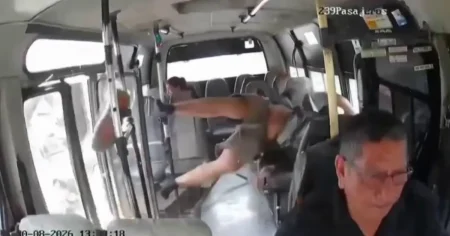
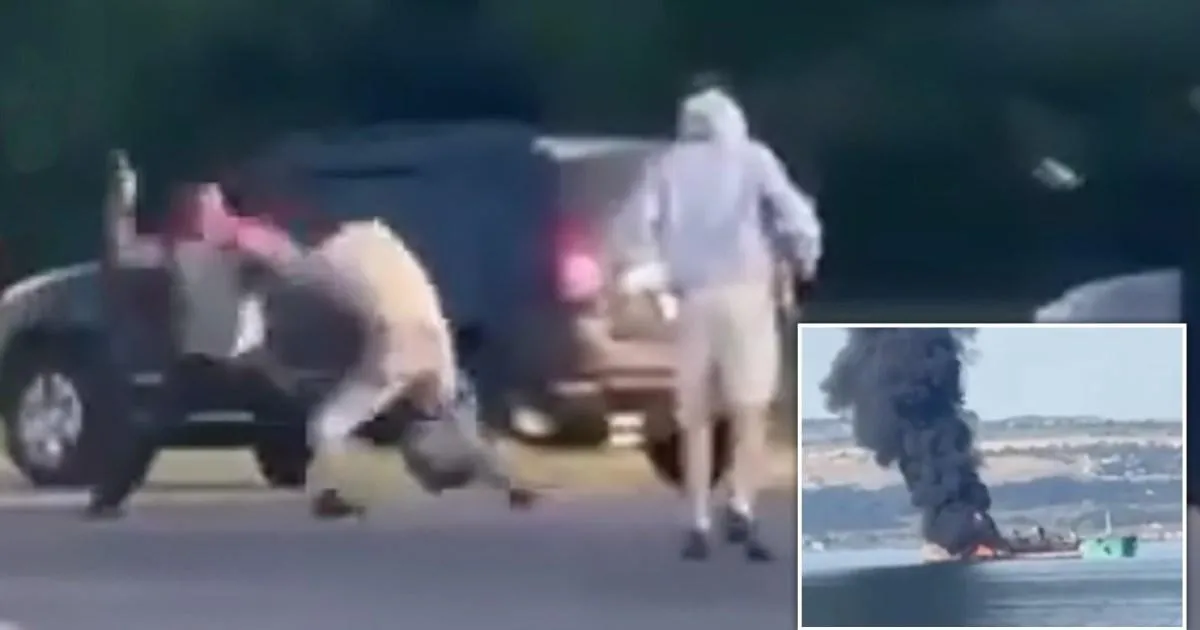
This instability is manifesting in raw, human terms in towns like Penza, Serov, and Ryazan, where the scarcity of fuel has ignited raw anger among motorists. When people are pushed to the edge, the veneer of civility often cracks, and in Russia, that has meant fistfights at pumps, drivers wielding knives to protect their place in line, and police being summoned to break up brawls sparked by nothing more than a few liters of gas. One particularly distressing account from Moscow features a tearful woman whose tires were slashed by an aggressive, knife-wielding man who believed she had cut him off in a petrol queue. These incidents, spanning from Siberia to the western regions, serve as a visceral backdrop to the broader economic crisis, illustrating that when fundamental resources become scarce, the social contract begins to disintegrate.
Criminal elements are, predictably, moving in to exploit this fragility, adding yet another layer of corruption to an already dire situation. Mafia groups and opportunistic black-market syndicates have been caught seizing control of fuel supplies, hoarding resources to resell them at triple the market price. This predatory behavior further alienates the average Russian citizen, who is suffering both from the rising costs of inflation and the inability to travel or conduct business. Law enforcement has been forced to intervene in these cabals, but the sheer scale of the shortages across all 83 of Russia’s regions suggests that the state’s ability to maintain public order is flagging. The black market thrives where the government fails, and in this instance, it is profiting directly from the despair of the people.
The root of this crisis—and the reason it continues to escalate—is the systematic destruction of Russian oil infrastructure by Ukrainian forces. By targeting critical refineries, such as the Gazprom Neft facility in Moscow, Ukraine has found a way to strike at the heart of Russia’s war machine and the daily life of its citizenry simultaneously. These strikes act as a strategic lever; Ukraine has offered to pause these attacks if Russia ceases its bombardment of their country. However, Putin remains steadfast in his refusal, seemingly willing to sacrifice his nation’s internal economic security rather than concede to a diplomatic exit. The result is a cycle of destruction that forces the Kremlin to scramble for solutions while the public bears the brunt of the fallout.
Ultimately, Putin’s attempt to downplay the severity of the crisis is failing to convince anyone. While he publicly insists that fuel reserves are only down by a minor four percent compared to the previous year, his own words acknowledge that “problems” exist. This disconnect between official rhetoric and the reality of fights at the pumps suggests a desperate attempt to maintain an image of control. As the war continues to drain the country’s coffers and infrastructure, the question remains whether the Kremlin can weather the internal pressure. For now, the people are trapped in the middle of a conflict that has moved from the trenches of the front line to the local forecourt, turning the simple task of buying gas into an emblem of a nation losing its grip.